Lingua Franca | Award-Winning French Lessons Brisbane

French lessons, events & trips

FRENCH LESSONS EVENTS & GIFTS

Filtering by Category: Fashion

Bonne Maman

We’re willing to bet une baguette* that lurking in your fridge is a jar of confiture* bearing the name and signature vichy rouge* lid of this French foodie brand. Meaning grandmother or granny, Bonne Maman is a family-owned marque* synonymous with delicious home-style preserves, jellies and fruit spreads. All made to traditional recettes* – jam-packed with fruit, and without artificial flavours, colours or conservateurs* (pas préservatifs*, attention!*). 

Founded in 1971 by the Gervoson family, Bonne Maman is based in Biars-sur-Cère, a small village in a beautiful fruit-growing region along the Dordogne in Southwest France. However, the jams’ appeal is much more widespread (pardon the pun), with the range now enjoyed in almost 100 countries across the globe.

In 2021, a rumour also emerged that the company founders sheltered people during the holocaust. While the private family declined to comment, we can’t think of a better reason to pop on la bouilloire* and indulge in something sweet. *Bonne Maman, bien sûr.
To learn more, visit the French website. (We’re sorry to say the madeleines aren’t available on our shores.)

*a baguette | *jam | *red gingham |*brand | *recipes | *preservatives | *not condoms | *be careful | *the kettle | *Bonne Maman, of course


Spotlight on: Sophie Fontanel

With her silvery, mid-length locks and enviable wardrobe, Sophie Fontanel is a true style icon. The 60-year-old fashion critic, author and one-time Fashion Director of ELLE France has also amassed a 294, 000+ following as an Instagram star – thanks to artful mirror selfies showcasing her bold, intellectual and playful approach to personal style. And her online documentation of her transition to grey.

For this femme française*? Overt sexiness is out, as Sophie tells Vogue:

Ditto, crippling, vertiginous talons*.

But that doesn’t mean elle est contente* to shrink into the background. Her style is punctuated by an eclectic mix of vintage items, men’s clothing and designer pieces. And, of course, that hair – the subject of her bestselling book, Une Apparition*.

Another livre* is dedicated to her 12 years of celibacy, while she won Le Prince Maurice Prize for romantic literature in 2011 for her roman*, Grandir*.

Author, fashion journalist, influencer… Quite the modern-day slashie, non?

We can’t help admiring Sophie’s honesty, esprit* and positive approach to life ­– and ageing. Follow her stylish moves sur Instagram* or take a peek inside her chic Paris appartement* in this interview with Vogue.


*French woman | *high heels | *she is happy | *A Ghost |*book | *novel | *Growing Up| *spirit | *on Instagram| *apartment


Four wheels under an umbrella

If you’ve studied French for a while or had at least a passing interest in French culture, you’ll most likely have heard of the Citroën 2CV.

It may have cropped up when you learned about the tréma accent it contains (and if you’ve forgotten its impact, here’s Katrina explaining it) or perhaps you’ve heard people reminiscing with beaucoup d’affection* about their travels around France in the 70s and 80s behind the wheel of one of these très petites voitures* or TPVs as they were known in the Citroën factory.

André Citroën had dreams of being the Henry Ford of France but this politically ambitious man was unfortunately also un joueur invétéré*, and soon ran into financial difficulty.

Fortunately, the newly installed patron*, Pierre Boulanger (who, had he been born on British soil would have been plain old Peter Baker) inherited a talented team of engineers. Pierre enjoyed walks in the countryside, and was taken by the pace of the farmers in horse-drawn carts who kept gentle rhythm with their chevaux*. He decided to replace the deux chevaux with deux chevaux-vapeur*, and the idea for the 2CV was born.

A simple edict to the engineers followed:

I’m no engineer, but with only 2CV under the hood, you’d imagine the Citroën 2CV is not exactly at risk of getting away from you on the open road. James Bond, however, would disagree, and a nun with a lead foot gives Louis Funès a lift he’ll never forget in this charming petite vidéo*.

*lots of affection | *very small cars | *chronic gambler | *boss | *horses | *horsepower | *little video

Papier dominoté

If you have an eye for design, you’re going to love indulging in your own research à propos du papier dominoté*. So what is the name of the craft behind it and what is it exactly anyway?

The charmant* website Madame Décore gives this definition:

Dominoterie : désigne la conception, la fabrication ou le commerce de papiers peints et imprimés en couleur de motifs géométriques ou floraux que l'on trouve fréquemment à l'intérieur des coffres, des armoires, des tiroirs, mais également dans les cartons à chapeaux et même les cheminées. Très en vogue au XVIIIème et début du XIXème siècle, le papier dominoté servait de garnissage pour les livres et le mobilier, en ce temps où chaque détail avait son importance.

Dominoterie : refers to the design, production or trade of colour-printed and painted paper in floral or geometric design which one often finds on the inside of chests, wardrobes and drawers, but also in hatboxes and even chimneys. Very fashionable in the 18th and beginning of the 19th century, papier dominoté was used as the trim for books and furnishings, at a time when every detail mattered.

Le papier dominoté
is experiencing a resurgence in popularity actuellement*. Not sure you're ready to commit to a whole wall of pattern? How about framing a more modest échantillon* as a nod to this fine craft? Start here.


Source: site web Madame Décore

*about papier dominoté | *charming | *currently | *sample

Chanel

The Gabrielle Chanel: Fashion Manifesto exhibition at the National Gallery of Victoria inspired us to do a bit of digging into her back catalogue.

For a period of time in the 80s, the Chanel brand was considered fusty and démodé*. The arrival of Karl Lagerfeld in 1983 quickly put paid to that, but what is so striking is that her iconic designs, many of which appeared for the first time in the 20s, feel so fresh and contemporary today.

Jetez un œil*.

*out of fashion | *Take a look

Papier Tigre

For many, a love of language goes main dans la main* with an appreciation of fine stationery. There’s a sense of vast possibility in a blank page and a freshly-sharpened pencil that’s hard to replicate.

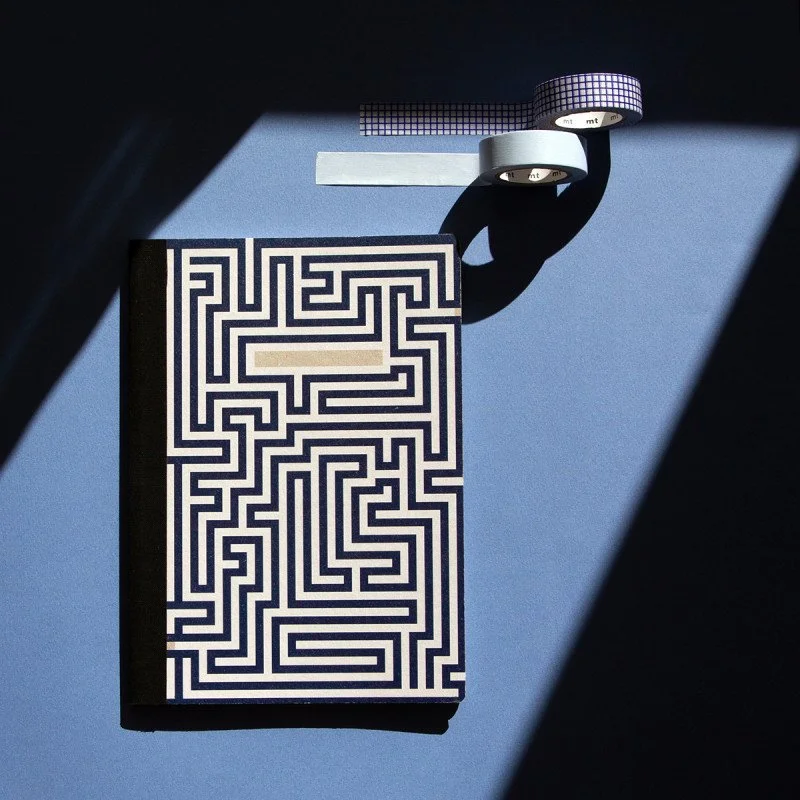
Imagine my excitement, then, when I came across the website of Papier Tigre*, une petite papeterie* in the heart of the Marais in Paris.

L’angoisse* soon followed, though, as I fretted that their gorgeous bloc-notes*, cartes postales* and crayons* would be unavailable to us, here at the other end of the world.

Happily, this micro-story has une fin heureuse* - Papier Tigre is available right here in Brisbane.

Bons achats*!

*hand in hand | *Paper Tiger | *a little stationer’s shop | *Anguish | *writing pads | *postcards | *pencils | *a happy ending | *Happy shopping!

*

A bit of friction...

I’m pretty sure I’m not alone when I say that one of the petits plaisirs* I enjoy when travelling in a French-speaking country is a trip to the local pharmacie*.

There’s something about seeing products that I’ve long considered produits de luxe* being sold to le grand publique* at extremely reasonable prices.

There there are the petites découvertes* involving products we simply don’t have here. One such discovery took place a few years ago when we were on a trip to la Nouvelle Calédonie*. I’m a sucker for a good-looking label, so when I came upon my first bottle of Friction de Foucaud, I couldn’t part with my sous* fast enough.

It was only when I got back to the hotel that Deborah, whom some of you know, told me that it was a French product reeking of nostalgia in the vein of Quick-Eze or Vicks Vapor Rub for those of us who grew up here.

She explained that it was mostly used as a refreshing tonic in hot weather or as a quick and effective pick-me-up for those days that just seem to drag.

it was created in 1946 by Madame Lucienne Merle. Inspired by the climate she experienced living in French Indochina (now Cambodia, Laos and Vietnam) this secret formula, which has remained unchanged for 70 year, offered ‘sovereign relief from tiredness’.

Since its creation, and in an effort to penetrate a larger market, the range has been extended to include roll-ons, foot creams and thigh gels. Its popularity was given a boost in the 80s when tennis player Yannick Nosh extolled its virutes.

According to the Friction de Foucaud website:

”Vous serez séduits à votre tour en l’utilisant, par le mariage d’huiles essentielles de citron, d’orange, de thym, de romarin, mêlées à des extraits naturels de camphre et de menthol qui donnent à la friction cet effet rafraîchissant et énergisant.”

”You, too, will be seduced when you use it, by the combination of essential oils such as lemon, orange, thyme, and rosemary, mixed with natural extracts of camphor and menthol with give the friction its refreshing and energising effect.”

*small pleasures | *pharmacy | *luxury products | *the general public | *little discoveries | *New Caledonia | *cash

Une fille | Un style

If you have just over eight minutes to spare and are confident you can keep le monstre aux yeux verts* at bay, be ready to be absolutely transported by this video from Vogue Paris.

*the green-eyed monster

Chaussures VEJA

Next time you’re at your French lesson au nid*, cast your eyes towards the floor. Chances are, you’ll see someone wearing a pair of baskets VEJA*.

VEJA was founded in 2005 by French entrepreneurs Sébastien Kopp and François-Ghislain Morillion after a trip to Brazil to do a social audit on a major fashion brand. Disturbed by the living conditions of the factory’s workers, they decided against going into tech ‘like the rest of their generation’. Instead, they decided to take the very symbol of conspicuous consumption, les baskets*, and produce them in an ethical way.

Source: www.veja-store.com

Since 70% of the price of a high-end pair of trainers is eaten up by la publicité*, Sébastien and François-Ghislain realised that in removing this line item, they could revolutionise the production of fashion sneakers.

Their story is inspiring and you’ll find it on their website. Try the French version first, I think you’ll be pleasantly surprised by how much you understand if you read along as the founders recount their parcours*. Getting lost? Switch to English to finish off the story. Desperate to own a pair? Jump onto their site web* and get scrolling!

*at the nest | *VEJA trainers | *trainers | *advertising | *path | *website

Great Champagne Houses

 
311-manufacturer_defaut.jpg.png
 

Founded in 1829 by three men, one aristocratic and the two others experts de vin*, Champagne Bollinger is today one of the oldest family-owned independent champagne houses in France.

As a member of an aristocratic family, Athanase de Hennerquin de Villermont was unable to commercialise the family name, thus the champagne house was originally called Renaudin Bollinger, after local wine fanatic Paul Renaudin and his friend, German wine negociant Jacques Bollinger.

When Jacques married Athanase’s daughter in 1837, the bonds grew stronger and by 1918, it was Jacques’ great-grandson, also named Jacques, who was running the company. When Jacques died in 1941 without leaving an heir, the management of the house fell to Jacques’ widow, Lily Bollinger. Described as une perle rare* by those who knew her, she was nothing if not a master promoter of the product.

Lily Bollinger.jpg
“I drink it when I’m happy and when I’m sad. Sometimes I drink it when I’m alone. When I have company I consider it obligatory. I trifle with it if I’m not hungry and drink it when I am. Otherwise, I never touch it—unless I’m thirsty.”

For the first time in its history, Champagne Bollinger is now managed by a non-family member, Jérôme Philipon, though with the full support of the Bollinger descendants.

Image par Andreas Winterer de Pixabay

Image par Andreas Winterer de Pixabay

*wine experts | *a rare gem

Yuka

If one of your Résolutions de Nouvel An* involves taking a more considered approach to your supermarket shopping, it might be worth downloading the Yuka app.

Created in Paris in 2016 by a small team of three who won a Food Hackathon competition, the app scans barcodes to break down the ingredients and nutritional value of products you’d find in the course of your weekly shop. It also analyses beauty products and gives ratings based on their potential for adverse health effects.

By the way, though the developers are cent pour cent français*, the name Yuka was inspired by the Mexican wife of one of the founders who is from the state of Yucatán.

[Visit the Yuka website]

Yuka.png

*New Year’s Resolutions | *100% French

French fashion

“ La mode se démode, le style jamais*. ”

Coco Chanel, French fashion designer (1883 - 1971)

Paradoxically, though Louis XIV was a renowned lover of fashion, the very first maison de couture* was opened by an Englishman, Charles Frederick Worth, in Paris in 1858. He took what was hitherto regarded as a menial business (dressmaking) and elevated it to the perfect confluence of commerce and art.

However, it's the French designers who have produced some of the most avant-gardiste*, iconic and franchement* sublime creations the world has ever seen.

Put your knowledge of la mode* to the test by telling us which brilliant designer is responsible for each of the looks below. The first person to send in the correct answers will win a copy of French Vogue!

*Fashion goes out of style, style never. | *High fashion house | *avant-garde | *frankly | *fashion

LCCN_20200427_12.png

La Marmotte

You know how some ads just work their way into popular culture? Think of the Yellow Pages ad (“Not happy, Jan!”) or G-O-G-G-O (the Goggomobil ad, again Yellow Pages). Or how about Mortein’s Louie the Fly?

France has its own classics and one of the best known is this ad for Milka, the confectionary company. The ad is self-explanatory, until we get to the strapline:

Man: Et alors la marmotte, elle met le petit chocolat dans le papier d'alu.

Woman: Mais, bien sûr!

Translation:

Man: And so the woodchuck puts the chocolate in the alfoil.

Woman: But, of course!

Ever since the ad’s appearance in France in the late 1990s, whenever someone says something outlandish or is seeming a bit crazy, one might hear: Et alors, la marmotte…