Lingua Franca | Award-Winning French Lessons Brisbane

French lessons, events & trips

FRENCH LESSONS EVENTS & GIFTS

Filtering by Category: Travel

Swoon : Québec city

Québec City is the capital of the French-speaking province of Québec, in Canada. The indigenous Algonquin people named it Kébec, meaning where the river narrows, before a French explorer created a European settlement in 1609.

With a population of just over 500 000, it is one of the oldest European cities in the Americas and Vieux Québec (Old Québec) was declared a World Heritage Site by UNESCO in 1985. There’s a lot to swoon over in this petite ville magique*. Enjoy.

benoit-debaix-cBP39oD_NhM-unsplash.jpg
larry-teo-cb_GIV6Kjz0-unsplash.jpg
memory-catcher-WQsj0qKx1ro-unsplash.jpg
eddy-lee-TQ4dMvpA6XM-unsplash.jpg
matthieu-joannon-DrC-S2-Umes-unsplash.jpg
sean-geraghty-aX18o_gWKlQ-unsplash.jpg

*magical little city

Swoon : La Neige

Have you simply had enough of cette chaleur*? Refresh your spirit with these belles photos* of snowy French landscapes. Guaranteed you’ll feel un frisson*, whether from the cold or the anticipation of future travel.

tom-coomer-de0P588zgls-unsplash.jpg
olivier-bergeron--UXmcsUDC0c-unsplash.jpg
robin-benzrihem--0uO0rPuv5U-unsplash.jpg

*this heat *beautiful photos *a shiver

yann-allegre-3rz8qLQp0fg-unsplash.jpg
romain-mathon-jKZ4AMWfBsA-unsplash.jpg

Name the francophone countries

Name the French-speaking countries in which you'd find the following attractions touristiques*. The first person to contact us with all six correct answers will win a Lingua Franca En Voyage guidebook.

CLUE: 115 islands make up this sublime archipelago in the Indian Ocean.

CLUE: 115 islands make up this sublime archipelago in the Indian Ocean.

CLUE: These surreal-looking gazelles are called les gérénuks and could not be plus mignons*.

CLUE: These surreal-looking gazelles are called les gérénuks and could not be plus mignons*.

CLUE: Sticky rice is a staple.

CLUE: Sticky rice is a staple.

CLUE: The Historic Old Quarter was designated a UNESCO World Heritage Site in 1994.

CLUE: The Historic Old Quarter was designated a UNESCO World Heritage Site in 1994.

CLUE: Caught between two countries who enjoy a serious love/hate relationship. Starts with ‘G’.

CLUE: Caught between two countries who enjoy a serious love/hate relationship. Starts with ‘G’.

CLUE: This destination is home to a significant Tamul community.

CLUE: This destination is home to a significant Tamul community.

*cuter

Swoon : Corsica

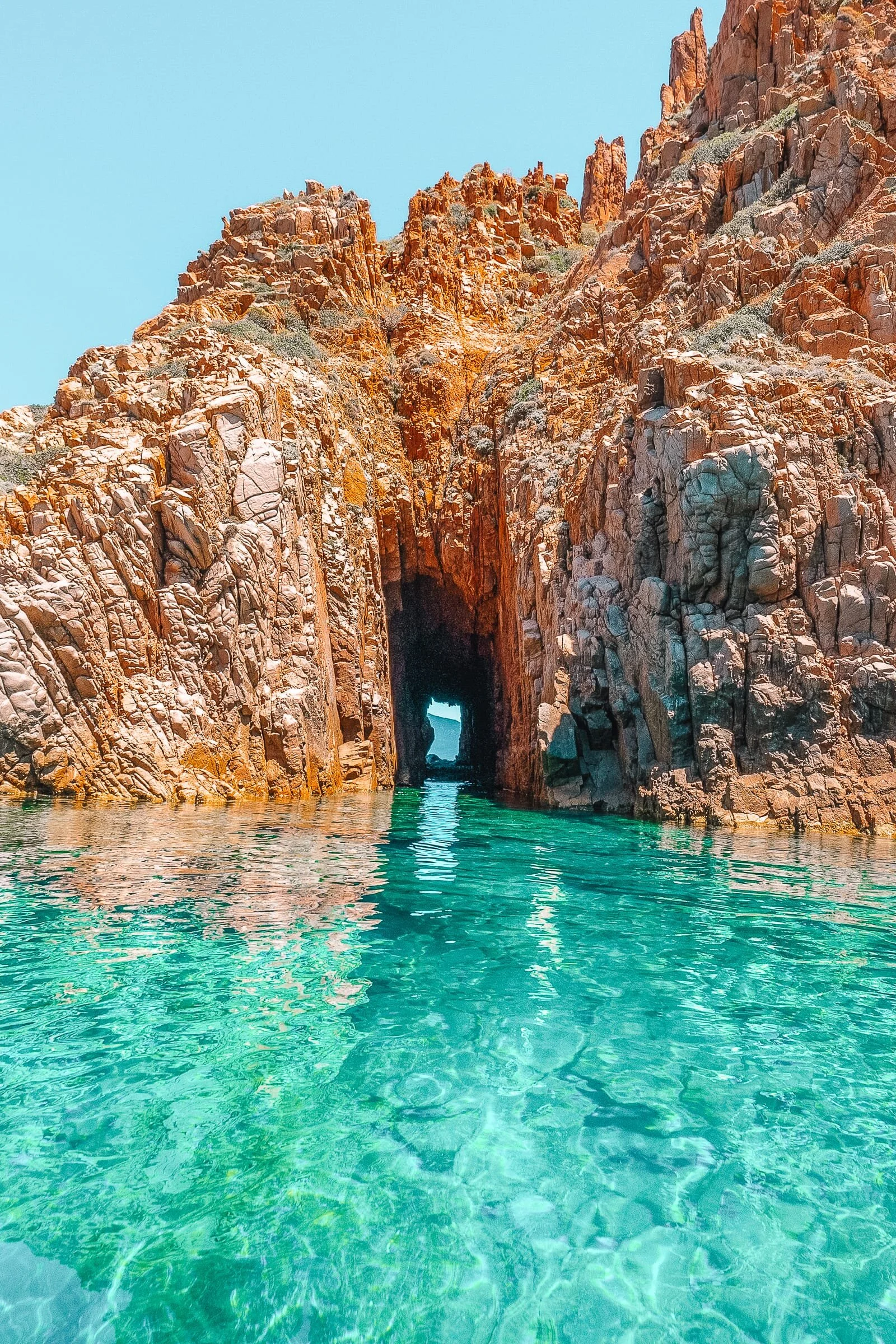
It’s always le bon moment* to be transported by la beauté* of France. Here, we present another spectacular French island, this time Napoleon’s birthplace: Corsica.

Cap-Corse.jpg
Palombaggia.jpg
Plage-de-Saleccia.jpg
La-Citadelle-de-Calvi.jpg
Calanques-de-Piana.jpg
Aiguilles-de-Bavella.jpg
King-of-Aragon-Staircase-1.jpg
476086ad4766ee5b69b6a21cd4b666de.jpg

Photography : Pinterest

*the right time | *the beauty

Swoon : Île de Ré

It’s always le bon moment* to be transported by la beauté* of France. Here, we present the charming Île de Ré on the Atlantic Coast, just near La Rochelle.

Ars-en-Ré-ile-de-Ré-2.jpg
Ars-en-Ré-ile-de-Ré-5.jpg
Ars-en-Ré-ile-de-ré-16.jpg
saint-martin-de-ré-ile-de-ré-107.jpg
Ars-en-Ré-ile-de-Ré-3.jpg
Ars-en-Ré-ile-de-Ré-7.jpg
la-flotte-ile-de-ré-7.jpg
476086ad4766ee5b69b6a21cd4b666de.jpg

Photography : claires-blog.com on Pinterest

*the right time | *the beauty

Harry’s Bar Paris

In a previous blog post, we gave the recipe for a French 75, a classic French cocktail whose effect on the imbiber was likened to a blow from a 75mm French canon. Savez-vous que* this cocktail was the creation of Le Harry's Bar in Paris? For us in the Anglophone world, the French 75 is likely the least known of the bar's original cocktail creations: the Bloody Mary, the Side Car and the Blue Lagoon all hail from the same adresse*, and the classic Italian Bellini was first served up at Harry's Bar in Venice.

So why is Harry's Bar so special? Well, for a start, the bar started life across the Atlantic in Manhattan, where, with prohibition approaching, the owner decided to dismantle and ship his beloved bar to Paris, piece by piece. Harry's soon became a deuxième chez soi* for American expats and its clubby feel and expert bartenders eventually drew non-French luminaries such as Ernest Hemingway, Humphrey Bogart, Aly Khan, Rita Hayworth and even the Duke of Windsor. And bien sûr*, when Coco Chanel is counted as a patron, you can be assured the bar has un charme certain*.

Located at 5, rue Daunou in the 2nd arrondissement, Harry’s needed a way to assure a steady stream of thirsty Americans. So in 1924, the bar's legendary Scottish manager, Harry Mac Elhone, placed the following ad in the Herald Tribune: « Just tell the taxi driver: Sank Roo Doe Noo and get ready for the worst! ». Intelligent, non*?

Indeed, a 16 year old James Bond uttered this very phrase in Ian Fleming's 1960 short story "From a View to a Kill", that .... "started one of the memorable evenings of his life, culminating in the loss, almost simultaneous, of his virginity and his notecase".

An interesting side note: since 1924, Harry's has conducted a straw poll amongst its American patrons prior to each presidential election, and have been wrong only on three occasions: 1976, 2004 and 2016. Je me demande* how they'll go in 2020?

*Did you know that | *address | home away from home | *of course | *a certain charm | *Clever, isn't it? | *I wonder

Museums of Paris

Though our travel options may be a bit limitées* at the moment, no-one can stop us from dreaming…or planning.

When Lingua Franca held our first Paris Summer School in 2019, we were absolutely blessed to have poet, translator and amateur historian Gilles Mourier as one of our tutors for the week. Gilles’ knowledge of French culture is virtually boundless, but he also has the knack of breaking down complex information into manageable (and very useful) chunks.

Take, for example, his simple way of distinguishing between three of the most famous musées* of Paris: Le Louvre, Le Musée d’Orsay et Le Centre Pompidou. It is tellement* simple and will be very useful to you in planning your dream itinéraire*.

LCCN_2020052813.png


N’OUBLIEZ PAS*: entry to many Parisian museums is free on the first Sunday of the month. Go here to dream (en français* or in English): https://www.parisinfo.com/decouvrir-paris/guides-thematiques/paris-gratuit/musees-et-monuments-gratuits-a-paris/les-musees-et-monuments-gratuits-a-paris


*limited | *museums | *so | *itinerary | *Don’t forget | *in French

Paysages de France

“La pensée voyage à la vitesse du désir.” - Thought travels at the speed of desire.

Malcolm de Chazal, Mauritian philosopher.

Here, les plus beaux paysages de France* as presented by Geo.

PS Make sure you disable your ad blocker to watch this gorgeous video.

*the most beautiful landscapes of France.

Le Carnaval

If you didn't know better, you could be thinking that life in France for Deborah is just one long fête*. In our last édition* of Le Chouchou News, Deborah explained la galette des rois*, and how this delicious 'kings' cake' is traditionally eaten on Epiphany Day.

This month, she's off to Pau's Carnaval Biarné. Pourquoi*? Glad you asked...

Quoi de mieux pour le moral qu’une vraie fête populaire ? Une fête gratuite, ouverte, qui vous aspire ! Carnaval, c’est une bouffée d’air pur dans un monde où l’on suffoque, un monde de plus en plus aseptisé et violent. Carnaval, c’est l’antidote à tous les maux, le plaisir de se laisser porter par une histoire fantastique qui mobilise tout le Béarn : celle du retour d’exil de sa Majesté Sent Pançard et de sa cour!

What better for the spirits than a true party for the people? A party that's free, open to all and lifts you up! Carnaval is a breath of fresh air in a world where we're suffocating, a world ever more sterile and violent. Carnaval is the antidote to all the bad. Let yourself be swept away by a fantastic story that brings together all of Béarn: that of the return from exile of His Majesty Sent Pançard and his court!

*party | *edition | *cake of the kings | *Why? 

À la découverte de | discover Les châteaux Cathares

À la découverte de | discover

Les châteaux Cathares

© IP3 PRESS/MAXPPP

© IP3 PRESS/MAXPPP

“Kill them all and let God sort them out”.

Fighting words indeed, allegedly uttered by the Papal legate Arnaud Almaury prior to the massacre at Béziers, the start of a crusade against the Cathars which ultimately led to the massacre of approximately half a million inhabitants of the Languedoc Roussillon region. 

So who were the Cathars and why was the Catholic Church out for blood? With the benefit of hindsight, it is easy to see that c'était joué d’avance*. The Cathars were a religious group who appeared in France in the 11th century. It is believed their ideas came from the Byzantine Empire (modern-day Turkey and Bulgaria) and travelled to France via northern Italy. They represented a threat to the all-powerful Catholic Church as their philosophy gained ground and was tolerated or even accepted by many Catholics in the Languedoc region. While the Roman Catholics believed in one all-powerful God, the Cathars had a dualistic approach to religion, believing there was a good God who had created all that was immaterial (good, permanent and immutable) and a bad God who was the god of all material things, including the world and everything in it. They believed this bad God had captured souls and imprisoned them in ‘tunics of flesh’ (i.e. the human form) through conception. The only way to escape the mortal coil and enter heaven was to become a Parfait or Parfaite (Perfects, or those who lived irreproachable lives) and thereby avoid reincarnation. They therefore believed that all non-procreative sex was better than procreative sex, believed in contraception, masturbation, euthanasia and suicide. They did not eat meat, believed in the equality of men and women and possibly worst of all, refused to pay tithes to the Catholic Church. The stage was therefore set for a bataille royale*, which indeed came to pass. Pope Innocent III called for a formal crusade, and the slaughter began.

Since the Cathars were well-liked amongst the populace of Languedoc, they were often given refuge in the hilltop châteaux* scattered around the Languedoc region. These châteaux, often built on the top of escarpments and mountains and believed to be impenetrable proved not to be so. Over a period of two generations, starting in 1208, more than half a million people were killed, and not all of them were Cathars. Such was their popularity, it was often difficult to distinguish between true Cathars and Cathar sympathisers, many of whom were members of the Catholic Church, resulting in Arnaud Almaury’s famous, if bloody-minded, proclamation.

Les Chateaux Cathares, some of which have been restored, are firmly on the tourist trail in the region now known as Occitanie, an eerie reminder of the crusades of the Medieval Era.


*it was a foregone conclusion | *battle royal | *castles | *

A LA DÉCOUVERTE DE | DISCOVER Evian-les-bains

A LA DÉCOUVERTE DE | DISCOVER

EVIan-les-bains

Even if you've not yet made it to the town itself, it is nevertheless almost guaranteed you've bought the spa town's most famous export: Evian water. 

Located on the banks of Lac Léman* in the Haute Savoie region and a truly stunning 35-minute ferry ride from Lausanne in Switzerland, Evian-les-Bains is a high-end spa town. Past visitors have included the Lumière brothers (pioneers of French cinema), Marcel Proust, King George V of England, François Mitterand and King Farouk of Egypt. Since 1994, the best female professional golfers from around the world have descended upon Evian for the prestigious Evian Championship, held in September of each year.

The French have had a longstanding interest in the curative powers of spring water, dating back to Napoleon's first French Republic. So much so, in fact, that in 1807 a scientist was despatched to analyse the waters of the region. Deeming them sufficiently pure, the construction of linking infrastructure followed soon after and before long a booming spa town was born. The town of Evian was so synonymous with water than in 1859 its name was changed to Evian-les-Bains to capitalise on its popularity for those seeking le cure*.

With this rise in popularity came the need for more and more hotels, and in 1909 the most luxurious of them all was constructed: l'Hôtel Royal Evian (pictured). Set on 47 acres of wooded grounds, the hotel comprises 150 chambres*, three restaurants, a La Prairie spa (if there's a heaven, I hope it's this), four tennis courts and a ski-shop (naturellement*). Like most things in Evian, the hotel is owned by the multi-national food products company Groupe Danone (2015 turnover €22.4 billion), whose brands include Evian, Badoit, Volvic and Activia. Interestingly, Groupe Danone is dwarfed in financial terms by one of its neighbours just across the lake in Switzerland, Nestlé S.A., whose 2015 turnover was a touch shy of €250 billion, ten times that of Danone's.

Alors voilà*, yet another French village* to add to your list of destinations.

Fun fact: in Mary Shelley's Frankenstein, Victor Frankenstein spends the first night of his lune de miel* in Évian. Sadly (and a lot less romantically) he is unable to prevent his monster from strangling his new wife Elizabeth.


*Lake Geneva | *thermal therapy | *rooms | *naturally | *So there you go | *village | *honeymoon


À LA DÉCOUVERTE DE | discover Carcassonne

À LA DÉCOUVERTE DE | discover

carcassonne

"… you have created a prison called “The Wall”, which would be better called “Hell”. Some prisoners remain in fetters … and are unable to move. They excrete and urinate where they are … Some are placed on the chevelet*; many of them have lost the use of their limbs because of the severity of the torture … Life for them is an agony, and death a relief."

Now if that's not a sales pitch for Carcassonne tourism I don't know what is. 

Thankfully the Carcassonne of today extends hospitality far kinder than that described in the extract above from a letter written in 1285 to a Dominican inquisitor describing the conditions in the Inquisition Tower.

Sitting in the verdant valley of the Aude River in the region of Occitanie, the citadel was restored at the end of the 19th century and in 1997 it was added to UNESCO’s list of World Heritage Sites. According to some sources, it is the second-most visited French site after the Eiffel Tower, which either indicates the bloodthirsty history has been forgotten, or is the very reason for the city's continuing popularity.

A friend of ours has a lovely apartment situated close to the city which is available for rent. Please remember to mention Lingua Franca when you make your booking to receive le traitement de faveur*.

*an instrument of torture | *the full treatment