How to Learn French - Name your poison.
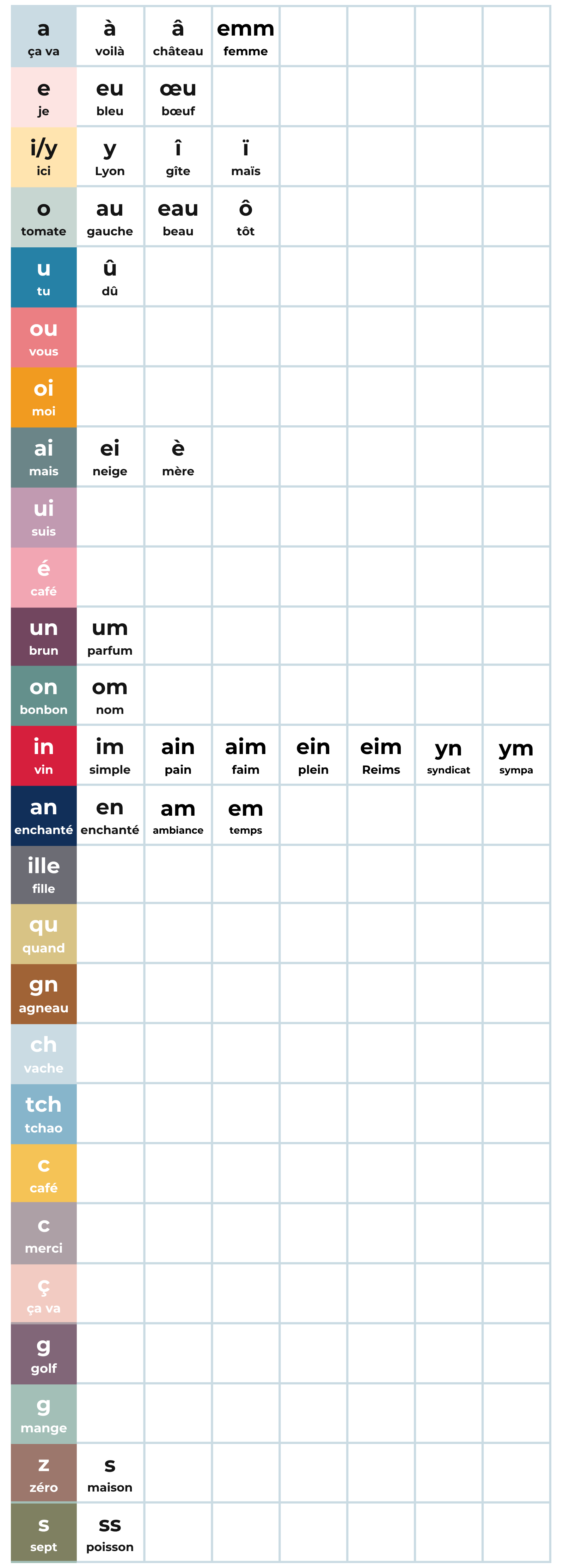
In the last post, we looked at the ‘z’ sound in French, created by (bien sûr*) a ‘z’ as in zéro but also when an ‘s’ is flanked by two vowels, as in maison*.
As it turns out, that is the exception for the letter ‘s’ in French. The default pronunciation is a hissing sound, as in the word sept (and interestingly, the word seven in English). So you can rest safe in the knowledge that (almost) every time you see an ‘s’ in French, you’ll be ssssounding like a ssssssnake.

Here are a few examples of where you may find them:
At the start of a word. Any ‘s’ beginning a word (before a vowel) hisses.
For example:
salut
soleil
septembre
sac
savoir
When doubled between vowels. The doubling of the letter is there specifically to keep the sound as a hissing ‘s’ but more on that later.
For example:
poisson
dessert
assez
classe
poussin
tasse
When it sits next to a consonant. If an ‘s’ butts up against another consonant (on either side) it hisses.
For example:
stade (before)
espoir (before)
veste (before)
reste (before)
danse (after)
casque (before)
penser (after)
absolu (after)
As you know, a general rule in French is that if a word ends in a consonant, it is mute, and that includes the letter ‘s’. But where would be the fun if there weren’t the odd exception ou deux*?
When a final ‘s’ is actually pronounced.
Watch out for these ones:
fils
bus
ours
mars
tennis
sens

Where things can become tricky (or funny…okay, embarrassing) is if you accidentally make a buzzing sounds (like a ‘z’) instead of a hissing ‘s’ sound. In some instances it can actually completely change the meaning of the word. If you do make the mistake, fear not, it’ll likely just elicit a small smile from a native French speaker. However, there is one instance where it may convey something more illicit, so if you’re keen to avoid that one, read on…
poisson (fish) vs poison (poison)
coussin (cushion) vs cousin (cousin)
dessert (dessert) vs désert (desert)
Imagine the following:
”Ce poison est délicieux !”
(This poison is delicious!)
”Tu peux me passer un cousin ?”
(Can you pass me a cousin?)
”Pas de désert pour moi !”
(No desert for me!)
There are many more like this, but unless you want to find yourself in a fairly awkward position, I’d recommend you pay special attention to the following pair:
baisser (to lower) vs baiser (For Unlawful Carnal Knowledge)
(By the way, apparently the etymology of this very expressive word does not include the acronym above, but it’s fun, isn’t it? I believe these made-up-after-the-fact acronyms are called ‘backronyms’ in grammatical terms).
I won’t disturb you with an example phrase for this one, but there is some mitigating information. Baiser as a verb does indeed mean to engage in sexual relations, but as a noun, un baiser simply means a kiss, so you never know, you may one day find yourself accidentally-on-purpose making this petite erreur* !
Bon courage, les Chouchous* !
*of course | *house | *or two | *little mistake | *Good luck, Teacher’s Pets