Lingua Franca | Award-Winning French Lessons Brisbane

French lessons, events & trips

FRENCH LESSONS EVENTS & GIFTS

Filtering by Category: French culture

A bit of friction...

I’m pretty sure I’m not alone when I say that one of the petits plaisirs* I enjoy when travelling in a French-speaking country is a trip to the local pharmacie*.

There’s something about seeing products that I’ve long considered produits de luxe* being sold to le grand publique* at extremely reasonable prices.

There there are the petites découvertes* involving products we simply don’t have here. One such discovery took place a few years ago when we were on a trip to la Nouvelle Calédonie*. I’m a sucker for a good-looking label, so when I came upon my first bottle of Friction de Foucaud, I couldn’t part with my sous* fast enough.

It was only when I got back to the hotel that Deborah, whom some of you know, told me that it was a French product reeking of nostalgia in the vein of Quick-Eze or Vicks Vapor Rub for those of us who grew up here.

She explained that it was mostly used as a refreshing tonic in hot weather or as a quick and effective pick-me-up for those days that just seem to drag.

it was created in 1946 by Madame Lucienne Merle. Inspired by the climate she experienced living in French Indochina (now Cambodia, Laos and Vietnam) this secret formula, which has remained unchanged for 70 year, offered ‘sovereign relief from tiredness’.

Since its creation, and in an effort to penetrate a larger market, the range has been extended to include roll-ons, foot creams and thigh gels. Its popularity was given a boost in the 80s when tennis player Yannick Nosh extolled its virutes.

According to the Friction de Foucaud website:

”Vous serez séduits à votre tour en l’utilisant, par le mariage d’huiles essentielles de citron, d’orange, de thym, de romarin, mêlées à des extraits naturels de camphre et de menthol qui donnent à la friction cet effet rafraîchissant et énergisant.”

”You, too, will be seduced when you use it, by the combination of essential oils such as lemon, orange, thyme, and rosemary, mixed with natural extracts of camphor and menthol with give the friction its refreshing and energising effect.”

*small pleasures | *pharmacy | *luxury products | *the general public | *little discoveries | *New Caledonia | *cash

C'est délicieux!

If you just can’t wait for the Alliance Française French Film Festival to come to town, there is a stop-gap measure available to you.

Délicieux* was released in Australian cinemas on 26th December and though it is still showing, ne tardez pas* if you’re keen to catch it.

A historical comedy starring Isabelle Carré and Grégory Gadebois, Délicieux tells the tale of a talented and passionate chef, whose mistreatment at the hands of a grandiose duke eventually leads to the creation of France’s very first restaurant.

Enjoy la bande annonce*.

*Delicious | *don’t waste any time | *the trailer

La Bûche de Noël*

Source : marieclaire.fr

Savez-vous que*…

La Bûche de Noël is the traditional cake served at Christmas in France. If you’ve been interested in French language, culture or cuisine for a little while, you may very well already know this. However, do you know the origins of this most recognisable of desserts français*?

Tradition has it that on the longest night of the year (le solstice d’hiver*), French pagans would burn an enormous log to stave off the freezing temperatures, bien sûr*, but also as an offering to the gods to ensure a plentiful harvest in the coming year.

While it’s unlikely you’ll want to recreate the heat of a burning log in our sweltering southern climes, you may wish to set yourself the challenge of making this spécialité hivernale*. Voici la recette* (it’s in French but if you need some help, just click on any term for the English translation. Bon courage!*

*The Christmas Log | *Did you know that | *French desserts | *the winter solstice | *of course | *winter specialty | *Here’s the recipe | *Good luck!

Christmas shoes

Savez-vous que*…

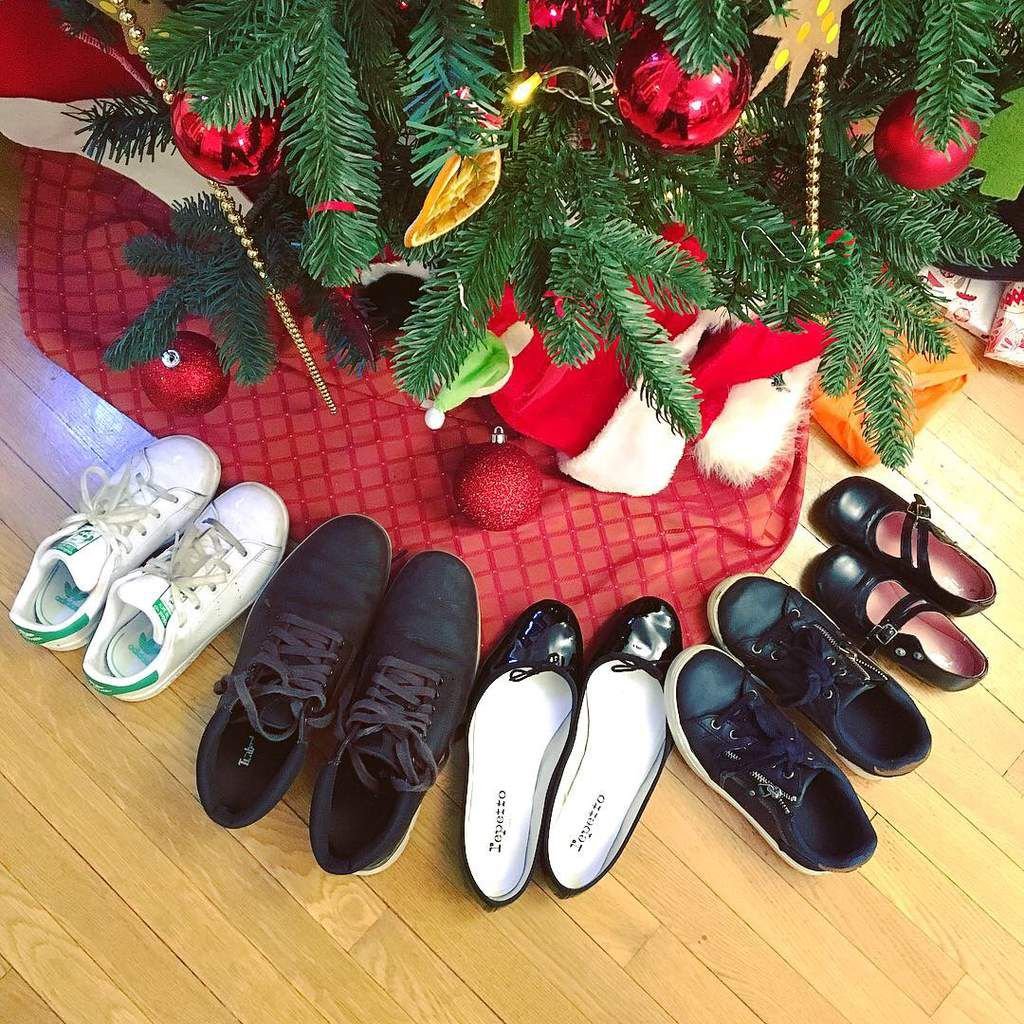
French children put out their chaussures* instead of their stockings in the hope that Père Noël* will fill them to the brim with cadeaux*?

Voici l’histoire*, thanks to French leather goods site Cirage et Compagnie*.

On raconte qu'un jour qu'il passait devant la maison de trois petites sœurs pauvres pour se réchauffer devant la cheminée, Saint Nicolas leur offrit quelques pièces de monnaie pour les aider.

Les piécettes glissèrent dans les chausses que les fillettes avaient mis à sécher devant le foyer de la cheminée. Ce n'est qu'après sa visite, qu'elles découvrirent la surprise en se réveillant.

Les bonnes choses se sachant vite, la rumeur s'est répandue et depuis, le soir du réveillon, chacun met ses chaussures ou ses chaussettes devant la cheminée ou bien au pied du sapin avec l'espoir d'y trouver quelque chose le lendemain matin.


It is said that once upon a time, as Saint Nicholas passed by the front of the house of three poor little sisters, he asked to warm himself in front of their fire and offered them a few coins to help them out.

He slipped the little coins in the pantaloons that the young girls had placed to dry in front of the chimney. It was only after his visit, when they woke up the next morning, that they discovered the surprise.

Good news travels fast so the rumour got around and ever since, on Christmas Eve, children put their shoes or slippers in front of the chimney or even at the foot of the Christmas tree in the hope of finding something the following morning.

Mignon, non*?

*Did you know that | *shoes | *Father Christmas | *presents | *Here’s the story | *Wax & Co. | *Cute, isn’t it?

Père Fouettard

Les gens* often lament that things are just not like they used to be, and in many cases, it’s a fair complaint. The world seems to be changing at warp speed and it’s tempting to want to grasp on to the familiar.

However, there are certaines circonstances* when change is a positive thing and Père Fouettard is one of them!

No longer d’actualité* (you’ll see why soon), Père Fouettard (Father Whipper or Old Man Whipper) is a fictional (we hope!) character who accompanies Père Noël* on his rounds during Saint Nicholas’ Day on the 6th December. The story goes that while jolly Père Noël is busy handing out gifts aux enfants sages*, Père Fouettard dispenses lumps of coal to the naughty children. Fouetter is the verb ‘to whip’ in French and this is where this villain gets his name - he’s known to whip those rascals who have not been on their best behaviour all year.

As though that’s not disturbing enough, an alternative tale goes like this:

“An innkeeper (or a butcher in other versions) captures three boys who appear to be wealthy and on their way to enrol in a religious boarding school. Along with his wife, he kills the children in order to rob them….They drug the children, slit their throats, cut them into pieces, and stew them in a barrel. St. Nicholas discovers the crime and resurrects the children. After this, Père Fouettard repents and becomes St Nicholas' partner.”

Quelle horreur
*!

Source: Wikipedia

*People | *certain circumstances | *in common usage | *Father Christmas | *to the good children | *What horror!

Le Réveillon de Noël*

Though today only about 15% percent of French citizens declare themselves practising Catholics, there was a time towards the end of the 19th century when that number was 98%.

This could explain the French tradition of celebrating Christmas on the 24th December with a very late dinner, usually eaten upon their return from Mass and often kicking off at about midnight.

Naturally, things have changed since then and many families celebrate with an earlier dîner* on Le Réveillon de Noël with some even waiting for the 25th to celebrate.

While in the most religious of families the Christmas meal was deliberately simple (for example une soupe aux légumes*) as a reminder that Jesus was born into poverty, today the meal is often a veritable festin de Balthazar* and can include foie gras*, huîtres*, queues de langoustines*, saumon fumé*, champagne* and the traditional bûche de Noël, of course.

Délicieux*!

*Christmas Eve | *dinner | *vegetable soup | *feast fit for a king | *foie gras | *oysters | *lobster tails | *smoked salmon | *champagne | *Christmas log | *Delicious!

Cher Père Noël*

Savez vous que…*

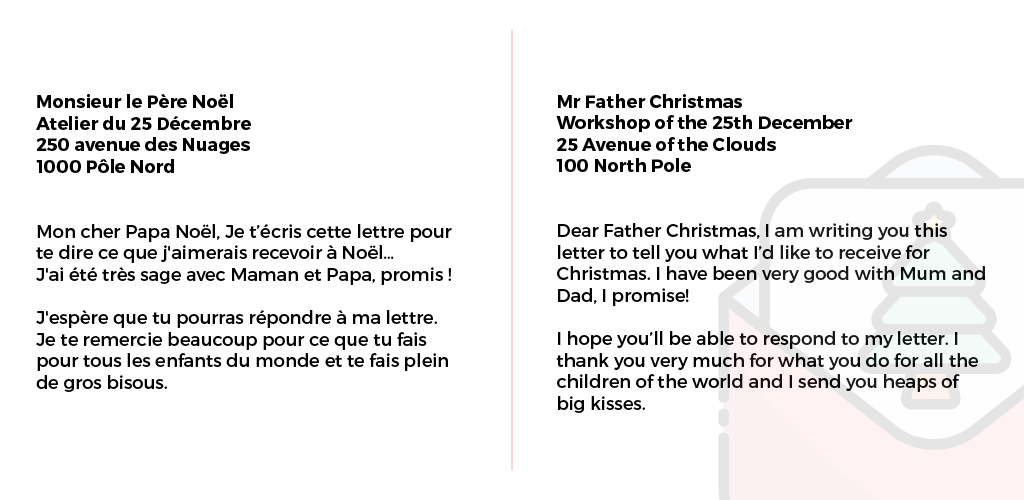
Since 1962 it has been French law that every letter written to Père Noël* will be responded to in the form of a carte postale*? C’est vrai*!

La Poste (the French version of Australia Post) even has several versions of suggested texts to help les enfants* express their dearest wishes, as well as various addresses, all of which will ensure accurate delivery. C’est tellement mignon*. Here’s the full story.

*Dear Father Christmas | *Did you know that… | *Father Christmas | *postcard | *It’s true | *children | *It’s so cute

La rentrée

You may have heard some talk about la rentrée* earlier this month, as French children were preparing to head back to school.

While la rentrée definitely describes the return to school after the long summer holidays in France, it is also used more broadly among the rest of the population.

In August, virtually the whole of France slows to a crawl, with not only schools but many businesses, restaurants and even the government shutting up shop for the hottest of the summer weather.

Almost everyone takes a holiday away from their home town. The most privileged may eye off international experiences and those on more modest budgets may faire du camping*. Regardless of the destination, le but* is to leave behind le quotidien* for a chance to changer les idées*. It’s for this reason that la rentrée holds such weight in the French culture. Come the start of September, it’s time to pack away the togs, get ready for school or work and look forward to a new year.

Whether that evokes excitement or apprehension probably rests on the quality of les vacances…*

*start of the school year | *go camping | *the aim | *the everyday | *to take one’s mind off something | *the holidays

Le Bal des Pompiers

In July’s issue of Le Chouchou News we promised you a story about the famous Bal des Pompiers* which takes place on the evening of La Fête Nationale* which, as you know, is le 14 juillet*.

So how did it all start?

In 1937, bystanders from main parade on the Champs Élysées followed some of the firemen back to their caserne* in Montmartre. The fire chief made the fateful decision to open the doors to that tenacious group and a party ensued.
More than 80 years later, the Bal des Pompiers is still going strong and is a much-anticipated annual event, perhaps even more so than the parade itself for les fêtards*, at least.

D’où vient le Bal des Pompiers? | Where does the Firemen’s Ball come from?

*The Firemen’s Ball | *Bastille Day | *on the 14th July | *fire station | *party animals