Lingua Franca | Award-Winning French Lessons Brisbane

French lessons, events & trips

FRENCH LESSONS EVENTS & GIFTS

Filtering by Category: Vocabulary

A quest for happiness

Le bonheur* is both a beautiful French word and a noble pursuit, one which French philosophers and writers have pondered for centuries.

Grab a coffee and take the time to reflect sur ces bonnes paroles*.

  1. I recognised my happiness by the sound it made in leaving. - Jacques Prévert

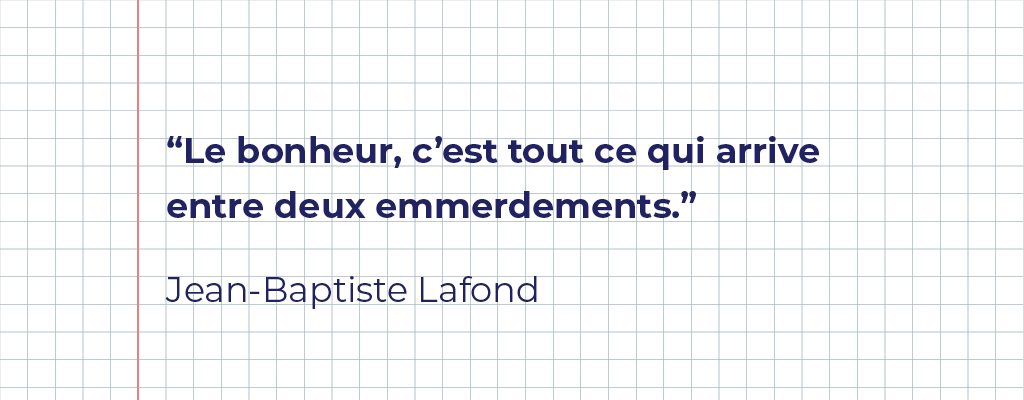
  2. Happiness is everything that happens between two hassles. - Jean-Baptiste Lafond

  3. True happiness costs little: if it’s expensive, it’s not the right type. - François René de Châteaubriand

  4. Happiness is continuing to desire what one possesses. - Saint Augustin

  5. If you want to understand the word happiness, you need to hear it as a reward and a not a goal. - Antoine St-Exupéry

  6. To dream, that’s happiness. To wait, that’s life. - Victor Hugo.

*Happiness | *these words of wisdom

Madeleine de Proust

Talk turned to madeleines* this week at Lingua Franca, which in and of itself, is not a rare occurrence.

However, for once we weren’t rhapsodising about their buttery delights, rather the talk was of les souvenirs* and what provokes them. Pourquoi*?

Because Marcel Proust, a privileged but poorly French writer, who was confined to his bed for much of his life, wrote of an événement déclencheur* in the first volume of his classic text À la Recherche du Temps Perdu*. That event was being handed a madeleine and une tasse de thé* by his mother as he was convalescing, and the taste of that delicious madeleine immediately transported him back to his childhood, when his Tante Léonie* would offer him a taste of hers after she’d dipped it in her lime-flower tea.

With the work spanning seven volumes and containing more than a million words, Proust is not known for his vitesse*. In fact, the madeleine incident occurs only on page 95, so it’s fair to say he’s not a man in a hurry. Nonetheless, the scene is widely recognised as the point where the book really takes off, as detailed in this excellent article from the Penguin website.

Proust had his fans (Virginia Woolf, Grahame Greene, Victor Nabakov) as well as his his detractors (Somerset Maugham, Kazuo Ishiguro) but it’s unlikely any of them would turn down a petite madeleine* if offered by a caring and affectionate aunt.

If all this talk of les pâtisseries* has served to réveiller vos papilles*, voici la recette* again.

Un grand merci à Kathryn* who brought this delightful sujet* to the table at her class on Wednesday night.

*a traditional small cake from the Lorraine region | *memories | *Why? | *trigger event | *In Search of Lost Time | *a cup of tea | *Aunt Léonie | *speed | *little madeleine | *pastries | *wake up your tastebuds | *here is the recipe | *A big thank you to Kathryn | *subject

Brave New Word

In researching portmanteau words for a recent blog post, I came across this 2011 article all about another set of words: les néologismes*.

Where a portemanteau is created by the merging of two or more existing words (think ‘brunch' or ‘brainiac’ in English and ‘franglais’ and ‘courriel’ in French), a neologism is a brand new word, freshly invented….and often created by merging two or more existing words. So in theory all portmanteaux started life as neologisms but not all neologisms are portmanteaux, si ça a du sens*...

Interesting to see that the verb ‘textoter' (to text) is still waiting to take off more than ten years after the article’s publication. It must be said, it doesn’t exactly trip off the tongue, though, does it?

Dommage* about ‘watture’ though, 2013’s winner. Created by combining the English word ‘watt’ and the French word for car (voiture), it’s a new word for an electric car. Not only intelligent* but très utile* these days, non*?

Enjoy.

*neologisms | *if that makes sense… | *Shame | *clever | *very useful | *don’t you think?

Portmanteau words

If, upon hearing the word portmanteau, your mind immediately conjures a vintage Louis Vuitton steamer trunk, félicitations*, you know your luxury leather goods brands. And you’re not wrong, either. The hinged trunk that opens out into a travelling wardrobe is indeed called a portmanteau, and possibly hints at its second meaning as well.

A portmanteau is the combination of two words to create a new word with its own meaning. Portmanteau itself is such an example. Porter (meaning to carry or wear) and manteau (meaning coat) come together to give us the word that describes a mobile wardrobe. While in English we call this combination a portmanteau word, in French it’s called a mot-valise, or word suitcase, which makes sense in a complicated way.

We use portmanteau words all the time in English. Some are so ubiquitous we may not recognise them as such: electrocute (electricity + execute), smog (smoke + fog) and fortnight (fourteen + night). Others are more obvious (and amusing) in their origins: affluenza (affluent + influenza), hangry (hungry + angry) and Brangelina (Brad Pitt + Angelina Jolie) spring to mind.

The French have at least as many portmanteaux as we do in English. Below, a short list of our favourites.

*congratulations


A different type of crèche.

Savez-vous que*…

Though we use the word crèche in English to mean a nursery where babies and young children are cared for during the working day, there is another meaning related to Noël*.

Une crèche* is also the French word for a nativity scene, as it comes from the Old French cresche or ‘crib’.

Not up to speed on your French religious figures’ vocab? N’ayez crainte*, we’ve got you covered.

*Did you know that | *Christmas | *a nativity scene | *Never fear

Let’s get straight to the point.

Allez, allez*! Take 10 minutes to learn these evocative phrases which all use the verb aller*.

*Go, go! | *to go

It’s all back to front.

As a child you may have dabbled in a bit of pig latin, but did you know the French have their own secret language called verlan?

The name verlan itself is in fact an illustration of how this very-commonly used langage* works. To create a word in verlan, we must first identify the sounds of the syllables. The next step is to reverse their order. Attention*, you’re not reversing the letters, you’re inverting the sounds of the syllables.

For example, ‘ver-lan’ is made up of the sounds ‘lan-ver’, and l’envers in French means ‘backwards’. Tu piges*?

If not, don’t worry, it’s not immediately obvious, c’est sûr*, so we’ve given you some more examples below.

Interested in this sort of thing? If you live in Brisbane, we’ll be talking more about this little French quirk at our upcoming P’tit Week-end Immersion (more details here).

If you’re busy or don’t live in the area, please enjoy this video instead, by French artist Stromae, whose very name is verlan for Maestro. Clever, non*?

*language | *Be careful | *Do you get it? | *that’s for sure | *isn’t it?

Tu me manques

If you’re very, very lucky, one day you might wish to tell someone in French that you miss them. Encore mieux*, they might tell you that they’re missing you. Romantique, non*?

Romantique, oui*, but it’s not as easy as you might think.

The verb ‘to miss’ is manquer in French. So far so good, you may think, but this is where it starts to get a little tricky.

In English we say “I miss you". In French though, the structure is the equivalent of “You are missing to me”. That is, in French, the object of your affections takes centre stage, whereas in English it’s all about the person doing the missing.

LCCN_20210910_IMissYou_2.png

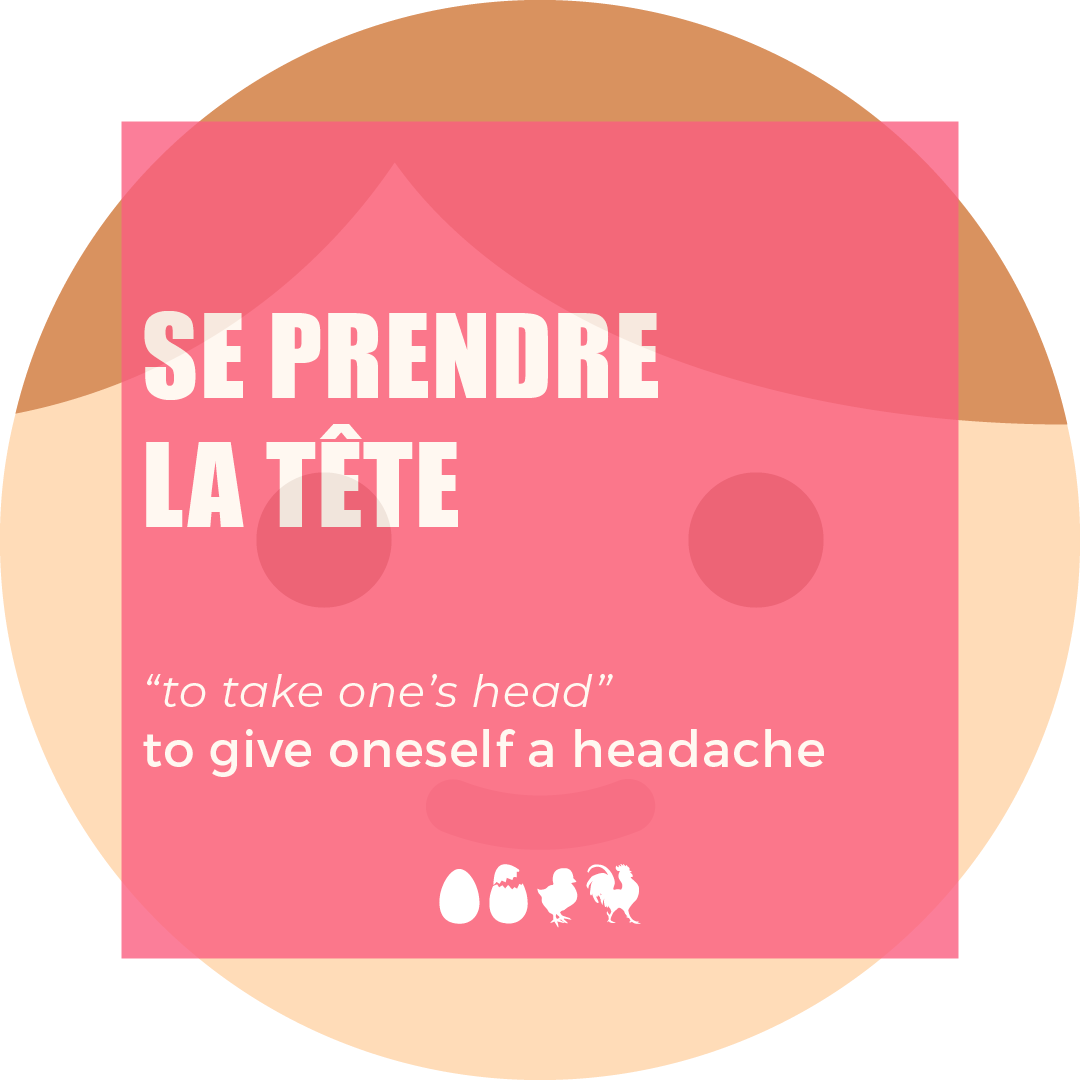
It may help to think of the verb manquer as ‘to lack’. I find this help me come to grips with the fact that we use an indirect pronoun (to me) rather than a direct one (me). Ne prends pas la tête*, though. If you do structure your sentence in the English way, you’ll just be telling the person that they’re lacking to you, which could spark a conversation all of its own.

LCCN_20210910_IMissYou_3.png

Of course, you could always turn this phrase into a question if you wanted to ask someone if they were missing you.

LCCN_20210910_IMissYou_4.png

C’est clair*? Maybe not right now, but you will wrap your mind around this counterintuitive little gem in time, c’est promis. One of our Chouchous*, Nora, found this song which she swears has helped her to just that. Merci encore*, Nora.

*better still | *Romantic, isn’t it? | *Romantic, yes | *Don’t worry too much | *Is that clear? | *I promise | *Teacher’s Pets | *Thanks again

Maman a dit que je peux

Many people struggle to keep the French modal verbs vouloir*, pouvoir* and devoir* straight in their heads.

At Lingua Franca, we teach that:

LCCN_20210910_PVD.png

This charming French publicité* for condoms gives us a much more interesting way to remember the verb pouvoir, though. The little boy’s constant refrain is “Maman a dit que je peux” (Mum said I can), reminding us that pouvoir is as much about permission as it is possibility, and this boy is seemingly granted permission around the clock!

Tellement mignon.*

*to want/wish | *to be able to/can | *to have to/must | *ad | *So cute

La rentrée

You may have heard some talk about la rentrée* earlier this month, as French children were preparing to head back to school.

While la rentrée definitely describes the return to school after the long summer holidays in France, it is also used more broadly among the rest of the population.

In August, virtually the whole of France slows to a crawl, with not only schools but many businesses, restaurants and even the government shutting up shop for the hottest of the summer weather.

Almost everyone takes a holiday away from their home town. The most privileged may eye off international experiences and those on more modest budgets may faire du camping*. Regardless of the destination, le but* is to leave behind le quotidien* for a chance to changer les idées*. It’s for this reason that la rentrée holds such weight in the French culture. Come the start of September, it’s time to pack away the togs, get ready for school or work and look forward to a new year.

Whether that evokes excitement or apprehension probably rests on the quality of les vacances…*

*start of the school year | *go camping | *the aim | *the everyday | *to take one’s mind off something | *the holidays

French animal noises

Savez-vous que*….

Animal noises around the world are not the same? This is just the cutest little video which will have you rethinking the validity of our ‘oink oinks’ and ‘cock-a-doodle-dos’.

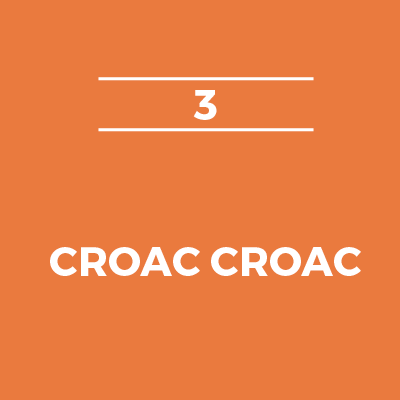
See if you’re able to match up the French noises for the various animals below. The first person to contact us with a perfect score will win a Petit Guide de Pronunciation*. Bon courage*!

Cock-a-doodle-do • quack quack • oink oink • coo coo • ribbit ribbit • cheep cheep

LCCN_20210819_Animaux4.png
LCCN_20210819_Animaux2.png
LCCN_20210819_Animaux5.png
LCCN_20210819_Animaux3.png

PS If you’re having difficulty even working out the English, the video is where it’s at!

Lingua Franca Petit Guide de Prononciation

Lingua Franca Petit Guide de Prononciation

*Did you know that | *Little Pronunciation Guide | *Good luck!

Presque amis*

You may have heard of faux amis* in French. These are words that look so similar to English words that they lull you into a false sense of security, having you believe you understand them without even opening your dictionary app. In the past, we’ve told you about blessé (not blessed but hurt), le bras (not a bra but the arm) and les préservatifs (not preservatives but condoms).

But there’s another group of words that may cause you even more trouble because they’re just a bit off. It’s difficult to explain and probably easier to just experience for yourself, so here is a little list for you right below.

*Almost friends

Tirer la Tronche

Je tire la tronche.

Recently, while (re)watching Episode 1 of The Parisian Agency, I was reminded of a great little phrase I’d heard the first time around. Tirer la tronche means to be unhappy, to pout or to brood. If you’ve seen the series, Valentin says it to his mère* just after he gets off the phone with Lisa, the lingerie designer, having just broken the news that someone else has put an offer in on the property she’d had her eye on.

Elle tire la tronche*,” he says.

Even without understanding exactly what he says, you can tell from their short conversation and Valentin’s body language that his client is not happy. This is yet another benefit of watching series in French - you’ll pick up so much from the many visual and auditory clues on offer. Tirer la tronche is just one of the new expressions I learned from this series and there are dozens more to be had. Croisons les doigts* for a second series!

*mother | *She’s pouting | *Let’s cross our fingers

Mika: Elle me dit

Here at Lingua Franca, our students have a variety of learning styles. We try to cater to all styles as much as we possibly can, but there is no replacement for the ideas our students bring to us about their preferred ways of learning.

Recently, one of our students, Nora, was telling her class that she’d found a song that helped her learn the placement of direct and indirect object pronouns. This is an intermediate-level subject, so for you débutants* out there just know that these pronouns are a future pleasure (!) laying in wait for you.

Before I get to Nora’s song, though, which involves a double object pronoun nightmare…pardon* “challenge”, here’s a song that shows the placement of a single object pronoun, in this case, the indirect pronoun me, meaning ‘to me’.

LCCN_20210623_Pronouns.png


The song is called Elle me dit and translates as ‘She says to me’. Literally, it’s ‘She to me says’, as object pronouns are placed between the subject (elle) and the verb (dit) as you’ll hear over and over in this song.

By the way, for les curieux*, here’s a link to the lyrics in both French and English.


Also, look out for a star turn by celebrated French actress Fanny Ardant, who appeared in a blog post last month and whom many of you will know from 2019’s Belle Époque*.

Now here’s Nora’s chanson préférée*, which contains not one, but two, object pronouns. Called Je te le donne, it translates as ‘I give it to you’, or literally ‘I to you it give’. Clair*?

Though the placement and order of double object pronouns can be very complicated, this song gives you an idea of a rule that works for the most part (if you’ve been learning French for even the briefest times, you’ll know it’s not afraid of an exception, like all languages). That rule is this:

Indirect before direct and placed between the subject pronoun and the verb.

LCCN_20210623_Pronouns2.png


PS For those of you who are très, très enthousiastes*, here is the exception:

If both of your object pronouns refer to third person objects, the order is reversed. That is, direct before indirect. For example: Je le lui dis. I say it to him/her. Or literally, I it to him/her say.

*beginners | *sorry | *curious people | *Beautiful Era | *favourite song | *Clear? | *very, very keen

Expressions françaises

Some French expressions can be translated directly into English and retain their exact meaning. For example, the saying “better late than never” is mieux vaut tard que jamais in French.

Others, however, are more difficult to reconcile with their French counterparts, and therefore much more fun, too.

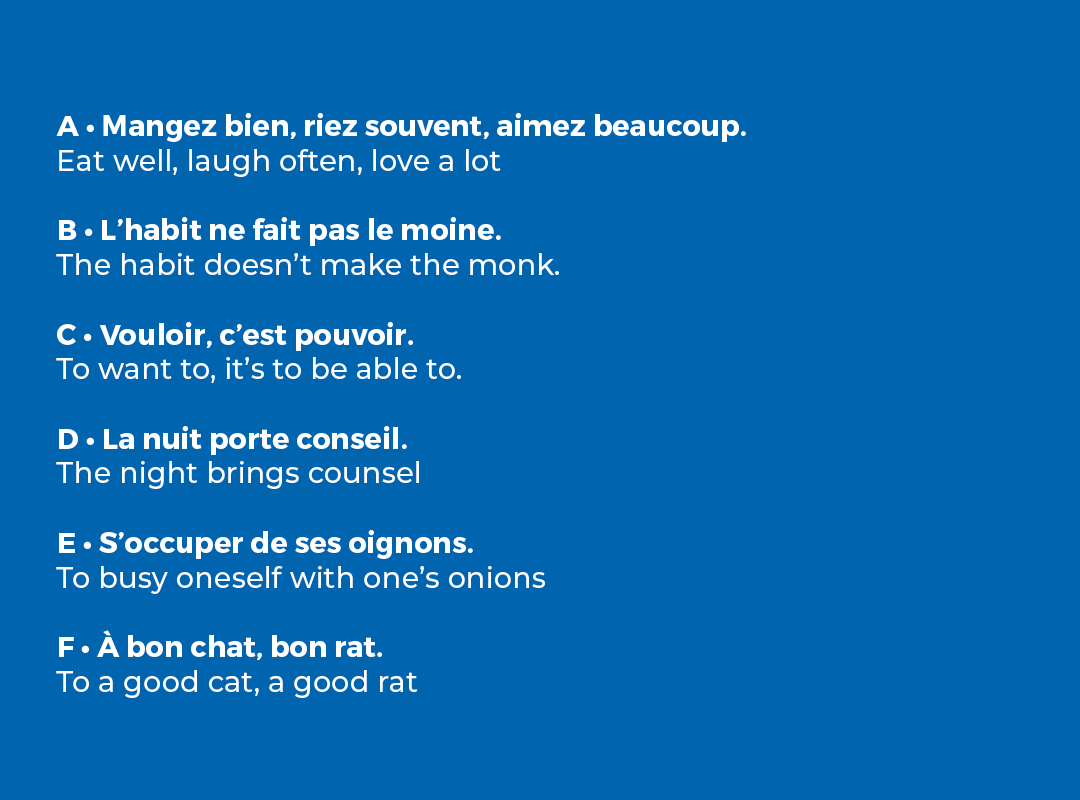
Allons-y*! See if you’re able to make le lien* between the following French and English sayings.

LCCN_20210623_Phrases2.png

*Let’s go! | *the link

A real name changer

You may know that Snow White is called Blanche Neige in French, but could you name her sept petits amis*?

As a reminder, in English they are: Grumpy, Dopey, Doc, Happy, Bashful, Sneezy and Sleepy.

Can you match the images to the French versions of their names? Bon courage*!

LCCN_20210528_7Dwarves2.png

*seven little friends | Good luck

What is a cognate?

A cognate is a word that comes from the same origin as a word from a different language. Below, three of our favourites.

LCCN_202104267.png

MIRAGE

Both French and English use the word ‘mirage’ to describe the bending of light which produces an optical illusion, but do you know where the word originally comes from? It’s most likely via the Latin word ‘mirare’ (to admire/gaze) which is where we get the word ‘mirror’. In French we have the reflexive verb ‘se mirer’ which means ‘to gaze at oneself/to be reflected’, hence mirage. There is, though, a chance it comes from the Latin word ‘mirus’ (wonderful) which is where we get the word miracle. Cool, non*?

HORS D’ŒUVRE

Un œuvre in French is ‘a work’, so to say 'a work of art' we say un œuvre d’art. Even in English we can use the word ‘œuvre’ to describe the body of work of an artist. As we know, the French take la cuisine* very, very seriously and if you’ve ever had a sublime French meal you’d probably be happy to consider the chef un or une artiste*. So, since hors means ‘outside of’, it makes sense that both languages call a small savoury dish, typically served as an appetizer, un hors d’œuvre, since it arrives at your table outside the main œuvre d’art which is of course le plat principal*.

POT POURRI

If you’re a person of un certain âge* you’ll remember the pot pourri craze that swept the nation in the eighties. No domestic surface was safe from the little terracotta pots of dried petals we used to add a touch of country style to our homes.

I wonder if we would have been quite so keen had we known the verb pourrir at the time which means ‘to rot’. Yes, that’s right, pot pourri translates to rotten pot which somewhat takes away the appeal, non*?

*Cool, isn’t it? | *cooking | *an artist | *the main course | *a certain age | *doesn’t it?

Funny expressions with avoir

If you’ve studied French for a while, you’ll know that the verb avoir* ranks just behind être* as the language’s most useful verb.

When we’re just starting out, we tend to use avoir to talk about our friends, family and age.

J’ai deux sœurs et un frère.
I have two sisters and a brother.

Je n’ai pas d’enfants
I don’t have any children

J’ai 34 ans.
I am 34 years of age.

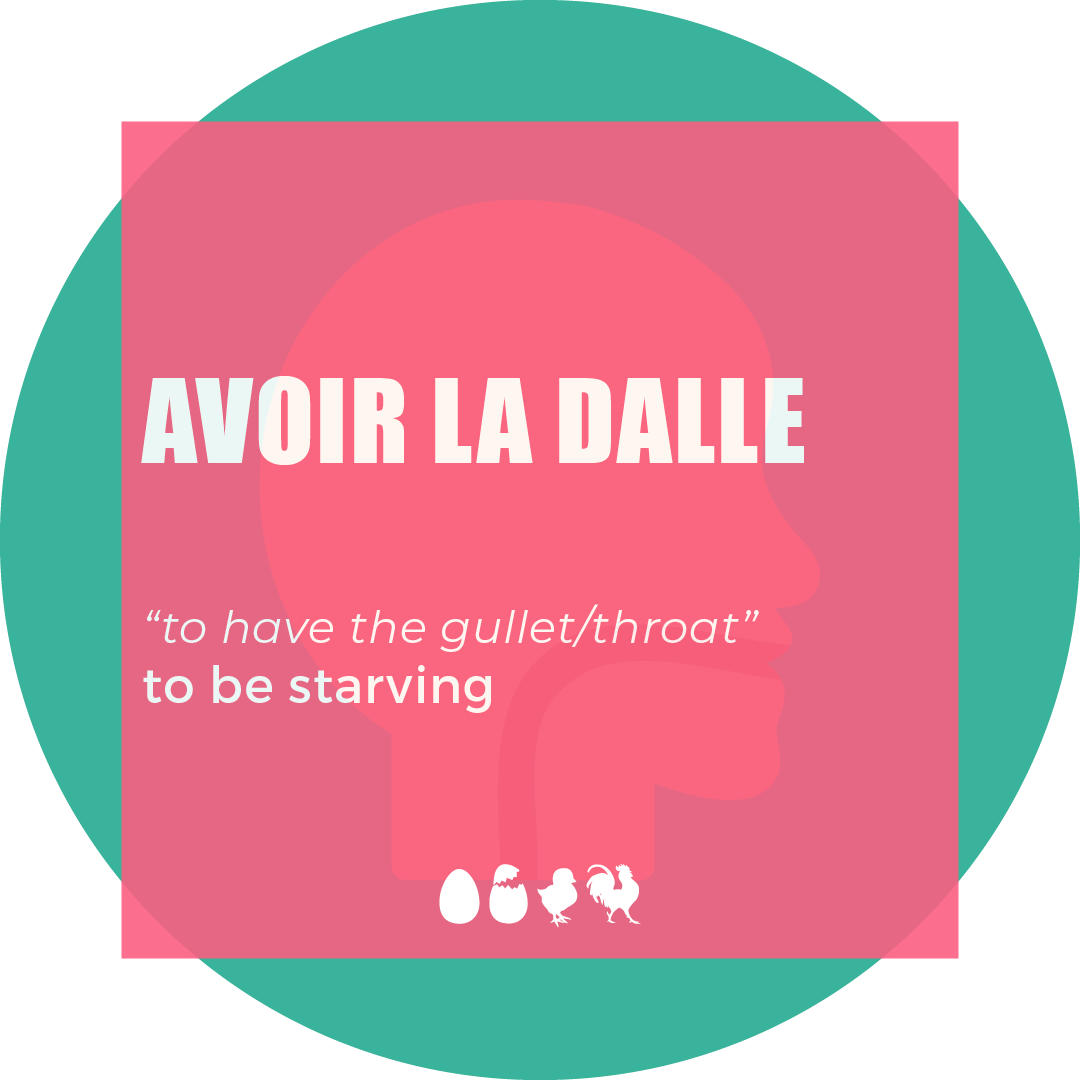
So as you can see, though avoir is worth its weight in gold, its application can sometimes seem a little…banal*. With that in mind, we’ve rustled up the following expressions, all of which contain avoir, as well as just a touch more personnalité*

LCCN_20210329_Avoir.png
LCCN_20210329_Avoir3.png
LCCN_20210329_Avoir5.png
LCCN_20210329_Avoir2.png
LCCN_20210329_Avoir4.png
LCCN_20210329_Avoir6.png

*to have | *to be | *pedestrian | *personality

Funny reflexive verbs

Reflexive verbs are rarely fun, but we find using them through colloquialisms makes them a little more intéressants*.

So, what do pelles*, sucettes* and encre* have in common? Not a lot on the face of it, but they do all make an appearance in these strangely funny phrases.

If you can’t remember what reflexive verbs are (or haven’t learned about them yet), they are verbs where the subject and the object are the same, so the action is ‘reflected’. That is, the person doing the action also receives the action.

For example :

Je me lave.

“I wash myself” is reflexive as I’m doing and receiving the washing.

Je lave la voiture.

“I wash the car” isn’t reflexive as I’m doing the washing but not receiving it.

IG_20210210_.png
IG_20210210_2.png
IG_20210210_5.png
IG_20210210_3.png
IG_20210210_4.png
IG_20210210_6.png

*interesting | *shovels | *lollipops | *ink