How to Learn French - Consonant craving
Bonjour tout le monde*!
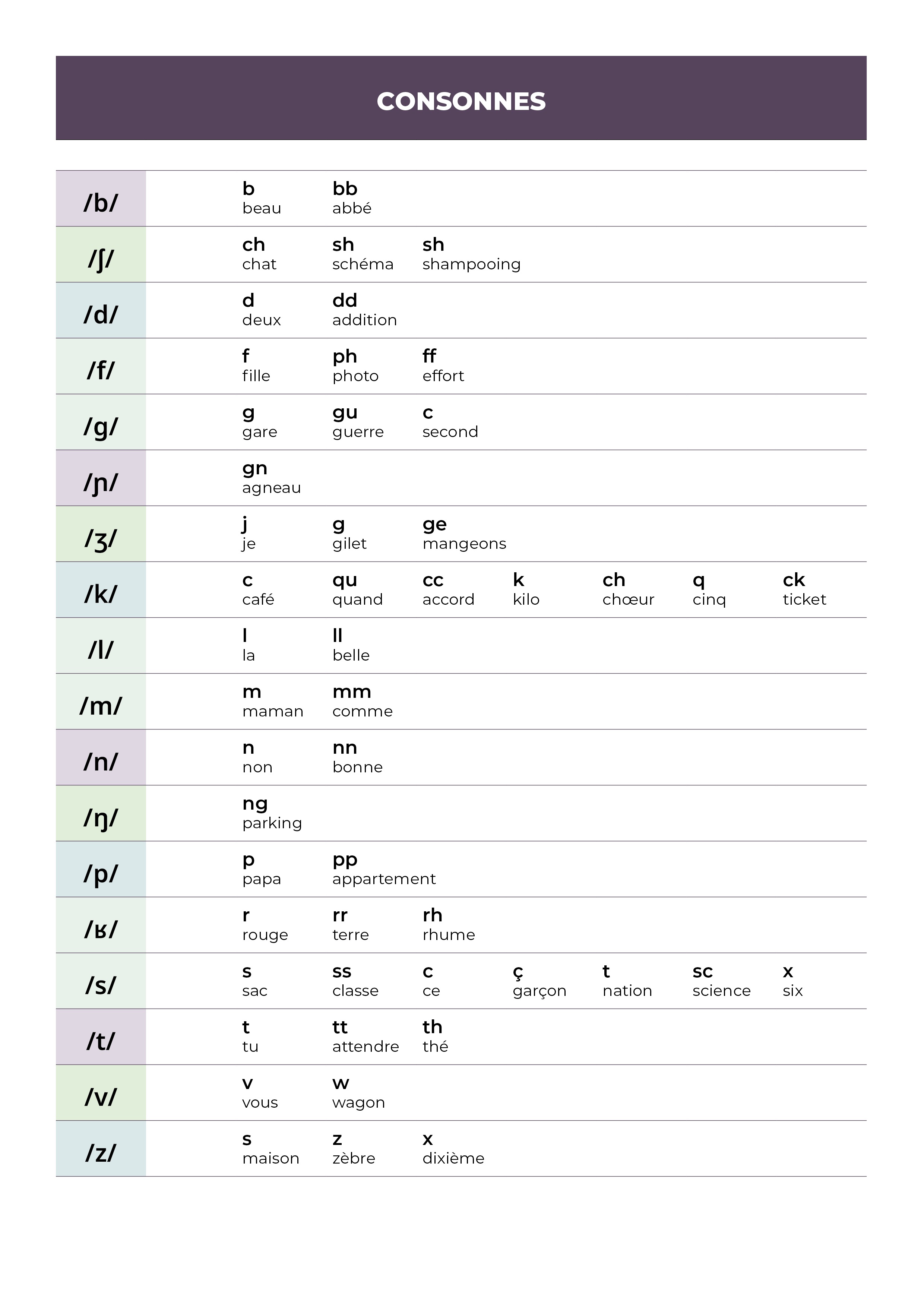
I did mention in a previous post that I was working on tidying up the pronunciation table that I’ve created for this series and I am happy to report I’ve made some headway.
I don’t want to overwhelm you, so I’ve just added the consonants at the moment. Most of them are similar to English so there’s no need to explain them in detail - they’re fairly self-explanatory. There are a couple of things to note, though.

You’ll see I’ve added the symbols for the International Phonetic Alphabet in the column of the far left. I know many of you have an aversion to this system so if that’s you, please feel free to ignore them. If you’re interested in why they can be helpful, though, there’s a great video here that explains how they work.
Please don’t feel you need to learn them or make a study of them. I believe it’s enough to know of their existence and that they’re available to you when you want to be très précis(e)* about the pronunciation of a word.

I hope you’ll find the consonant table reassuring. I know I did as I was making it. I really like that there are several ways of writing the same sound (take a look at the sound /k/ for example). To me it makes the language a little more manageable to know that all of the words I’ve given as examples contain the very same sound.
Also worth noting is that the pronunciation of the word “second”, which has the same meaning as English. You may be surprised to learn it contains a /ɡ/ sound as in ‘gare’ instead of a /k/ sound as in ‘café’. Apart from the derivations of the words second (seconde, secondaire, secondairement, seconder, secondement*) there is only one other work that contains this in the French language and it’s the word “zinc”. Intéressant, non*?
*Hello everybody | *very precise | *second (adj.) | *second (noun) | *secondary | *secondarily | *to second | *secondment | *Interesting, isn’t it?