Lingua Franca | Award-Winning French Lessons Brisbane

French lessons, events & trips

FRENCH LESSONS EVENTS & GIFTS

Filtering by Category: Expressions

Brave New Word

In researching portmanteau words for a recent blog post, I came across this 2011 article all about another set of words: les néologismes*.

Where a portemanteau is created by the merging of two or more existing words (think ‘brunch' or ‘brainiac’ in English and ‘franglais’ and ‘courriel’ in French), a neologism is a brand new word, freshly invented….and often created by merging two or more existing words. So in theory all portmanteaux started life as neologisms but not all neologisms are portmanteaux, si ça a du sens*...

Interesting to see that the verb ‘textoter' (to text) is still waiting to take off more than ten years after the article’s publication. It must be said, it doesn’t exactly trip off the tongue, though, does it?

Dommage* about ‘watture’ though, 2013’s winner. Created by combining the English word ‘watt’ and the French word for car (voiture), it’s a new word for an electric car. Not only intelligent* but très utile* these days, non*?

Enjoy.

*neologisms | *if that makes sense… | *Shame | *clever | *very useful | *don’t you think?

Let’s get straight to the point.

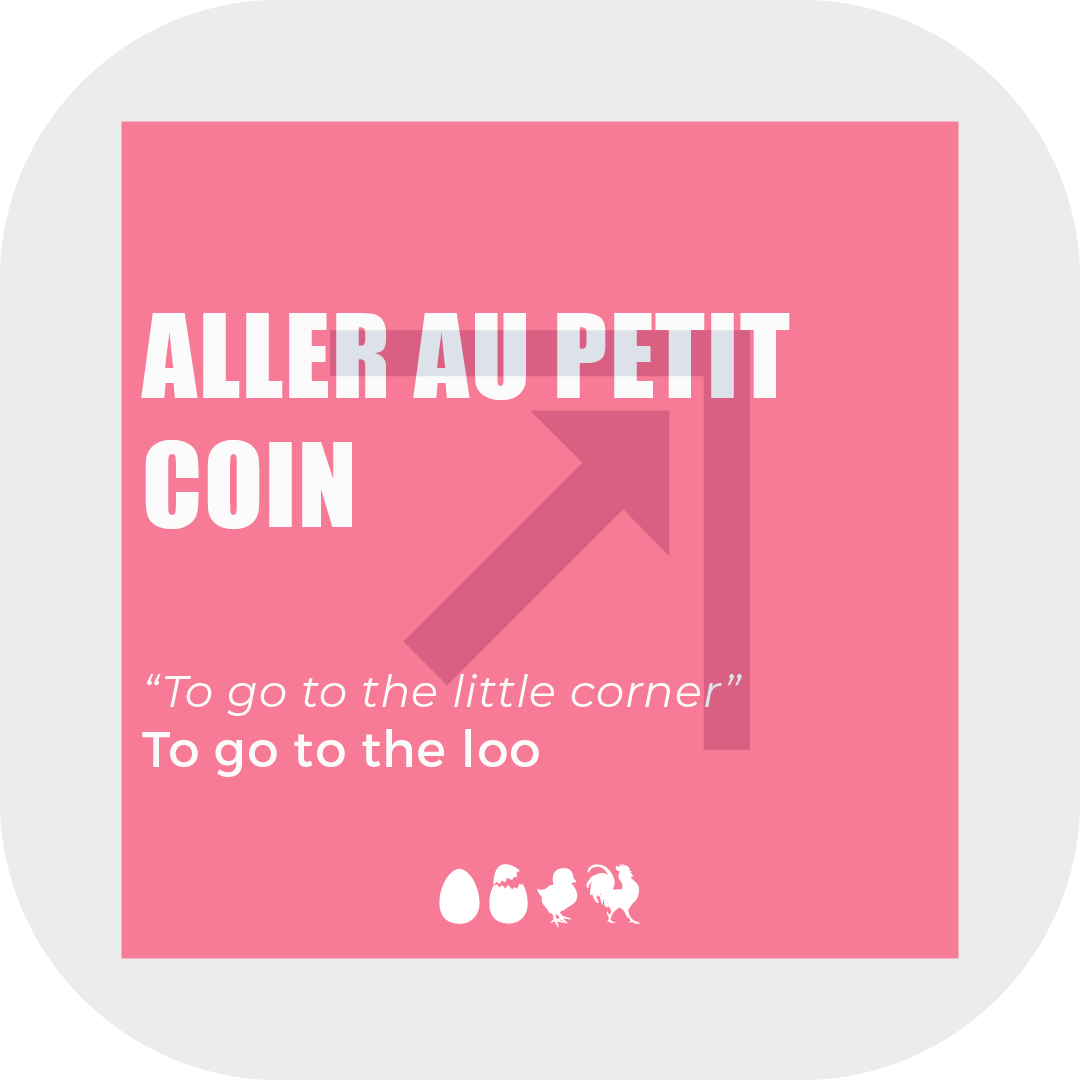
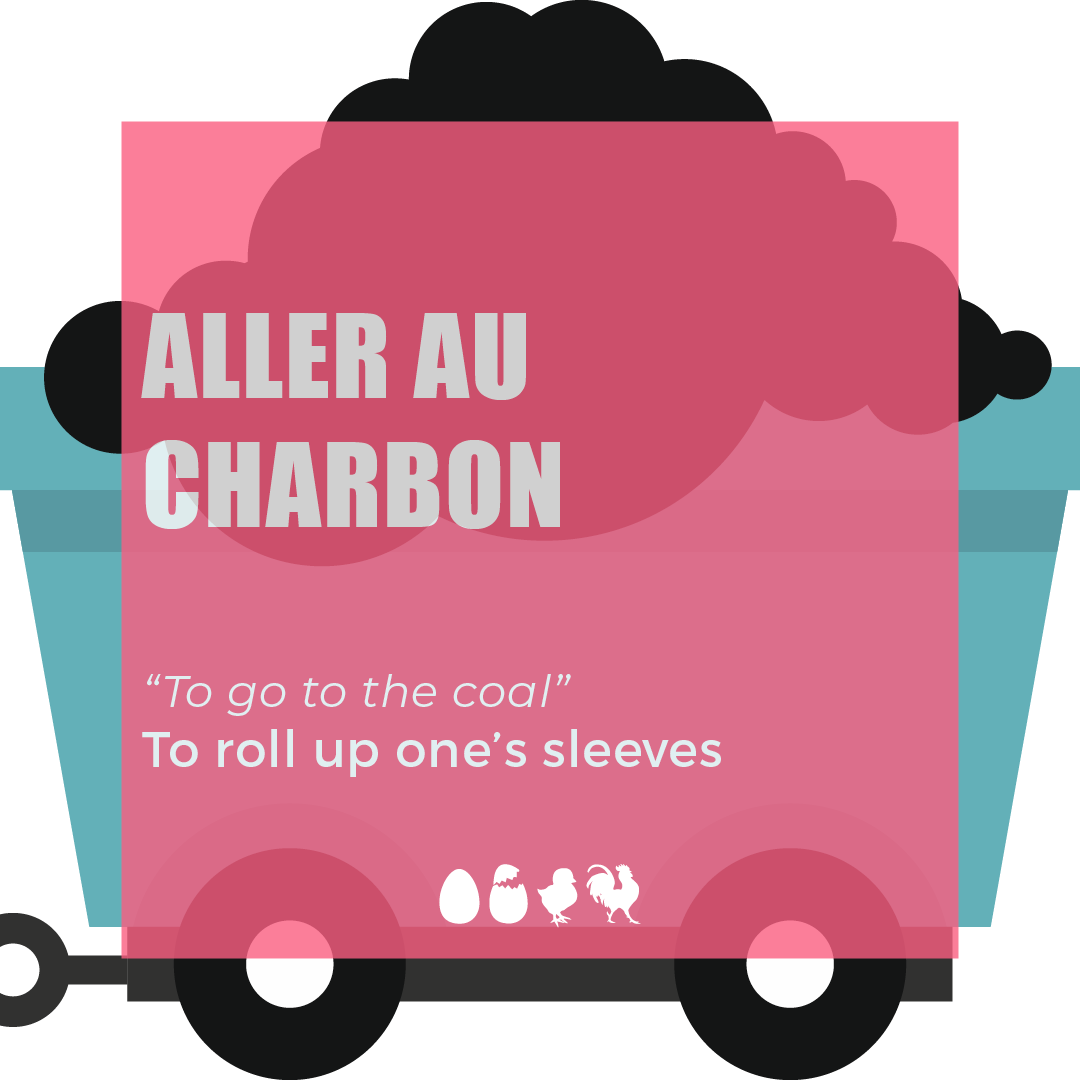
Allez, allez*! Take 10 minutes to learn these evocative phrases which all use the verb aller*.

*Go, go! | *to go

Tu me manques

If you’re very, very lucky, one day you might wish to tell someone in French that you miss them. Encore mieux*, they might tell you that they’re missing you. Romantique, non*?

Romantique, oui*, but it’s not as easy as you might think.

The verb ‘to miss’ is manquer in French. So far so good, you may think, but this is where it starts to get a little tricky.

In English we say “I miss you". In French though, the structure is the equivalent of “You are missing to me”. That is, in French, the object of your affections takes centre stage, whereas in English it’s all about the person doing the missing.

LCCN_20210910_IMissYou_2.png

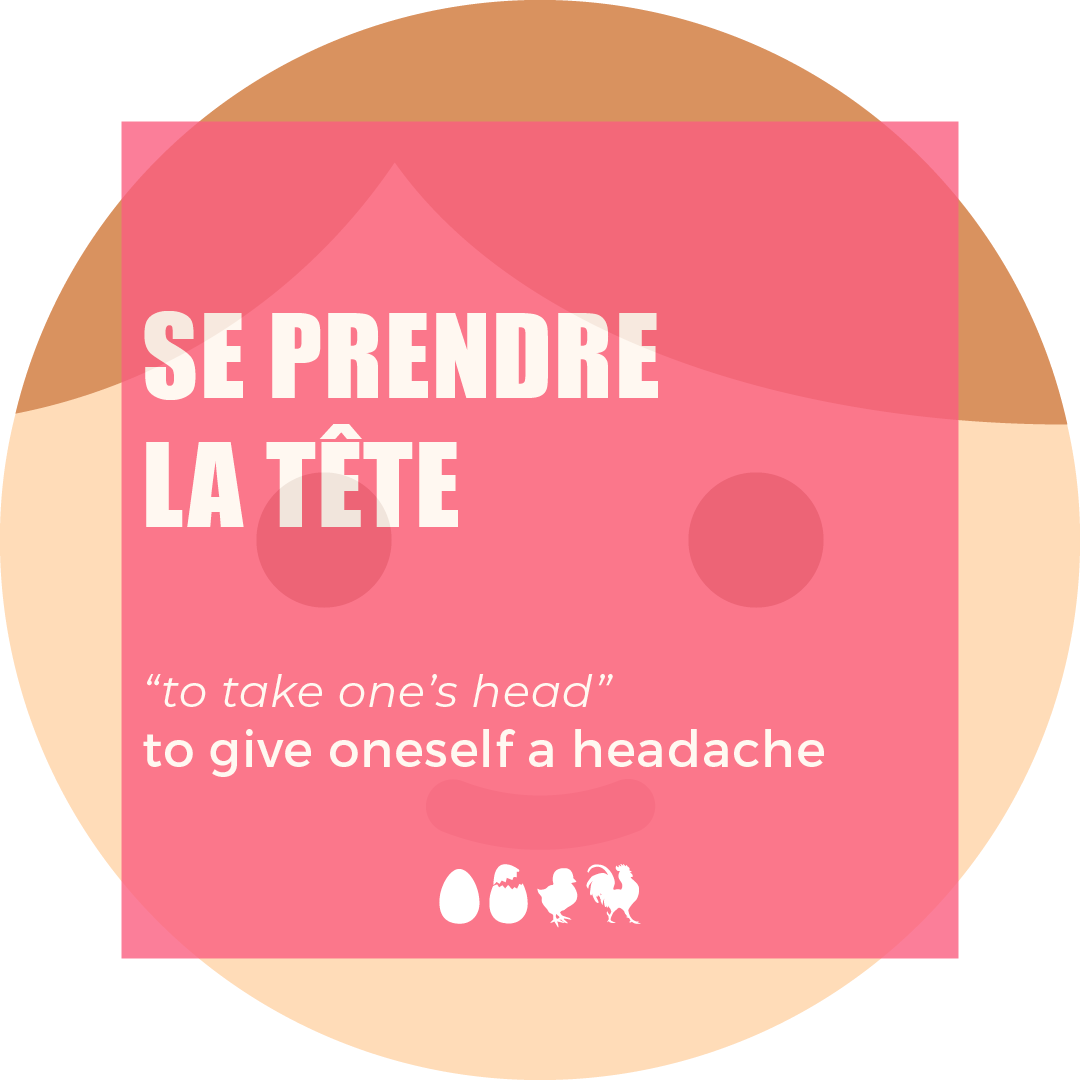
It may help to think of the verb manquer as ‘to lack’. I find this help me come to grips with the fact that we use an indirect pronoun (to me) rather than a direct one (me). Ne prends pas la tête*, though. If you do structure your sentence in the English way, you’ll just be telling the person that they’re lacking to you, which could spark a conversation all of its own.

LCCN_20210910_IMissYou_3.png

Of course, you could always turn this phrase into a question if you wanted to ask someone if they were missing you.

LCCN_20210910_IMissYou_4.png

C’est clair*? Maybe not right now, but you will wrap your mind around this counterintuitive little gem in time, c’est promis. One of our Chouchous*, Nora, found this song which she swears has helped her to just that. Merci encore*, Nora.

*better still | *Romantic, isn’t it? | *Romantic, yes | *Don’t worry too much | *Is that clear? | *I promise | *Teacher’s Pets | *Thanks again

Tirer la Tronche

Je tire la tronche.

Recently, while (re)watching Episode 1 of The Parisian Agency, I was reminded of a great little phrase I’d heard the first time around. Tirer la tronche means to be unhappy, to pout or to brood. If you’ve seen the series, Valentin says it to his mère* just after he gets off the phone with Lisa, the lingerie designer, having just broken the news that someone else has put an offer in on the property she’d had her eye on.

Elle tire la tronche*,” he says.

Even without understanding exactly what he says, you can tell from their short conversation and Valentin’s body language that his client is not happy. This is yet another benefit of watching series in French - you’ll pick up so much from the many visual and auditory clues on offer. Tirer la tronche is just one of the new expressions I learned from this series and there are dozens more to be had. Croisons les doigts* for a second series!

*mother | *She’s pouting | *Let’s cross our fingers

Mika: Elle me dit

Here at Lingua Franca, our students have a variety of learning styles. We try to cater to all styles as much as we possibly can, but there is no replacement for the ideas our students bring to us about their preferred ways of learning.

Recently, one of our students, Nora, was telling her class that she’d found a song that helped her learn the placement of direct and indirect object pronouns. This is an intermediate-level subject, so for you débutants* out there just know that these pronouns are a future pleasure (!) laying in wait for you.

Before I get to Nora’s song, though, which involves a double object pronoun nightmare…pardon* “challenge”, here’s a song that shows the placement of a single object pronoun, in this case, the indirect pronoun me, meaning ‘to me’.

LCCN_20210623_Pronouns.png


The song is called Elle me dit and translates as ‘She says to me’. Literally, it’s ‘She to me says’, as object pronouns are placed between the subject (elle) and the verb (dit) as you’ll hear over and over in this song.

By the way, for les curieux*, here’s a link to the lyrics in both French and English.


Also, look out for a star turn by celebrated French actress Fanny Ardant, who appeared in a blog post last month and whom many of you will know from 2019’s Belle Époque*.

Now here’s Nora’s chanson préférée*, which contains not one, but two, object pronouns. Called Je te le donne, it translates as ‘I give it to you’, or literally ‘I to you it give’. Clair*?

Though the placement and order of double object pronouns can be very complicated, this song gives you an idea of a rule that works for the most part (if you’ve been learning French for even the briefest times, you’ll know it’s not afraid of an exception, like all languages). That rule is this:

Indirect before direct and placed between the subject pronoun and the verb.

LCCN_20210623_Pronouns2.png


PS For those of you who are très, très enthousiastes*, here is the exception:

If both of your object pronouns refer to third person objects, the order is reversed. That is, direct before indirect. For example: Je le lui dis. I say it to him/her. Or literally, I it to him/her say.

*beginners | *sorry | *curious people | *Beautiful Era | *favourite song | *Clear? | *very, very keen

Expressions françaises

Some French expressions can be translated directly into English and retain their exact meaning. For example, the saying “better late than never” is mieux vaut tard que jamais in French.

Others, however, are more difficult to reconcile with their French counterparts, and therefore much more fun, too.

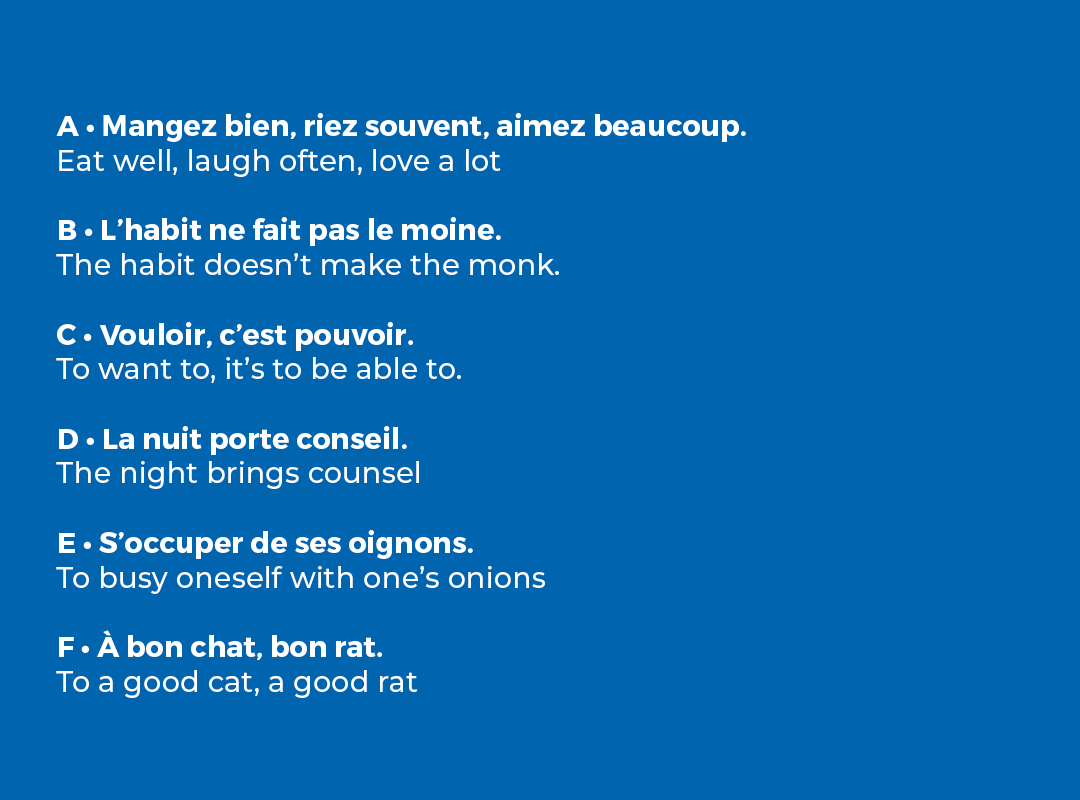
Allons-y*! See if you’re able to make le lien* between the following French and English sayings.

LCCN_20210623_Phrases2.png

*Let’s go! | *the link

What is a cognate?

A cognate is a word that comes from the same origin as a word from a different language. Below, three of our favourites.

LCCN_202104267.png

MIRAGE

Both French and English use the word ‘mirage’ to describe the bending of light which produces an optical illusion, but do you know where the word originally comes from? It’s most likely via the Latin word ‘mirare’ (to admire/gaze) which is where we get the word ‘mirror’. In French we have the reflexive verb ‘se mirer’ which means ‘to gaze at oneself/to be reflected’, hence mirage. There is, though, a chance it comes from the Latin word ‘mirus’ (wonderful) which is where we get the word miracle. Cool, non*?

HORS D’ŒUVRE

Un œuvre in French is ‘a work’, so to say 'a work of art' we say un œuvre d’art. Even in English we can use the word ‘œuvre’ to describe the body of work of an artist. As we know, the French take la cuisine* very, very seriously and if you’ve ever had a sublime French meal you’d probably be happy to consider the chef un or une artiste*. So, since hors means ‘outside of’, it makes sense that both languages call a small savoury dish, typically served as an appetizer, un hors d’œuvre, since it arrives at your table outside the main œuvre d’art which is of course le plat principal*.

POT POURRI

If you’re a person of un certain âge* you’ll remember the pot pourri craze that swept the nation in the eighties. No domestic surface was safe from the little terracotta pots of dried petals we used to add a touch of country style to our homes.

I wonder if we would have been quite so keen had we known the verb pourrir at the time which means ‘to rot’. Yes, that’s right, pot pourri translates to rotten pot which somewhat takes away the appeal, non*?

*Cool, isn’t it? | *cooking | *an artist | *the main course | *a certain age | *doesn’t it?

Funny expressions with avoir

If you’ve studied French for a while, you’ll know that the verb avoir* ranks just behind être* as the language’s most useful verb.

When we’re just starting out, we tend to use avoir to talk about our friends, family and age.

J’ai deux sœurs et un frère.
I have two sisters and a brother.

Je n’ai pas d’enfants
I don’t have any children

J’ai 34 ans.
I am 34 years of age.

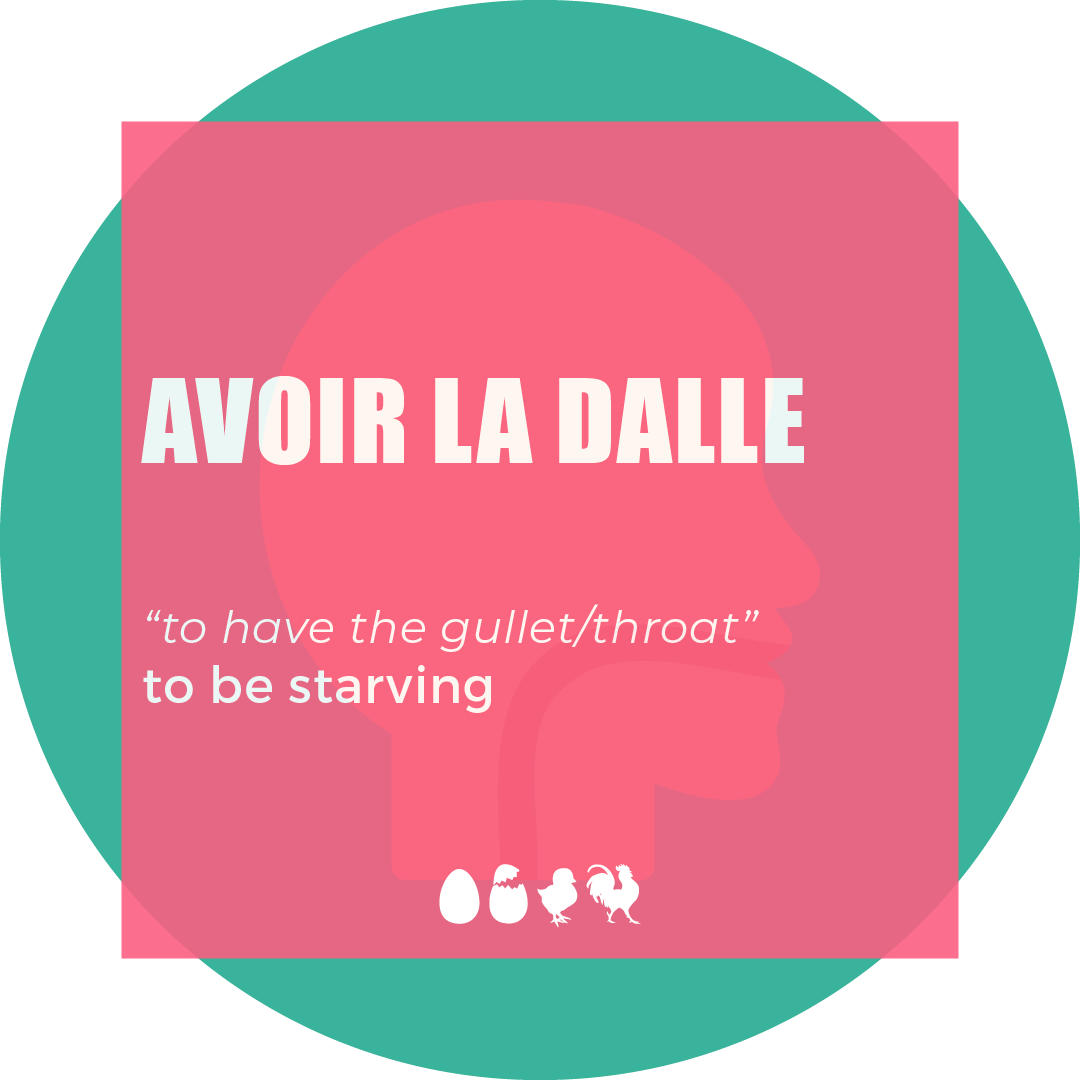
So as you can see, though avoir is worth its weight in gold, its application can sometimes seem a little…banal*. With that in mind, we’ve rustled up the following expressions, all of which contain avoir, as well as just a touch more personnalité*

LCCN_20210329_Avoir.png
LCCN_20210329_Avoir3.png
LCCN_20210329_Avoir5.png
LCCN_20210329_Avoir2.png
LCCN_20210329_Avoir4.png
LCCN_20210329_Avoir6.png

*to have | *to be | *pedestrian | *personality

Funny reflexive verbs

Reflexive verbs are rarely fun, but we find using them through colloquialisms makes them a little more intéressants*.

So, what do pelles*, sucettes* and encre* have in common? Not a lot on the face of it, but they do all make an appearance in these strangely funny phrases.

If you can’t remember what reflexive verbs are (or haven’t learned about them yet), they are verbs where the subject and the object are the same, so the action is ‘reflected’. That is, the person doing the action also receives the action.

For example :

Je me lave.

“I wash myself” is reflexive as I’m doing and receiving the washing.

Je lave la voiture.

“I wash the car” isn’t reflexive as I’m doing the washing but not receiving it.

IG_20210210_.png
IG_20210210_2.png
IG_20210210_5.png
IG_20210210_3.png
IG_20210210_4.png
IG_20210210_6.png

*interesting | *shovels | *lollipops | *ink

Ultimate French Resources #5

I remember doing a translation for a mining company several years ago. The job involved translating an instruction manual for some mining software. Since I wasn’t (and am still not) au fait* with either of these domains, I asked a French friend to help me out.

We met in a café in the city. He’d been in town all day, and didn’t know we were going to meet up. When he arrived, he was carrying a tiny backpack with him. We ordered coffees and got to work.

We struck our first problème* a few minutes in, and I was astonished when he reached down into his backpack and pulled out a battered copy of Le Bescherelle to check a conjugation. The fact that he had prioritised his verb book, along with a bottle of water and his wallet, spoke volumes about the value the French place on this resource. It’s also the reason why you should consider getting one if you’re serious about your French.

71RBpQJUEXL.jpg
81rRmEk3pZL.jpg

WHAT:

A little red book of verb conjugations, given to all French schoolchildren at the age of 10.

POINT FORT*:

The design. It has the conjugations for over 12 000 French verbs, yet the book is compact and slimline. The secret? All 12 000 verbs are divided into categories according to how they are conjugated and then one very common verb from each group is chosen to be conjugated in full. That is, it is conjugated for all ‘persons’ (je, tu, il, elle, etc.) and in all tenses (don’t freak out when you see them all - there are a lot). The rest are found in the index along with the category number for easy reference.

POINT FAIBLE*:

It takes a little while to work out how to use it and it’s easy to mix up the page number and category number (see above). Once you’ve got the hang of it, though, you’ll wonder how you ever did without it. I know there are fantastic apps for French verbs on the market and I use one myself, but there’s something about the seriousness and accuracy of Le Bescherelle that I really enjoy. Plus, being able to look at all the tenses at once without having to move a screen around is a relief, franchement*.

PS:

There’s also a Bescherelle for very young children called Mon Premier Bescherelle Illustré* which is absolutely beautiful as well as a great way to improve your vocabulary!

 
Mon premier Bescherelle illustré.jpg
 

*knowledgeable | *problem | *pro | *con | *frankly | *My First Illustrated Bescherelle


At Sixes and Sevens

We use idiomatic phrases involving numbers all the time in English. Don’t believe me?

  • Back to square one

  • Behind the eight ball

  • Baker's dozen

…and I’m only up to the letter B on the list! It stands to reason the French do the same.

Here are some of our favourites.

LCCN_20201119_Numbers.png
LCCN_20201119_Numbers5.png
LCCN_20201119_Numbers7.png
LCCN_20201119_Numbers2.png
LCCN_20201119_Numbers8.png


Bouche

If you’re a person of un certain âge* who did some rudimentary French at school, we could almost guarantee you remember the phrase “Fermez la bouche*!”

Now we’re grown up, though, it’s time to expand our repertoire*, not only with a few more applications of the word bouche*, but with the real way to tell someone to shut it: ta gueule!*

LCCN_20201028_Bouche.png

*a certain age | *Close your mouth | *repertoire | *mouth | *shut your face

Coup

If you've been learning French for a little while, you may have come across the word 'coup'. Perhaps you've seen un coup de téléphone or un coup de fil (both used for phone call). Even before French came into your life, you were probably familiar with a coup d’état* (even if we Anglophones tend to pronounce it something like 'koo day tar' rather than the more sonorous way it should be said).

What you may not know, though, is that coup has a huge range of translations, from 'blow' or 'knock', to 'attack' or even 'drink' and all the way to Vulgarville with 'f*ck'. So, a multi-dimensional word at the very least!

Where it really comes into its own, though, is in les formes composées*

Jetez un œil!*

LCCN_20200629_Coup.png