Lingua Franca | Award-Winning French Lessons Brisbane

French lessons, events & trips

FRENCH LESSONS EVENTS & GIFTS

Filtering by Category: Expressions

Madeleine de Proust

Talk turned to madeleines* this week at Lingua Franca, which in and of itself, is not a rare occurrence.

However, for once we weren’t rhapsodising about their buttery delights, rather the talk was of les souvenirs* and what provokes them. Pourquoi*?

Because Marcel Proust, a privileged but poorly French writer, who was confined to his bed for much of his life, wrote of an événement déclencheur* in the first volume of his classic text À la Recherche du Temps Perdu*. That event was being handed a madeleine and une tasse de thé* by his mother as he was convalescing, and the taste of that delicious madeleine immediately transported him back to his childhood, when his Tante Léonie* would offer him a taste of hers after she’d dipped it in her lime-flower tea.

With the work spanning seven volumes and containing more than a million words, Proust is not known for his vitesse*. In fact, the madeleine incident occurs only on page 95, so it’s fair to say he’s not a man in a hurry. Nonetheless, the scene is widely recognised as the point where the book really takes off, as detailed in this excellent article from the Penguin website.

Proust had his fans (Virginia Woolf, Grahame Greene, Victor Nabakov) as well as his his detractors (Somerset Maugham, Kazuo Ishiguro) but it’s unlikely any of them would turn down a petite madeleine* if offered by a caring and affectionate aunt.

If all this talk of les pâtisseries* has served to réveiller vos papilles*, voici la recette* again.

Un grand merci à Kathryn* who brought this delightful sujet* to the table at her class on Wednesday night.

*a traditional small cake from the Lorraine region | *memories | *Why? | *trigger event | *In Search of Lost Time | *a cup of tea | *Aunt Léonie | *speed | *little madeleine | *pastries | *wake up your tastebuds | *here is the recipe | *A big thank you to Kathryn | *subject

Brave New Word

In researching portmanteau words for a recent blog post, I came across this 2011 article all about another set of words: les néologismes*.

Where a portemanteau is created by the merging of two or more existing words (think ‘brunch' or ‘brainiac’ in English and ‘franglais’ and ‘courriel’ in French), a neologism is a brand new word, freshly invented….and often created by merging two or more existing words. So in theory all portmanteaux started life as neologisms but not all neologisms are portmanteaux, si ça a du sens*...

Interesting to see that the verb ‘textoter' (to text) is still waiting to take off more than ten years after the article’s publication. It must be said, it doesn’t exactly trip off the tongue, though, does it?

Dommage* about ‘watture’ though, 2013’s winner. Created by combining the English word ‘watt’ and the French word for car (voiture), it’s a new word for an electric car. Not only intelligent* but très utile* these days, non*?

Enjoy.

*neologisms | *if that makes sense… | *Shame | *clever | *very useful | *don’t you think?

Let’s get straight to the point.

Allez, allez*! Take 10 minutes to learn these evocative phrases which all use the verb aller*.

*Go, go! | *to go

Tu me manques

If you’re very, very lucky, one day you might wish to tell someone in French that you miss them. Encore mieux*, they might tell you that they’re missing you. Romantique, non*?

Romantique, oui*, but it’s not as easy as you might think.

The verb ‘to miss’ is manquer in French. So far so good, you may think, but this is where it starts to get a little tricky.

In English we say “I miss you". In French though, the structure is the equivalent of “You are missing to me”. That is, in French, the object of your affections takes centre stage, whereas in English it’s all about the person doing the missing.

LCCN_20210910_IMissYou_2.png

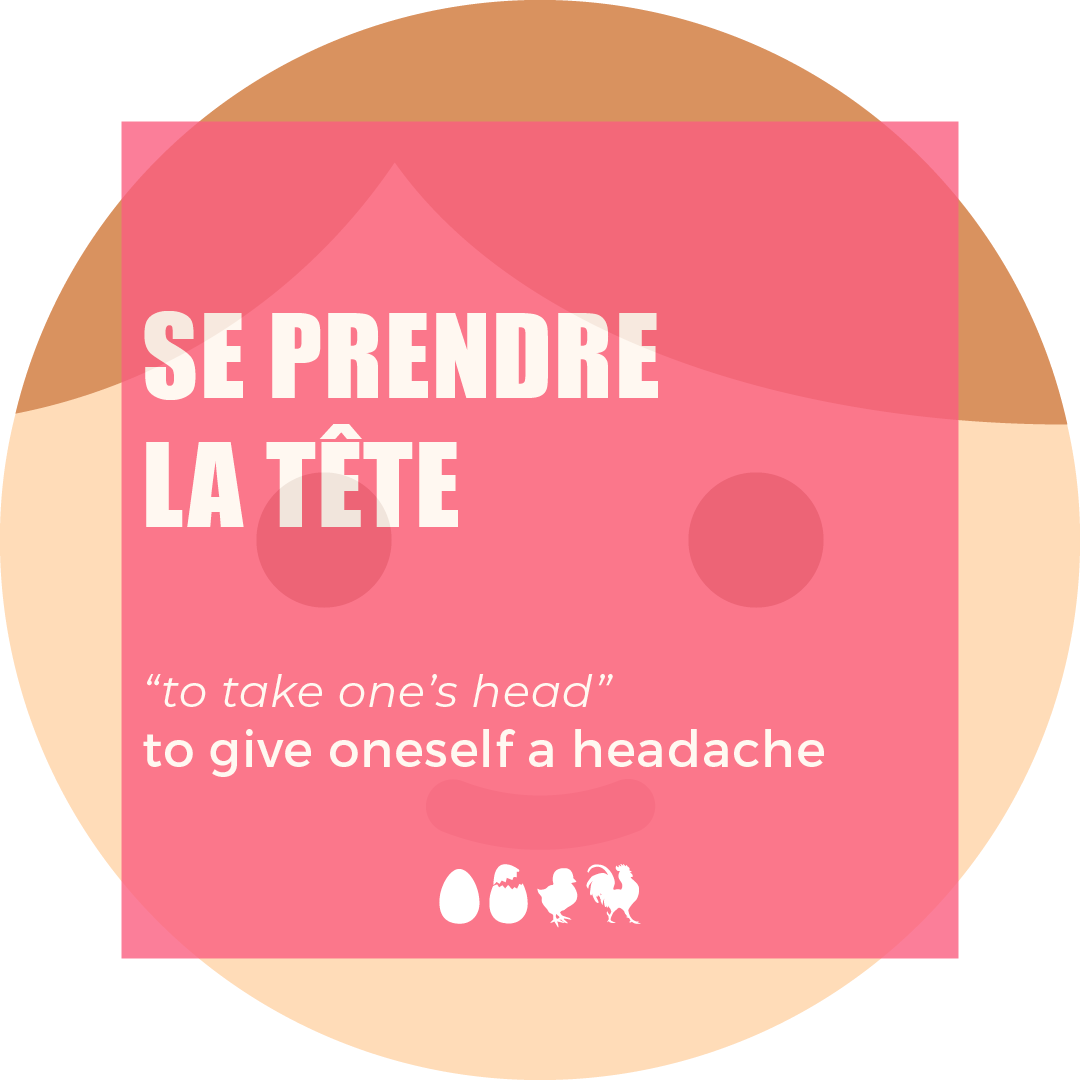
It may help to think of the verb manquer as ‘to lack’. I find this help me come to grips with the fact that we use an indirect pronoun (to me) rather than a direct one (me). Ne prends pas la tête*, though. If you do structure your sentence in the English way, you’ll just be telling the person that they’re lacking to you, which could spark a conversation all of its own.

LCCN_20210910_IMissYou_3.png

Of course, you could always turn this phrase into a question if you wanted to ask someone if they were missing you.

LCCN_20210910_IMissYou_4.png

C’est clair*? Maybe not right now, but you will wrap your mind around this counterintuitive little gem in time, c’est promis. One of our Chouchous*, Nora, found this song which she swears has helped her to just that. Merci encore*, Nora.

*better still | *Romantic, isn’t it? | *Romantic, yes | *Don’t worry too much | *Is that clear? | *I promise | *Teacher’s Pets | *Thanks again

Tirer la Tronche

Je tire la tronche.

Recently, while (re)watching Episode 1 of The Parisian Agency, I was reminded of a great little phrase I’d heard the first time around. Tirer la tronche means to be unhappy, to pout or to brood. If you’ve seen the series, Valentin says it to his mère* just after he gets off the phone with Lisa, the lingerie designer, having just broken the news that someone else has put an offer in on the property she’d had her eye on.

Elle tire la tronche*,” he says.

Even without understanding exactly what he says, you can tell from their short conversation and Valentin’s body language that his client is not happy. This is yet another benefit of watching series in French - you’ll pick up so much from the many visual and auditory clues on offer. Tirer la tronche is just one of the new expressions I learned from this series and there are dozens more to be had. Croisons les doigts* for a second series!

*mother | *She’s pouting | *Let’s cross our fingers

Mika: Elle me dit

Here at Lingua Franca, our students have a variety of learning styles. We try to cater to all styles as much as we possibly can, but there is no replacement for the ideas our students bring to us about their preferred ways of learning.

Recently, one of our students, Nora, was telling her class that she’d found a song that helped her learn the placement of direct and indirect object pronouns. This is an intermediate-level subject, so for you débutants* out there just know that these pronouns are a future pleasure (!) laying in wait for you.

Before I get to Nora’s song, though, which involves a double object pronoun nightmare…pardon* “challenge”, here’s a song that shows the placement of a single object pronoun, in this case, the indirect pronoun me, meaning ‘to me’.

LCCN_20210623_Pronouns.png


The song is called Elle me dit and translates as ‘She says to me’. Literally, it’s ‘She to me says’, as object pronouns are placed between the subject (elle) and the verb (dit) as you’ll hear over and over in this song.

By the way, for les curieux*, here’s a link to the lyrics in both French and English.


Also, look out for a star turn by celebrated French actress Fanny Ardant, who appeared in a blog post last month and whom many of you will know from 2019’s Belle Époque*.

Now here’s Nora’s chanson préférée*, which contains not one, but two, object pronouns. Called Je te le donne, it translates as ‘I give it to you’, or literally ‘I to you it give’. Clair*?

Though the placement and order of double object pronouns can be very complicated, this song gives you an idea of a rule that works for the most part (if you’ve been learning French for even the briefest times, you’ll know it’s not afraid of an exception, like all languages). That rule is this:

Indirect before direct and placed between the subject pronoun and the verb.

LCCN_20210623_Pronouns2.png


PS For those of you who are très, très enthousiastes*, here is the exception:

If both of your object pronouns refer to third person objects, the order is reversed. That is, direct before indirect. For example: Je le lui dis. I say it to him/her. Or literally, I it to him/her say.

*beginners | *sorry | *curious people | *Beautiful Era | *favourite song | *Clear? | *very, very keen

Expressions françaises

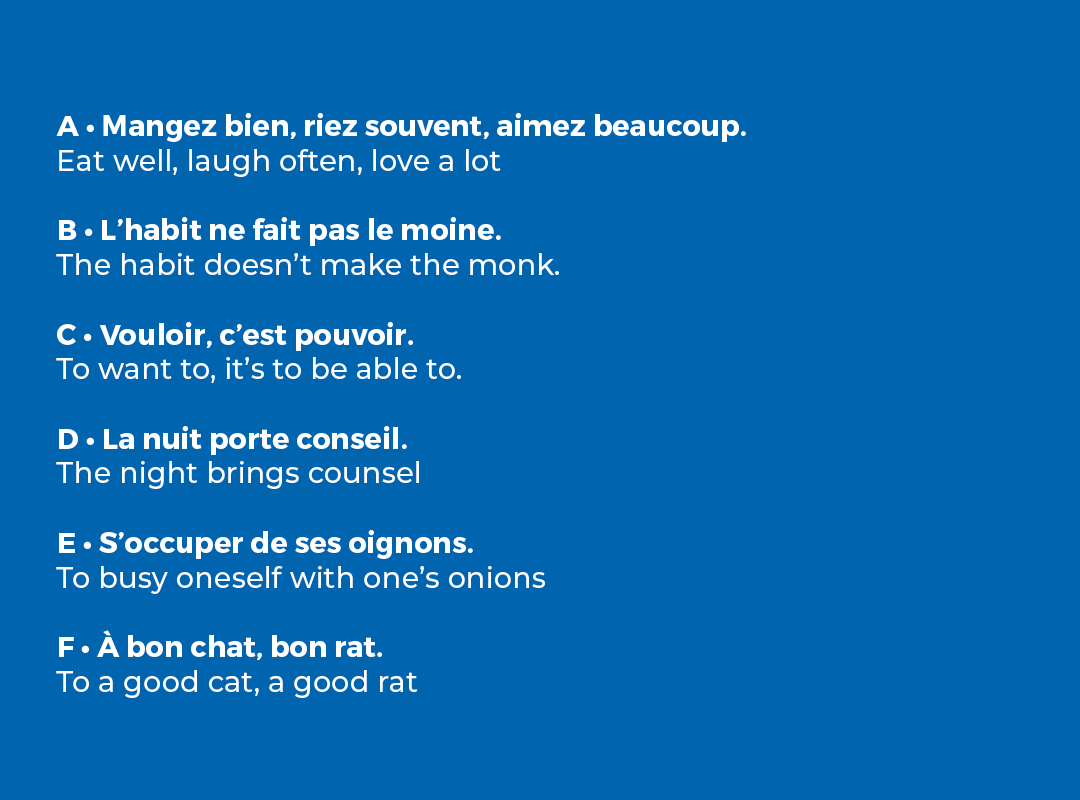
Some French expressions can be translated directly into English and retain their exact meaning. For example, the saying “better late than never” is mieux vaut tard que jamais in French.

Others, however, are more difficult to reconcile with their French counterparts, and therefore much more fun, too.

Allons-y*! See if you’re able to make le lien* between the following French and English sayings.

LCCN_20210623_Phrases2.png

*Let’s go! | *the link

What is a cognate?

A cognate is a word that comes from the same origin as a word from a different language. Below, three of our favourites.

LCCN_202104267.png

MIRAGE

Both French and English use the word ‘mirage’ to describe the bending of light which produces an optical illusion, but do you know where the word originally comes from? It’s most likely via the Latin word ‘mirare’ (to admire/gaze) which is where we get the word ‘mirror’. In French we have the reflexive verb ‘se mirer’ which means ‘to gaze at oneself/to be reflected’, hence mirage. There is, though, a chance it comes from the Latin word ‘mirus’ (wonderful) which is where we get the word miracle. Cool, non*?

HORS D’ŒUVRE

Un œuvre in French is ‘a work’, so to say 'a work of art' we say un œuvre d’art. Even in English we can use the word ‘œuvre’ to describe the body of work of an artist. As we know, the French take la cuisine* very, very seriously and if you’ve ever had a sublime French meal you’d probably be happy to consider the chef un or une artiste*. So, since hors means ‘outside of’, it makes sense that both languages call a small savoury dish, typically served as an appetizer, un hors d’œuvre, since it arrives at your table outside the main œuvre d’art which is of course le plat principal*.

POT POURRI

If you’re a person of un certain âge* you’ll remember the pot pourri craze that swept the nation in the eighties. No domestic surface was safe from the little terracotta pots of dried petals we used to add a touch of country style to our homes.

I wonder if we would have been quite so keen had we known the verb pourrir at the time which means ‘to rot’. Yes, that’s right, pot pourri translates to rotten pot which somewhat takes away the appeal, non*?

*Cool, isn’t it? | *cooking | *an artist | *the main course | *a certain age | *doesn’t it?

Funny expressions with avoir

If you’ve studied French for a while, you’ll know that the verb avoir* ranks just behind être* as the language’s most useful verb.

When we’re just starting out, we tend to use avoir to talk about our friends, family and age.

J’ai deux sœurs et un frère.
I have two sisters and a brother.

Je n’ai pas d’enfants
I don’t have any children

J’ai 34 ans.
I am 34 years of age.

So as you can see, though avoir is worth its weight in gold, its application can sometimes seem a little…banal*. With that in mind, we’ve rustled up the following expressions, all of which contain avoir, as well as just a touch more personnalité*

LCCN_20210329_Avoir.png
LCCN_20210329_Avoir3.png
LCCN_20210329_Avoir5.png
LCCN_20210329_Avoir2.png
LCCN_20210329_Avoir4.png
LCCN_20210329_Avoir6.png

*to have | *to be | *pedestrian | *personality

Funny reflexive verbs

Reflexive verbs are rarely fun, but we find using them through colloquialisms makes them a little more intéressants*.

So, what do pelles*, sucettes* and encre* have in common? Not a lot on the face of it, but they do all make an appearance in these strangely funny phrases.

If you can’t remember what reflexive verbs are (or haven’t learned about them yet), they are verbs where the subject and the object are the same, so the action is ‘reflected’. That is, the person doing the action also receives the action.

For example :

Je me lave.

“I wash myself” is reflexive as I’m doing and receiving the washing.

Je lave la voiture.

“I wash the car” isn’t reflexive as I’m doing the washing but not receiving it.

IG_20210210_.png
IG_20210210_2.png
IG_20210210_5.png
IG_20210210_3.png
IG_20210210_4.png
IG_20210210_6.png

*interesting | *shovels | *lollipops | *ink

At Sixes and Sevens

We use idiomatic phrases involving numbers all the time in English. Don’t believe me?

  • Back to square one

  • Behind the eight ball

  • Baker's dozen

…and I’m only up to the letter B on the list! It stands to reason the French do the same.

Here are some of our favourites.

LCCN_20201119_Numbers.png
LCCN_20201119_Numbers5.png
LCCN_20201119_Numbers7.png
LCCN_20201119_Numbers2.png
LCCN_20201119_Numbers8.png


Bouche

If you’re a person of un certain âge* who did some rudimentary French at school, we could almost guarantee you remember the phrase “Fermez la bouche*!”

Now we’re grown up, though, it’s time to expand our repertoire*, not only with a few more applications of the word bouche*, but with the real way to tell someone to shut it: ta gueule!*

LCCN_20201028_Bouche.png

*a certain age | *Close your mouth | *repertoire | *mouth | *shut your face

Coup

If you've been learning French for a little while, you may have come across the word 'coup'. Perhaps you've seen un coup de téléphone or un coup de fil (both used for phone call). Even before French came into your life, you were probably familiar with a coup d’état* (even if we Anglophones tend to pronounce it something like 'koo day tar' rather than the more sonorous way it should be said).

What you may not know, though, is that coup has a huge range of translations, from 'blow' or 'knock', to 'attack' or even 'drink' and all the way to Vulgarville with 'f*ck'. So, a multi-dimensional word at the very least!

Where it really comes into its own, though, is in les formes composées*

Jetez un œil!*

LCCN_20200629_Coup.png

De quoi ? | Say what ?

De quoi ? | Say what ?

se prendre un râteau | rouler une pelle

©EverEarth

©EverEarth

What is it about the French using gardening tools to describe amorous pursuits? Perhaps they really love their jardinage*?

Prendre un rateau* is a colloquial French saying and is used to describe the (often humiliating) experience of being rejected by a love interest. So why are we talking about râteaux*? Well, if you think about it, c’est logique*. Imagine you’re walking along, dreaming about your intended, and you step on the teeth of a rake. What happens? Well, the handle hits you in the face and you’re laid out flat. Ça fait mal*, c’est humiliant* and ça laisse des traces*. We can all feel the pain, non?

“Oh le pauvre, il a essayé de draguer Martine, mais il a pris un râteau.” 

“ Oh the poor thing, he tried to pick up Martine, but she rejected him.”

Less violent, but perhaps even more excruciating, by the way, is to be put in the ‘juste-un-pote’* category, ’ with ‘pote’ meaning ‘mate’ or ‘friend’. Ouch!

So what if, in fact, you’re lucky enough to not ‘prendre un râteau’, but succeed in winning over your paramour? Well then, you might have to change verbs (and nouns for that matter) and rouler une pelle, which means ‘to snog’. Why is French kissing known in France as ‘rolling a spade’? You’d have to ask a French person. Sérieusement*, I’m out of ideas.


*gardening | *to take a rake | *rakes | *it makes sense | *it hurts | *it's humiliating | *it leaves a mark | *friend-zone | *seriously

SAY WHAT? | DE QUOI?

SAY WHAT? | DE QUOI?

ÊTRE À CÔTÉ DE SES POMPES

Photo credit: Shopstyle

Photo credit: Shopstyle

I think we can all agree that les pompes* in the above photo are sérieusement sexy*.

So how did the French expression ‘to be beside your pumps’ come to denote a rather unsexy state of mind?  And why are you beside your pompes and not in them?

As you may know, the French word for shoes is chaussures*. The word pompes came about in the 19th century as a slang word for shoes, allegedly since their flimsier construction let water in via the soles, thereby turning them into little suction pumps (pompes aspirantes).

Since shoes are associated with walking, and therefore the idea of direction, it stands to reason that if you’re not walking in your pompes, but to the side of them, you’re not exactly focused. It describes the idea of doing something without thinking, of not being in the moment, of there being a décalage* between thought and reality. A more dramatic definition describes an angoisse existentielle*, or a difficulty in adapting to the real world.

In English, we have many ways of expressing this idea, though none possibly as evocative as être à côté de ses pompes. We talk of ‘not being with it’, or ‘being out of sorts’ or even ‘being away with the fairies’. Come to think of it, that’s a lovely expression! 

The word pompe is a useful little word. Here are some other meanings:

les pompes = push-ups

  • Mon entraîneur fait 200 pompes avant d'arriver à la salle de sport.

  • My trainer does 200 push-ups before he gets to the gym.

avoir un coup de pompe = to have wave of tiredness

  • Oh là, j’ai un coup de pompe. Je vais faire une petite sieste.

  • Wow, I’m suddenly really tired. I’m going to have a little nap.

être une pompe à fric = to be a money pit

  • Ce bateau est une vraie pompe à fric.

  • That boat is a real money pit.

lâcher les pompes = to leave someone alone

  • C’est ma décision, alors lâche-moi les pompes!

  • It’s my decision, so get off my back!

*pumps | *seriously sexy | *shoes | *gap | *existential anguish


EN UN MOT | IN A WORD

EN UN MOT | IN A WORD

curfew

LCCN 4 - Photo Blog - En un mot -Vinaigre.png

If you're a student of French, I sincerely hope you've had the luck to experience a moment when for some reason, all of a sudden ça fait tilt*. As a lover of language, there's nothing I like more than when a word I've been using unthinkingly all my life takes on a whole new relevance thanks to my studies.

Take the example of the English word 'vinegar' for example. Have you ever paused to ponder its provenance? Probably not, I would venture.

However, when you look at the French word for it, vinaigre, it really does make a lot of sense. Most of you know the French word for 'wine': vin. But do you know what aigre* means? Oui, c'est ça*: sour. So vinaigre = sour wine. C'est logique, non?*

A further dig into wordreference.com turns up these beauties:

  • tourner au vinaigre - to turn sour (literally and figuratively)

  • un pisse-vinaigre - a sourpuss/grump

  • On n'attrape pas les mouches avec du vinaigre - You catch more flies with honey than with vinegar.

Again, j'adore mon travail*.


*something clicks | *sour | *Yes, that's it | * It makes sense, doesn't it? | *I love my job

DE QUOI? | say what?

DE QUOI? | say what?

REtournons à nos moutons | Let's return to our sheep

If I had a euro for every time I've pulled this one out in a lesson...

I love this French saying as it not only evocative but effective as well.

Our French lessons here at Lingua Franca are casual affairs. Of course, we want our students to learn, and we're happy to report they do, but with groups of like-minded people passionate about French as well as countless other topics, we can sometimes become side-tracked. 'Retournons à nos moutons' (which literally means 'let's return to our sheep' or more colloquially 'let's get back to the subject') is a gentle and amusing way to remind everyone to come back to the topic at hand - le français*.

Apparently the saying originated from a 15th century French play called La Farce de Maître Pierre Pathelin. It tells the story of five characters, each more dishonest than the next, and includes a courtroom scene where the accused is instructed by his lawyer to answer all questions directed at him by saying 'Baaa' in an attempt to have him declared mentally instable. Sounds très drôle* indeed.

*French | *very funny