Lingua Franca | Award-Winning French Lessons Brisbane

French lessons, events & trips

FRENCH LESSONS EVENTS & GIFTS

Filtering by Category: Vocabulary

Olympic Glossary: Fun French Sporting Expressions

Want to sound like a pro discussing the Olympics with your French friends? From ‘envoyer une pizza*’ to ‘prendre un caramel*’ (not as pleasant as it sounds), this fun Olympic glossary will arm you with some weird and wonderful sporting expressions to try out at your next soirée.

*to hit a volleyball in a straight line that’s as flat as a pizza |* to hit the ground hard when tackled

Word Power: Bouche

If you want to expand your French vocab and pepper your conversation with some fun expressions, bouche*, meaning mouth, is another mot très utile* to add to your repertoire.

The following is just a little *mise en bouche (visit WordReference for a bumper list!) – but we’re sure you’ll find an expression or two that will tickle your fancy.


*mouth | *very useful word | *taster

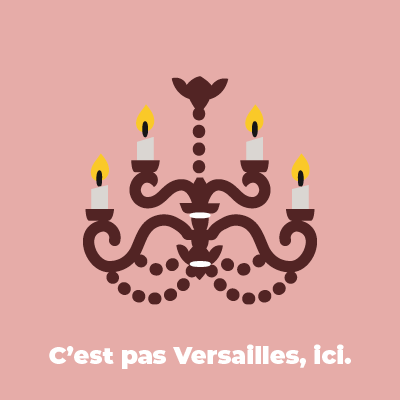
C'est Pas Versailles Ici...

Looking for an inventive way to tell your kids to turn off les lumières* (and stop racking up your energy bill)? Look no further than the French and give les enfants* a disdainful, “C’est pas Versailles ici”. This tongue-in-cheek saying is a go-to among parents – and one of our favourites from this list of everyday French expressions.

Do you have a favourite French saying? Tell us in the comments below.

*the lights | *the children

Word Power: Papillon

Many of our students tell us they love the French word for butterfly, papillon*. Thankfully, there are plenty of opportunities to use it, too, as ce joli mot* has a surprising number of applications.

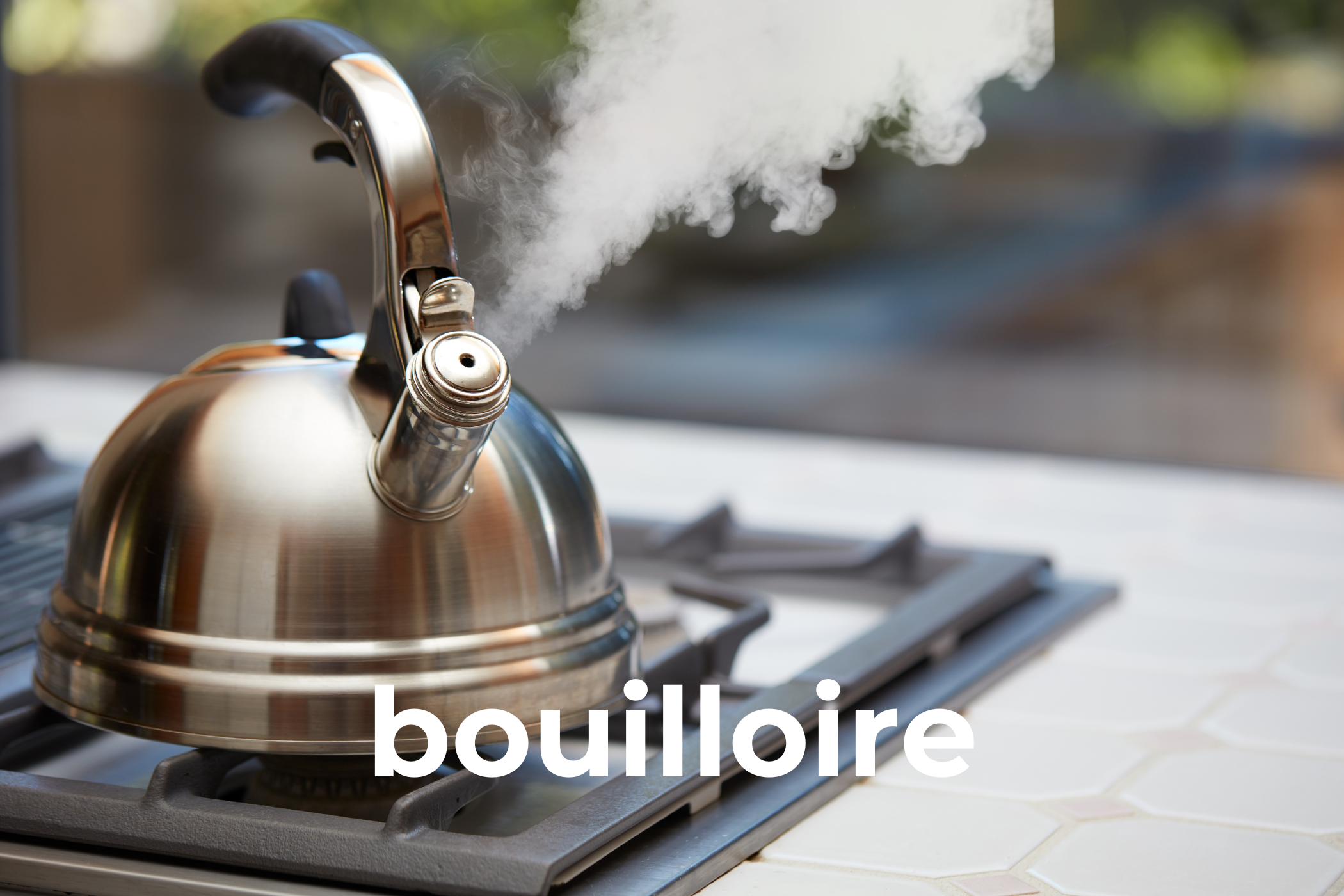
As in English, the French refer to la brasse papillon* ­– a complicated (and impressive) stroke in swimming. And you might just find yourself in need of un écrou papillon,* or butterfly nut, if you’re putting together some flat-pack furniture.

Want a few more examples to have up ta manche*? Memorise the little list below, and you’ll be sure to send your French friends into a flutter with your vocab.


*butterfly | *the pretty word| *butterfly stroke |*butterfly nut |*your sleeve

Tricky Words to Pronounce in French

From the exaggerated R to all the unpronounced letters, there’s no denying French pronunciation can be difficult for native English speakers. So, if you find yourself regularly tripping over ta langue*, rest assured you’re far from alone!

To help you gain confidence when reading aloud or conversing, here is a list of 10 everyday, notoriously tricky French mots* with helpful pronunciation tips. 

You can also find many of the same words here, plus some new tongue twisters with pronunciation included.

With a little practice (and a dash of bravado), you'll soon be reciting this list les doigts dans le nez*!

*your tongue | *words |*very easily (with your fingers in your nose)

Fun French Word: Pantouflard

Is lounging chez nous* on the weekends more your style than attending a fabulous soirée*? Then you, mon ami(e)*, could quite possibly be un pantouflard*.

Roughly translating as ‘homebody’, this phrase comes from the word, pantoufles* – meaning slippers. A fan of the indoors, a pantouflard is someone who spends life in their house slippers.

The expression has been used for decades by authors, appearing as early as the 1920s. C’est charmant, non*?  

Photo by Lisa Fotios

*at your place | *party | *my friend | *a homebody | *slippers | *It’s charming, isn’t it?

D'accord vs ça va

Do you think you know the difference between d’accord and ça va? Es-tu sûr*? While in some circumstances these expressions both mean ‘OK’, that’s not always the case – and they’re not interchangeable. D’accord and ça va have different uses, yet even our most advanced students mix them up from time to time.

Ne t’inquiète pas*, though. After you’ve finished this lesson, tout sera clair*! And in case you get lost, just remember this:

When you want to say ‘OK’

D’accord and ça va both mean OK. However, d’accord is to do with agreement, whereas ça va is about how you are feeling or how someone or something is going. Confused? Consider how both are used in conversation below. 

D’accord

Q: Tu veux venir avec nous?
Do you want to come with us?
R: D’accord!
OK!

Q: D’accord?
OK?
R: Oui, d’accord.
Yes, OK.

In these examples, you are agreeing to an activity, idea or decision. 

Ça va

Q: Ça va? 
How are you? (Literal translation: it goes?)
R: Ça va.
OK/ fine. (Literal translation: it goes.)

Q: Je prends ta voiture, ça va?
I’m taking your car, is that OK? 
R: Oui, ça va.
Yes, it’s OK.  

In these examples, you are being asked if you are OK or if a certain situation is OK. 

Other uses of d’accord

Still with us? While ça va is quite straightforward, there are plusieurs* other uses of d’accord to wrap your tête* around.  

Être d’accord (literally, ‘to be in agreement’) means to agree with someone or something. 

Par example*

Q: Ils sont d’accord?
Do they agree? 
R: Oui, ils sont d’accord.
Yes, they agree. 

Q: Es-tu d’accord avec elle?
Do you agree with her?
R: Oui, je suis d’accord. 
Yes, I agree.

Q: Qu’est-ce que vous pensez?
What do you think?
R: Je ne suis pas d’accord avec ça. 
I don’t agree with that. 

Être d’accord pour is also used to express agreement or willingness to do something.
Par example…

Q: Vous êtes d’accord pour arroser mes plantes quand je suis en vacances?
Do you agree to water my plants while I’m on holiday?
R: Oui, je suis d’accord pour les arroser.
Yes, I’m willing to water them. 

Je suis d’accord pour travailler samedi. 
I agree to work on Saturday. 

Finally (for now), être d’accord que means ‘to agree that’.

Par example…

Il était d’accord que ce n’était pas une bonne idée. 
He agreed that it wasn’t a good idea. 

TO RECAP
Got it? Here are some common traps to avoid. 

COMMON MISTAKES

*Are you sure? | * Don’t worry | *Everything will be clear! | *several | *head | *For example

Mecspliquez that again?

If you’re a woman you’ve no doubt rolled tes yeux* as un homme* has condescendingly “explained” the simplest of concepts to you. And guess what? The idea of mansplaining also exists in French – and it goes by the name of mecsplication.

A homonym for m'expliquer*, mecspliquer means to explain something to a woman in a patronising or oversimplified manner. It’s a clever combination of two French words. Mec – meaning guy, dude, man or bro in slang. And expliquer, meaning – you guessed it – to explain.

Want an example of mecsplication in action? Regarde* this famous 2021 tweet by Dr Jessica McCarthy.

Oh, la honte!*

*your eyes | *a man |* explain to me | *Look at | *Oh, the shame!

English words used in French

From ballet to faux-pas, baguette to souvenir, most Aussies unwittingly use numerous words of French origin as they go about their days. How numerous? Well, everyone’s vocabulaire* differs, but suffice it to say that approximately 7, 000 mots français* have made their way into the modern English language. (And many, many more words we use have French or Latin roots.)

But does it go both ways? Well, to a lesser extent, oui*. Today’s French is also littered with Anglicisms – especially among young, hip, pop culture vultures. 

You’re probably familiar with the food-related crossovers (hamburger, sandwich, hot dog), so here are some other loanwords to explore. 


Word power: feu

Looking to improve your French vocabulaire*? There’s un petit mot* you’ve probably come across that will help you péter le feu. Literally translated as ‘farting fire’, this charming expression simply means firing on all cylinders or being in good form. (Don’t you just love the French?)

The word in question? Feu, bien sûr*. 

Meaning ‘fire’, feu* is a handy word to know if you like cuisiner* or camping. But its uses don’t end there. 

Here are a few to add to your repertoire. Or, si tu as le feu sacré*, you can explore the full list at your leisure. 


*vocabulary | *a little word | *fire on all cylinders/ be in good form or health |*Fire, of course |*fire |*to cook |*if you have a fire in your belly/ if you’re very enthusiastic

Interesting French word: chanter en yaourt

While it might sound like a kind of vocal training best avoided by the lactose intolerant, this amusing French phrase has zero to do with dairy. And we’re betting you’ve even done it yourself – possibly during a trip to France. 

Literally translated as ‘singing in yoghurt’, chanter en yaourt means fudging your way through song lyrics using gibberish and, most likely, bravado.


According to Wikipedia, it’s “une technique qui consiste à chanter en produisant des sons, des onomatopées, des syllabes qui font penser qu'il s'agit d'une langue réelle.” (Traduction*: a technique that consists of singing while producing sounds, onomatopoeias, syllables that make people think that it is a real language.)

The term can apply to any ‘fake singing’ but most often refers to attempting to sing in another language. Why not give it a go next time les paroles* escape you?


*translation | *the song lyrics

When there are no words

Don’t we all love it when we’re able to translate from our mother tongue into French mot pour mot*? It’s reassuring in a way, to know that there is true common ground to be found between the two languages.

Quelle douleur exquise*, though, when we come across words that simply defy translation. Though sometimes mind-bendingly uncomfortable, there’s a beauty in knowing that the lived experience of one culture requires description, while the idea itself is not even conceived of in another. Vive la différence*!

word for word | What exquisite pain | Long live difference!