How to Learn French - Ça va?
In a previous post I talked about a huge déclic* I had when I learned that the letter C behaves as it does in English, changing sound according to the vowel that follows it. The irony was that I had never considered this in my native language before coming across it in French!
Today we’re going to look at the effect of my second-favourite French accent, the C cedilla (or c cédille, as it’s known in French).
Even if you’re new to French, you’ve almost certainly seen this quirky little mark hanging off the bottom of the letter C, like a number five without its lid.
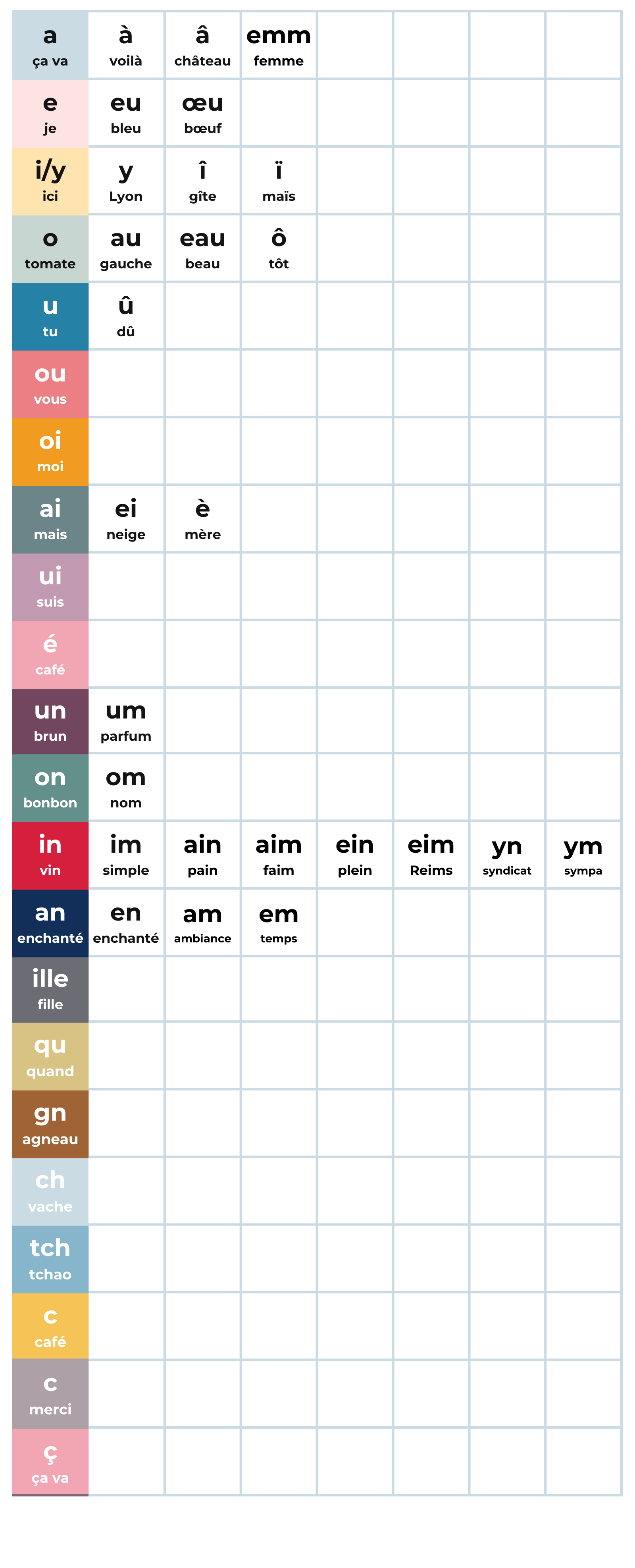
The c cédille is used when the French want to force a pronunciation change. That is, when they want to soften a hard C. Remember how we spoke about hard C sounds when the C is followed by an A, O or U, as in the words café, collège and cumin? In those instances the soft C sound is created naturally. However, if you want to get autoritaire* with a C sound that precedes one of these three vowels, you’ll need to call in the help of the ç cédille.

Here are some examples, most of which I’m sure you’ve seen before:
ça va
garçon
reçu (receipt or received)
And some more:
façade
leçon
déçu (disappointed)
If you’ve done a bit more French than the average ours* you may have also seen it pop up in certain verbs conjugations. Again its sole purpose is to soften a C sound which would otherwise be hard given the letter that follows it. Here’s an example:
COMMENCER - to start
present tense
je commence
tu commences
il/elle/on commence
nous commençons
vous commencez
ils/elles commencent
This is true for other verbs, such as placer*, lancer* and avancer*, among others. Hopefully that will bring some logic to what often appears as pure caprice* with your conjugation spellings.
Enjoy!
*realisation | *bossy | *bear | *capriciousness