Lingua Franca | Award-Winning French Lessons Brisbane

French lessons, events & trips

FRENCH LESSONS EVENTS & GIFTS

Filtering by Category: Learn French

Tirer la Tronche

Je tire la tronche.

Recently, while (re)watching Episode 1 of The Parisian Agency, I was reminded of a great little phrase I’d heard the first time around. Tirer la tronche means to be unhappy, to pout or to brood. If you’ve seen the series, Valentin says it to his mère* just after he gets off the phone with Lisa, the lingerie designer, having just broken the news that someone else has put an offer in on the property she’d had her eye on.

Elle tire la tronche*,” he says.

Even without understanding exactly what he says, you can tell from their short conversation and Valentin’s body language that his client is not happy. This is yet another benefit of watching series in French - you’ll pick up so much from the many visual and auditory clues on offer. Tirer la tronche is just one of the new expressions I learned from this series and there are dozens more to be had. Croisons les doigts* for a second series!

*mother | *She’s pouting | *Let’s cross our fingers

La Petite Histoire | Beginner 3 | Épisode 6

If you've ever done a group lesson here at Lingua Franca, you've probably come into contact with La Petite Histoire*. A tale with the very humblest of beginnings, it winds up becoming a rollicking schlockbuster as you move up the levels and your French improves enough to handle the outrageous (some would say impossible) turns of events of the six young friends.

La Petite Histoire is currently only available to our students, however La Préquelle is for everyone’s enjoyment. Below, another instalment of this new series, Chapter 6 (of 6) of the Beginner 3 level.

*The Little Story | *The Prequel

Je suis entrée dans le café à la fac. J’étais un peux nerveuse, je dois admettre. Avant de quitter la maison, mon mari a dit, pour la dixième fois, que c’était stupide d’aller rencontrer Roger, l’homme qui a répondu à la petite annonce. Et pour la dixième fois, j’ai dit à Jean-Louis que j’étais sérieuse: j’ai besoin de l’aide avec mon anglais. Ce n’est pas une blague!

“Comment je vais trouver ce Roger?” je me suis demandée.

Deux secondes plus tard, j’ai entendu:

”Hello! Leïla. Over here!”

À une table pour deux, j’ai vu un homme: grand, brun et très beau, je dois dire.

“Hello, are you Roger?” j’ai demandé.

”Yes, I am”, il a répondu avec un grand sourire. J’ai remarqué ses yeux bleus et ses dents parfaites. Il était très bronzé et il avait l’air sportif.

J’ai commencé à parler en français parce que c’était trop difficile de trouver mes mots en anglais devant cet homme.

”Mais vous ne voulez pas de l’aide avec votre anglais?” Roger a demandé.

“Oui, bien sûr”, j’ai dit “mais je suis trop nerveuse de parler devant vous”. J’ai rougi.

Roger a souri de nouveau et il a dit “Mais, Nicole, ça va. Nous pouvons prendre notre temps. C’est normal d’être nerveux, mais ne vous inquiétez pas, nous allons pouvoir travailler ensemble. Je suis confiant. Voulez-vous un café?”

J’ai dit “avec plaisir”, il est parti pour prendre des cafés, et j’ai essayé de respirer normalement. “Oh là, là!” je me suis dit.

I entered the café at uni. I was a bit nervous, I must admit. Before leaving the house, my husband said, for the tenth time, that is was stupid to go and meet Roger, the man who responded to my ad. And for the tenth time, I said to Jean-Louis that I was serious: I need help with my English. It’s not a joke.

”How am I going to find this Roger?” I wondered.

Two seconds later, I heard:

”Hello! Leïla. Over here!”

At a table for two, I saw a man: tall, with brown hair and very handsome, I must say.

“Hello, are you Roger?” I asked.

”Yes, I am”, he responded with a big smile. I noticed his blue eyes and his perfect teeth. He was very brown and seemed sporty.

I started to speak in French because it was too difficult to find my words in English in front of this man.

”But don’t you want some help with your English?” Roger asked.

”Yes, of course” I said, “but I’m too nervous to speak in front of you.” I blushed.

Roger smiled again and he said “But Nicole, it’s okay. We can take our time. It’s normal to be nervous, but don’t worry, we are going to be able to work together. I am confident. Do you want a coffee?”

I said '“with pleasure”, he left to get the coffees, and I tried to breathe normally. “Oh, dear!”, I thought.


La Petite Histoire | Beginner 3 | Épisode 5

If you've ever done a group lesson here at Lingua Franca, you've probably come into contact with La Petite Histoire*. A tale with the very humblest of beginnings, it winds up becoming a rollicking schlockbuster as you move up the levels and your French improves enough to handle the outrageous (some would say impossible) turns of events of the six young friends.

La Petite Histoire is currently only available to our students, however La Préquelle is for everyone’s enjoyment. Below, another instalment of this new series, Chapter 5 (of 6) of the Beginner 3 level.

*The Little Story | *The Prequel

Quand je suis rentrée de la fac hier soir, mon mari n’était pas content. Il était dans la cuisine, fatigué après une longue journée à l’hôtel.

“Un homme a appelé pour toi, Leïla”, il a dit.

“Ah, bon?”, j’ai répondu. “Qu’est-ce qu’il a dit?”

“Il veut t’aider avec ton anglais”, a dit Jean-Louis.

“Ah, super! Tu as son numéro?”, j’ai demandé.

“Leïla, il est français. Il ne peut pas t’aider avec ton anglais.”

“Ah, bon? Mais peut-être qu’il a passé beaucoup de temps en Angleterre ou il a de la famille anglaise.”

“Je ne pense pas, Leïla.” Mon mari est difficile parfois.

“Je vais appeler pour voir”, j’ai dit. “J’ai besoin d’aide. J’ai un examen le mois prochain et j’ai peur.”

Jean-Louis est sorti de la cuisine. Deux minutes plus tard, il est retourné et il a dit, “J’ai faim, Leïla. Qu’est-ce que tu vas préparer pour le dîner? J’ai travaillé dur aujourd’hui. Je suis fatigué, j’ai faim et je veux me coucher.”

Moi aussi, j’ai pensé, mais je n’ai rien dit. J’ai ouvert le frigo, j’ai pris des œufs, du fromage, du lait et des lardons et j’ai commencé à préparer le dîner pour notre famille.


When I cam home from uni last night, my husband was not happy. He was in the kitchen, tired after a long day at the hotel.

“A man called for you, Leïla”, he said.

“Oh, really?”, I replied. “What did he say?”

“He wants to help you with your English”, said Jean-Louis.

“Oh, great! Do you have his number?”, I asked.

“Leïla, he is French. He cannot help you with your English.”

“Oh, really? But maybe he has spent lots of time in England or he has English family.”

“I don’t think so, Leïla.” My husband can be difficult sometimes.

“I am going to call to see”, I said. “I need help. I have an exam next month and I’m scared.”

Jean-Louis left the kitchen. Two minutes later, he returned and said, “I’m hungry, Leïla. What are you going to make for dinner? I worked a hard today. I’m tired, I’m hungry and I want to go to bed.”

Me too, I thought, but I didn’t say anything. I opened the fridge, I took some eggs, cheese, milk and bacon and I started to prepare the dinner for our family.

Mika: Elle me dit

Here at Lingua Franca, our students have a variety of learning styles. We try to cater to all styles as much as we possibly can, but there is no replacement for the ideas our students bring to us about their preferred ways of learning.

Recently, one of our students, Nora, was telling her class that she’d found a song that helped her learn the placement of direct and indirect object pronouns. This is an intermediate-level subject, so for you débutants* out there just know that these pronouns are a future pleasure (!) laying in wait for you.

Before I get to Nora’s song, though, which involves a double object pronoun nightmare…pardon* “challenge”, here’s a song that shows the placement of a single object pronoun, in this case, the indirect pronoun me, meaning ‘to me’.

LCCN_20210623_Pronouns.png


The song is called Elle me dit and translates as ‘She says to me’. Literally, it’s ‘She to me says’, as object pronouns are placed between the subject (elle) and the verb (dit) as you’ll hear over and over in this song.

By the way, for les curieux*, here’s a link to the lyrics in both French and English.


Also, look out for a star turn by celebrated French actress Fanny Ardant, who appeared in a blog post last month and whom many of you will know from 2019’s Belle Époque*.

Now here’s Nora’s chanson préférée*, which contains not one, but two, object pronouns. Called Je te le donne, it translates as ‘I give it to you’, or literally ‘I to you it give’. Clair*?

Though the placement and order of double object pronouns can be very complicated, this song gives you an idea of a rule that works for the most part (if you’ve been learning French for even the briefest times, you’ll know it’s not afraid of an exception, like all languages). That rule is this:

Indirect before direct and placed between the subject pronoun and the verb.

LCCN_20210623_Pronouns2.png


PS For those of you who are très, très enthousiastes*, here is the exception:

If both of your object pronouns refer to third person objects, the order is reversed. That is, direct before indirect. For example: Je le lui dis. I say it to him/her. Or literally, I it to him/her say.

*beginners | *sorry | *curious people | *Beautiful Era | *favourite song | *Clear? | *very, very keen

Expressions françaises

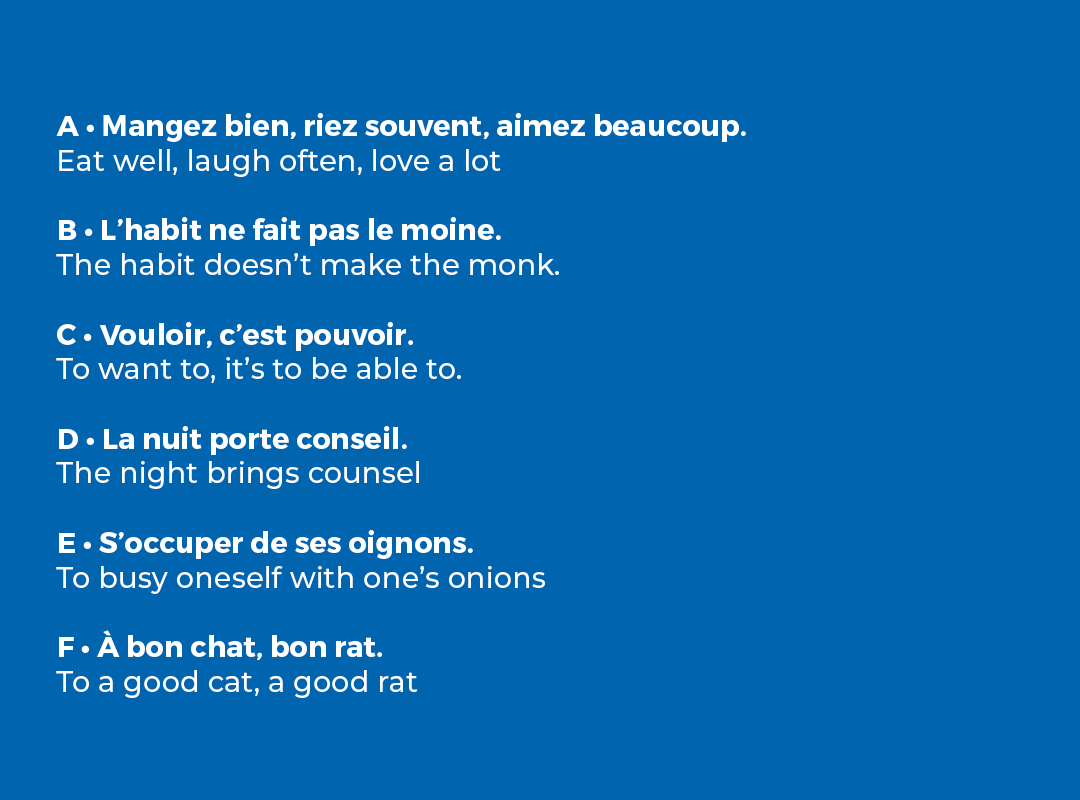
Some French expressions can be translated directly into English and retain their exact meaning. For example, the saying “better late than never” is mieux vaut tard que jamais in French.

Others, however, are more difficult to reconcile with their French counterparts, and therefore much more fun, too.

Allons-y*! See if you’re able to make le lien* between the following French and English sayings.

LCCN_20210623_Phrases2.png

*Let’s go! | *the link

MAI : La Petite Histoire | Beginner 3 | Épisode 4

If you've ever done a group lesson here at Lingua Franca, you've probably come into contact with La Petite Histoire*. A tale with the very humblest of beginnings, it winds up becoming a rollicking schlockbuster as you move up the levels and your French improves enough to handle the outrageous (some would say impossible) turns of events of the six young friends.

La Petite Histoire is currently only available to our students, however La Préquelle is for everyone’s enjoyment. Below, another instalment of this new series, Chapter 4 (of 6) of the Beginner 3 level.

*The Little Story | *The Prequel

LCCN_20210223_13.png

Aujourd’hui je suis allée à la fac pour mettre une petite annonce sur le panneau d’affichage dans le café près du Département d’Anglais. J’ai écrit:

Bonjour, j’ai besoin d’aide! Je cherche un tuteur/une tutrice d’anglais. Je suis francophone mais je suis étudiante en littérature anglaise et je veux parler (et écrire) mieux.
Deux heures par semaine, ici à la fac. Préférence pour un(e) anglophone natif/native. 20F/heure. Contactez-moi au 01 33 57 98 22. Merci.


J’attends avec impatience les réponses. Je dois améliorer mon anglais. Mon professeur, Simon, est très gentil avec moi. Après notre classe hier après-midi, il a demandé que je reste deux minutes. Il a dit qu’il a réfléchi après notre conversation dans le café, et il a offert de m’aider avec mon anglais. Il comprend que je n’ai pas beaucoup de temps avec toutes mes responsabilités. Il a dit que c’est dommage parce que je suis très douée en anglais et que je fais des petites erreurs qui sont simples à corriger. Simon a dit qu’il a beaucoup de temps libre parce que sa famille habite en Angleterre. J’ai dit non mais j’étais tentée, je dois dire.


*Today I went to uni to put an ad on the noticeboard in the café near the English Department. I wrote:

Hello, I need some help! I am looking for an English tutor. I am a French speaker but I am a student of English literature and I want to speak (and write) better. Two hours per week, here at the uni. Preference for a native English speaker. 20 francs/hour. Contact me on 01 33 57 98. Thank you.

I’m impatiently waiting for replies. I have to improve my French. My professor, Simon, is very kind to me. After our class yesterday afternoon, he asked that I stay back for two minutes. He said that he reflected after our conversation in the café, and he offered to help me with my English. He understands that I don’t have much time with all my responsibilities. He said it’s a shame because I am very gifted and that I make simple errors that are simple to correct. Simon said that he has a lot of free time because his family lives in England. I said no but I was tempted, I must say.

A real name changer

You may know that Snow White is called Blanche Neige in French, but could you name her sept petits amis*?

As a reminder, in English they are: Grumpy, Dopey, Doc, Happy, Bashful, Sneezy and Sleepy.

Can you match the images to the French versions of their names? Bon courage*!

LCCN_20210528_7Dwarves2.png

*seven little friends | Good luck

La Petite Histoire | Beginner 3 | Épisode 3

If you've ever done a group lesson here at Lingua Franca, you've probably come into contact with La Petite Histoire*. A tale with the very humblest of beginnings, it winds up becoming a rollicking schlockbuster as you move up the levels and your French improves enough to handle the outrageous (some would say impossible) turns of events of the six young friends.

La Petite Histoire is currently only available to our students, however La Préquelle is for everyone’s enjoyment. Below, another instalment of this new series, Chapter 3 (of 6) of the Beginner 3 level.

*The Little Story | *The Prequel

LCCN_20210223_13.png

Je suis très contente aujourd’hui. Ce matin je suis allée voir mon professeur d’anglais, Simon. J’ai demandé des conseils parce que j’ai reçu une mauvaise note pour mon essai cette semaine et j’étais vraiment déçue.

Simon a préparé un café pour nous, et puis on a parlé un petit peu de nos vies. Simon est anglais, de Londres, mais il habite à Paris depuis quelques mois. Ses enfants habitent en Angleterre avec leur mère, j’imagine. J’ai parlé de ma situation et Simon était très gentil avec moi. Il comprend que je n’ai pas beaucoup de temps mais que j’adore mes études et que je veux avoir de bonnes notes. Il a dit que mon anglais était super, mais que je fais de petites erreurs, qui est normal. Il a proposé que je trouve un tuteur et je pense que c’est une excellente idée.


I am very happy today. This morning, I went to see my English professor, Simon. I asked for some advice because I received a bad mark for my essay this week and I was really disappointed.

Simon made a coffee for us, and then we spoke a bit about our lives. Simon is English, from London, but he’s been living in Paris for a few months. His children live in England with their mother, I suppose. I spoke about my situation and Simon was very kind to me. He understands that I don’t have a lot of time but that I love my studies and that I want to have good marks. He said that my English was great, but that I make little errors, which is normal. He suggested that I find a tutor and I think that’s an excellent idea.

What is a cognate?

A cognate is a word that comes from the same origin as a word from a different language. Below, three of our favourites.

LCCN_202104267.png

MIRAGE

Both French and English use the word ‘mirage’ to describe the bending of light which produces an optical illusion, but do you know where the word originally comes from? It’s most likely via the Latin word ‘mirare’ (to admire/gaze) which is where we get the word ‘mirror’. In French we have the reflexive verb ‘se mirer’ which means ‘to gaze at oneself/to be reflected’, hence mirage. There is, though, a chance it comes from the Latin word ‘mirus’ (wonderful) which is where we get the word miracle. Cool, non*?

HORS D’ŒUVRE

Un œuvre in French is ‘a work’, so to say 'a work of art' we say un œuvre d’art. Even in English we can use the word ‘œuvre’ to describe the body of work of an artist. As we know, the French take la cuisine* very, very seriously and if you’ve ever had a sublime French meal you’d probably be happy to consider the chef un or une artiste*. So, since hors means ‘outside of’, it makes sense that both languages call a small savoury dish, typically served as an appetizer, un hors d’œuvre, since it arrives at your table outside the main œuvre d’art which is of course le plat principal*.

POT POURRI

If you’re a person of un certain âge* you’ll remember the pot pourri craze that swept the nation in the eighties. No domestic surface was safe from the little terracotta pots of dried petals we used to add a touch of country style to our homes.

I wonder if we would have been quite so keen had we known the verb pourrir at the time which means ‘to rot’. Yes, that’s right, pot pourri translates to rotten pot which somewhat takes away the appeal, non*?

*Cool, isn’t it? | *cooking | *an artist | *the main course | *a certain age | *doesn’t it?

Tips for learning a language

Finalement*! An article on language that tells the truth.

LCCN_20210426_Quotes.png

There’s a whole swathe of companies in the language learning cadre* who claim you can learn a language ‘easily!’, ‘in five minutes a day!’ or in ‘only three months!” (and yes, they usually are followed by des points d’exclamation* to drive home the idea that it’s ‘easy!’ to learn a language and that you’re a bit of a fool if you find it harder than that).

LCCN_20210426_Quotes2.png

Learning a language is an undertaking and depending on what you want to achieve, it can take a few hours (phrases for an upcoming trip) or a whole lifetime (if you love French, this is a thrilling idea, not a depressing one).

LCCN_20210426_Quotes3.png

C’est un long article*, but if you have the time, I recommend you read the whole article because it’s quite inspiring. Most of our keenest students already complement their learning with other methods such as apps, language exchanges and TV shows. This article has a host of great ideas for embedding more French in your life, and that is always a great thing.

*Finally! | *arena | *exclamation marks | *It’s a long article

La Petite Histoire | Beginner 3 | Épisode 2

If you've ever done a group lesson here at Lingua Franca, you've probably come into contact with La Petite Histoire*. A tale with the very humblest of beginnings, it winds up becoming a rollicking schlockbuster as you move up the levels and your French improves enough to handle the outrageous (some would say impossible) turns of events of the six young friends.

La Petite Histoire is currently only available to our students, however La Préquelle is for everyone’s enjoyment. Below, another instalment of this new series, Chapter 2 (of 6) of the Beginner 3 level.

*The Little Story | *The Prequel

LCCN_20210223_13.png

Aujourd’hui était un peu difficile. Cet après-midi à l’université, notre professeur, Simon, a rendu nos essais et j’ai reçu une mauvaise note! J’étais déçue car j’ai fait beaucoup de travail et j’étais contente de mes efforts. C’est difficile quand on est plus âgé que les autres étudiants. J’ai mes responsabilités: j’ai un mari qui travaille beaucoup, trois petits enfants, je dois cuisiner, faire le ménage et faire mes devoirs, aussi.

Quand je suis rentrée, mon mari, Jean-Louis, a vu ma tête et il a demandé s’il y avait un problème. J’ai parlé avec lui et il a dit que peut-être ce n’est pas le bon moment pour moi de faire mes études. Est-ce qu’il a raison? Je ne sais pas mais je sais que ce soir je suis un peu triste. J’adore faire mes études, j’adore lire et apprendre l’anglais et il y a des gens très intéressants dans mes classes. Je vais aller parler à mon professeur, Simon, demain. J’ai besoin des conseils.


Today was a bit difficult. This afternoon at university, our professor, Simon, gave back our essays and I received a bad mark! I was disappointed because I did a lot of work and I was happy with my efforts. It’s hard when you’re older than the other students. I have my responsibilities: I have a husband who works a lot, three little children, I have to cook, do the housework and do my homework, as well.

When I went back home, my husband, Jean-Louis, saw my face and he asked if there was a problem. I spoke to him and he said that maybe it’s not the right time for me to do my studies. Is he right? I don’t know but I do know that tonight I am a bit sad. I love doing my studies, I love to read and learn English and there are very interesting people in my classes. I am going to go and speak to my professor, Simon, tomorrow. I need some advice.

Funny expressions with avoir

If you’ve studied French for a while, you’ll know that the verb avoir* ranks just behind être* as the language’s most useful verb.

When we’re just starting out, we tend to use avoir to talk about our friends, family and age.

J’ai deux sœurs et un frère.
I have two sisters and a brother.

Je n’ai pas d’enfants
I don’t have any children

J’ai 34 ans.
I am 34 years of age.

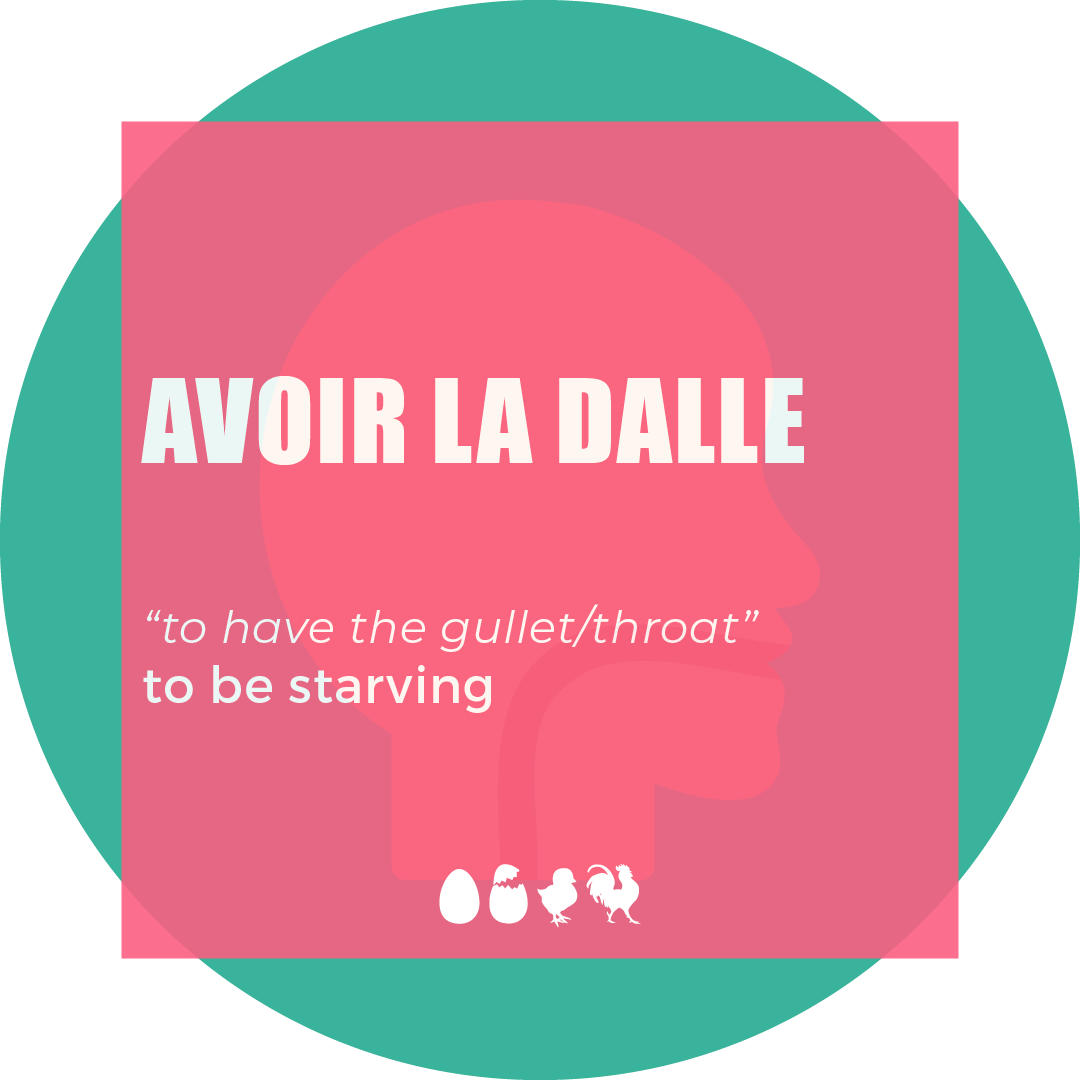
So as you can see, though avoir is worth its weight in gold, its application can sometimes seem a little…banal*. With that in mind, we’ve rustled up the following expressions, all of which contain avoir, as well as just a touch more personnalité*

LCCN_20210329_Avoir.png
LCCN_20210329_Avoir3.png
LCCN_20210329_Avoir5.png
LCCN_20210329_Avoir2.png
LCCN_20210329_Avoir4.png
LCCN_20210329_Avoir6.png

*to have | *to be | *pedestrian | *personality

La Petite Histoire

If you've ever done a group lesson here at Lingua Franca, you've probably come into contact with La Petite Histoire*. A tale with the very humblest of beginnings, it winds up becoming a rollicking schlockbuster as you move up the levels and your French improves enough to handle the outrageous (some would say impossible) turns of events of the six young friends.

La Petite Histoire is currently only available to our students, however La Préquelle is for everyone’s enjoyment. Below, another instalment of this new series, Chapter 1 (of 6) of the Beginner 3 level.

*The Little Story | *The Prequel

LCCN_20210223_13.png

Il est maintenant 17h45, je suis chez moi avec mes filles et mon mari va bientôt arriver, j’espère. Je veux parler de ma journée à l’université avec lui.
Je suis retournée à l'université il y a quelques* mois et j'adore l'expérience. Bien sûr, c'est difficile avec des enfants, un mari et des devoirs, mais la langue et la littérature anglaise sont vraiment une passion pour moi. En plus, j'aime être avec des gens qui partagent* mes intérêts.
Mon professeur de littérature est anglais. Il s’appelle Simon et j’adore écouter quand il parle anglais. Son accent est (naturellement) parfait et quand il lit les poèmes* de Wordsworth, par exemple, c’est un rêve* pour moi.
Je suis un peu plus âgée que mes collègues parce que je suis restée à la maison avec nos trois enfants et par conséquent*, je suis un peu plus sérieuse comme étudiante.


It is now 5:45pm, I am at home with my girls and my husband is going to arrive soon, I hope. I want to talk about my day at university with him.
I went back to university a few months ago and I am loving the experience. Of course, it's difficult with children, a husband and homework, but the English language and literature is really a passion for me. Also, I like to be with people who share my interests.
My literature professor is English. His name is Simon and I love listening when he speaks English. His accent is (naturally) perfect and when he reads Wordsworth's poems, for example, it's a dream for me.
I am a bit older than my colleagues because I stayed at home with our three children and as a consequence I am a bit more serious as a student.

*some | *share | *poems | *dream | *as a consequence

Funny reflexive verbs

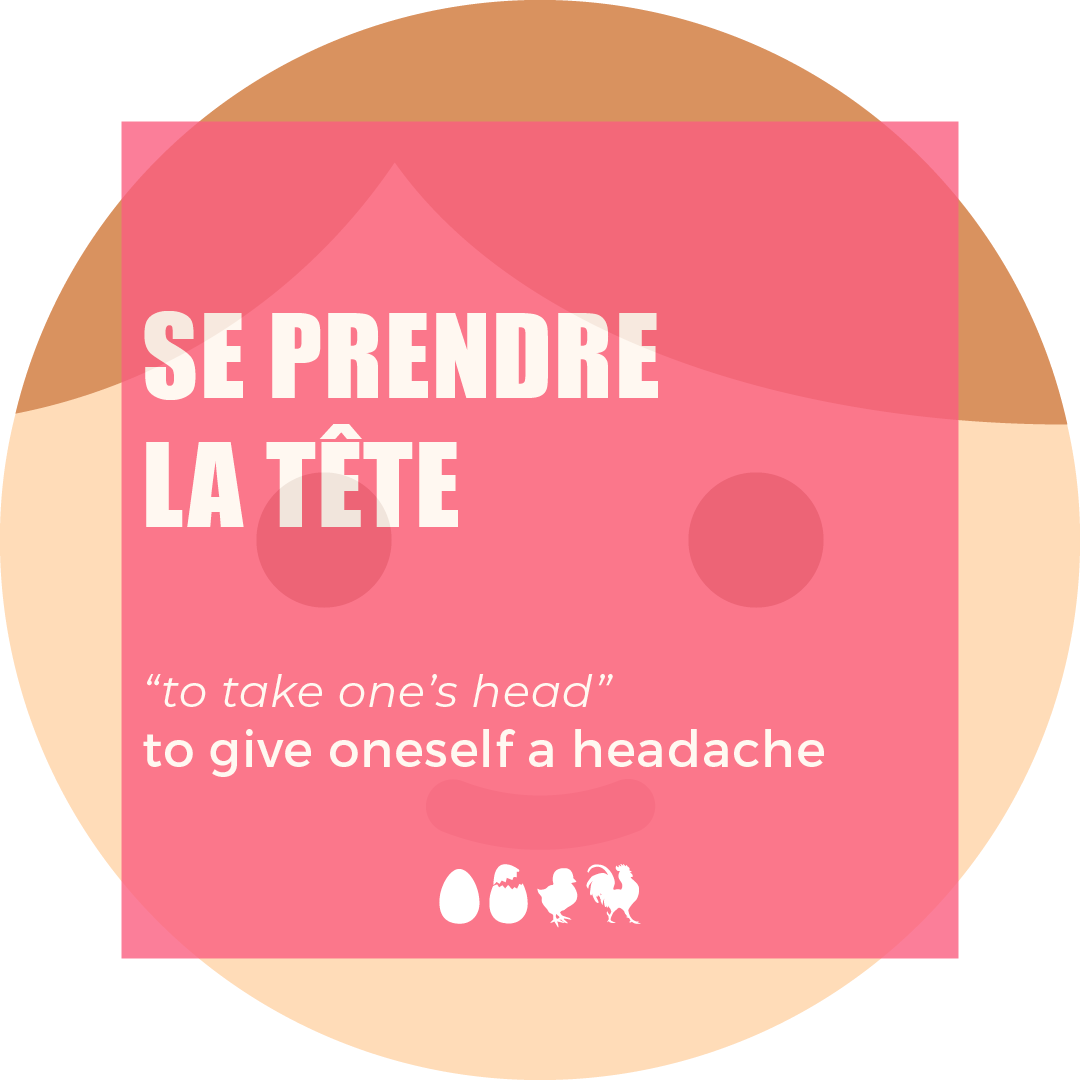
Reflexive verbs are rarely fun, but we find using them through colloquialisms makes them a little more intéressants*.

So, what do pelles*, sucettes* and encre* have in common? Not a lot on the face of it, but they do all make an appearance in these strangely funny phrases.

If you can’t remember what reflexive verbs are (or haven’t learned about them yet), they are verbs where the subject and the object are the same, so the action is ‘reflected’. That is, the person doing the action also receives the action.

For example :

Je me lave.

“I wash myself” is reflexive as I’m doing and receiving the washing.

Je lave la voiture.

“I wash the car” isn’t reflexive as I’m doing the washing but not receiving it.

IG_20210210_.png
IG_20210210_2.png
IG_20210210_5.png
IG_20210210_3.png
IG_20210210_4.png
IG_20210210_6.png

*interesting | *shovels | *lollipops | *ink

La Petite Histoire

If you've ever done a group lesson here at Lingua Franca, you've probably come into contact with La Petite Histoire*. A tale with the very humblest of beginnings, it winds up becoming a rollicking schlockbuster as you move up the levels and your French improves enough to handle the outrageous (some would say impossible) turns of events of the six young friends.

La Petite Histoire is currently only available to our students, however La Préquelle is for everyone’s enjoyment. Below, the fifth instalment of this new series, which is written to a Beginner 2 level.

*The Little Story | *The Prequel

LCCN_20210127_LPH.png

Depuis septembre, une journée typique pour moi est très longue. Je suis maintenant responsable d'un hôtel dans le premier arrondissement et je travaille très dur*.
En général, je me lève tôt (avant 07h00) et je prends le petit-déjeuner avec ma femme et mes petite filles, Anouk, Céline et Vivienne. Après, je me douche, je m'habille et je pars pour aller au travail. J'ai des réunions avec l'équipe* entre* les services et après je dîne dans le restaurant de l'hôtel. Après, je parle avec les réceptionnistes et nous regardons les réservations ensemble.
À 21h00, je me dépêche pour rentrer à la maison et voir ma femme avant de me coucher à 23h30.

*hard | *team | *between

LCCN_20201028_LPH2.png

Je suis mère, femme et étudiante donc une journée pour moi est très chargée. Je dois être très organisée parce que mon mari travaille beaucoup et il ne peut pas aider* beaucoup avec la maison et nos petites*.
Je me lève d'habitude à 05h00 quand ma petite fille se réveille. Je prépare son petit-déjeuner et puis je prépare le petit-déjeuner pour mon mari et moi. Parfois*, je ne peux pas prendre le petit-déjeuner avec Jean-Louis parce que les enfants veulent leur maman* et mon café est toujours froid!
Le lundi, mardi et vendredi je dépose* les enfants chez ma belle-sœur et je vais à l'université. C'est comme des vacances pour moi - toute la journée pour apprendre, lire et parler avec mes nouveaux amis.
Le soir, je fais le ménage, je m'occupe* des enfants et j'attends mon mari, qui* est souvent en retard. Je me sens un peu seule parfois. C'est pour ça que j'adore aller à l'université.

*to help | *our little one | *sometimes | *mum | *drop off | to take care of | *who

Une journée typique pour ma femme et moi commence à 08h00. Nous nous réveillons, ma femme se lève, elle prépare un café pour moi et elle retourne à la cuisine pour préparer notre petit-déjeuner. Je lis le journal et je bois mon café et puis je me lève aussi pour commencer ma journée.
Le lundi, mardi et vendredi, ma belle-sœur, Leïla, arrive chez nous avec sa petite fille, Anouk. Leïla étudie l'anglais à la Sorbonne (elle est très intelligente et déterminée) et Yasmine adore les enfants alors elle s'occupe d'Anouk pour Leïla. Ma femme va avoir un bébé aussi bientôt, mais elle est très généreuse et parfois trop gentille, à mon avis*.

*in my opinion

LCCN_20201028_LPH4.png

Je suis professeur d'anglais à l'Université de la Sorbonne. Je travaille du lundi au vendredi le week-end, j'aime aller au marché le samedi matin pour faire les courses pour la semaine. J'habite seule, mais j'aime cuisiner*, alors je prends le temps de bien choisir les fromages, de la charcuterie, du pain et des fruits et légumes.

Le samedi après-midi, j'écris toujours une lettre à mes enfants qui habitent en Angleterre, et puis je travaille. J'aime lire les rédactions* des étudiants en paix*, sans interruption. La qualité des rédactions est très bonne. Les étudiants plus âgés* sont les plus forts* en général. J'ai environ* 200 étudiants mais je ne les connais pas encore. J'ai hâte d'apprendre à les connaître*.

*to cook | *essays | *in peace | *older | *the strongest | *about | *to get to know them

LCCN_20201028_LPH5.png

Ma journée commence à 09h30. Je me lève, je prépare un café et je retourne au lit. J'étudie à l'Université de la Sorbonne cette année et j'ai des classes le mardi, mercredi et vendredi. Ma première classe est à 13h00 (je ne suis pas stupide) donc je passe le matin tranquillement* à la maison. Je téléphone à ma copine (elle habite en Angleterre en ce moment) et je lis mon texte*. C'est vraiment difficile. Nous étudions les poètes romantiques ce trimestre donc nous lisons Blake, Wordsworth et Keats.

Je vais devoir trouver un tuteur* je pense parce que je ne comprends rien! Ma copine essaie* de m'aider* mais elle est frustrée parfois et moi j'ai honte de mon anglais donc je vais mettre une annonce à l'université demain.

En plus*, c'est difficile de se concentrer en classe parce qu'il y a beaucoup de jolies femmes qui étudient avec moi. J'aime beaucoup ma copine, mais elle est loin*...

*peacefully | *textbook | *tutor | *tries | *help me | *Besides | *far away

LCCN_20201028_LPH6.png

Je suis très contente avec ma décision d'étudier à l'université cette année. Comme vous savez, j'ai un problème de visa et donc je cherche un mari pour pouvoir rester ici en France.

À l'université il y a beaucoup d'hommes intéressants et par intéressant je veux dire* beaux, intelligents et (très important) français. Je préfère être avec un homme de mon âge mais franchement, ce sont les professeurs qui sont les plus stables.

Je me dépêche le matin pour arriver au cafétéria tôt parce que beaucoup de professeurs viennent à 09h00 pour prendre un café avant le travail. Je prends une table avec des chaises supplémentaires, comme ça mon futur mari va avoir une excuse de me parler.

C'est simplement une question de patience - je vais rencontrer quelqu'un* bientôt, je suis sûre.

*I mean | *someone | *sure


JEAN-LOUIS
Since September, a typical day for me is very long. I am now the manager of a hotel in the first arrondissement and I work very hard.
I get up early (before 7am) and I have breakfast with my wife and my little daughters, Anouk, Céline and Vivienne. After, I have a shower and get dressed and I leave to go to work. I have meetings with the team between the services and afterwards, I have dinner in the hotel restaurant. After that, I talk to the receptionists and we look at the bookings together.
At 9pm, I hurry to go home and see my wife before going to bed at 11:30pm.

LEÏLA
I am a mother, wife and student so a day for me is very busy. I have to be very organised because my husband works a lot and he can't help a lot with the house and our little ones.
I usually get up at 5am when my daughter wakes up. I prepare her breakfast and then I prepare breakfast for my husband and me. Sometimes, I can't have breakfast with Jean-Louis because our children want their mum and my coffee is always cold!
On Mondays, Tuesdays and Fridays I drop the children off at my sister-in-law's place and I go to university. It's like holidays for me - all day to learn, read and talk with my new friends.
At night, I do the housework, I take care of the children and I wait for my husband, who is often late. I feel a little lonely at times. That's why I love going to university.

HERVÉ
A typical day for my wife and me starts at 8am. We wake up, my wife gets up, she makes a coffee for me and she returns to the kitchen to prepare our breakfast. I read the newspaper and drink my coffee and then I get up as well to start my day.
On Mondays, Tuesdays and Fridays, my sister-in-law, Leïla, arrives at our place with her little daughter, Anouk. Leïla is studying English at the Sorbonne (she is very intelligent and determined) and Yasmine adores children so she looks after Anouk for Leïla. My wife is going to have a baby too, soon, but she is very generous and sometimes too kind, in my opinion.

SIMON
I am an English professor at the Sorbonne University. I work from Monday to Friday and on the weekend, I like to go to the market to do the grocery shopping for the week. I live alone, but I like to cook, so I take the time to choose the cheeses, cold meats, bread and fruit and vegetables well.
On Saturday afternoons, I always write to my children who live in England, and then I work. I like to read the students' essays in peace, without interruption. The quality of the essays is very good. The older students are the strongest in general. I have about 200 students but I don't know them yet. I am keen to get to know them.

ROGER
My day starts at 9:30am. I get up, I make a coffee and I go back to bed. I am studying at the Sorbonne University this year and I have classes on Tuesday, Wednesday and Friday. My first class is at 1:00pm (I'm not stupid) so I spend the morning peacefully at home. I phone my girlfriend (she's living in England at the moment) and I read my textbook. It's really hard. We're studying the romantic poets this semester so we're reading Blake, Wordsworth and Keats.
I am going to have to find a tutor I think because I don't understand anything! My girlfriend tries to help me but she's frustrated sometimes and I'm ashamed of my English so I am going to put a notice up at the university tomorrow.
Besides, it's hard to concentrate in class because there are lots of pretty women who study with me. I like my girlfriend a lot, but she is far away...

NOËLLE
I am very happy with my decision to study at the university this year. As you know, I have a visa problem and so I'm looking for a husband to be able to stay here in France. At the university there are lots of interesting men and by interesting I mean handsome, intelligent and (very important) French. I prefer to be with a man of my age but frankly it's the professors who are the most stable.

I hurry in the morning to get to the cafeteria early because lots of the professors come at 9:00am to have a coffee before work. I take a table with extra chairs, that way my future husband has an excuse to talk to me. It's simply a question of patience - I am going to meet someone soon, I'm sure.

French Christmas Food

A French Christmas dinner is traditionally shared en famille* on the evening of the 24th December. True traditionalists will have a light supper before attending la messe de minuit*, then return home to the real sit-down dinner, which can last until 4am!

Florence from My Parisian Kitchen, a bilingual French cooking blog, has published her top picks for a traditional feast below, and though times are changing in France as everywhere, a quick straw poll au nid* revealed the team were plus ou moins* in agreement. Bon appétit*!

LCCN_20201219_Noel.png

And let’s not forget le champagne*, of course! As per the My Parisian Kitchen article:

This is not a dish but is actually something you definitely have to serve for a classic French Christmas eve dinner. You may want to pour in crème de cassis blackcurrant liquor to make a Kir Royal. But if the champagne is good, there’s no need!
— Florence (My Parisian Kitchen)

[Read full article]

*with the family | *midnight mass | *the champagne | *at the nest | *more or less | *Happy eating!

La Petite Histoire

If you've ever done a group lesson here at Lingua Franca, you've probably come into contact with La Petite Histoire*. A tale with the very humblest of beginnings, it winds up becoming a rollicking schlockbuster as you move up the levels and your French improves enough to handle the outrageous (some would say impossible) turns of events of the six young friends.

La Petite Histoire is currently only available to our students, however La Préquelle is for everyone’s enjoyment. Below, the fifth instalment of this new series, which is written to a Beginner 1 level.

*The Little Story | *The Prequel

LCCN_20201219_LPH.png

Après le travail ce soir, je vais rentrer tout de suite*. J'ai une excellente nouvelle* et je veux* parler avec ma femme. En septembre, je vais recevoir une promotion! Je vais devenir responsable de l'hôtel où je travaille et je suis très enthousiaste*. Peut-être* dans le futur je vais pouvoir acheter un hôtel, mais pour le moment le plan est de faire un bon travail. Naturellement*, je vais travailler un peu plus, mais heureusement* ma femme va rester à la maison avec nos enfants.

*straight away | *piece of news | *I want | *Perhaps | *Naturally | *luckily/fortunately

LCCN_20201028_LPH2.png

Aujourd'hui, je suis très, très contente. En général, je suis contente mais récemment* je suis un peu frustrée*. J'adore mes filles (Anouk a deux ans et les jumelles* ont trois mois) et j'adore être mère mais j'adore aussi la culture, les langues* et franchement*, les adultes. Donc, je vais aller à l'université pour étudier une licence en lettres*. Je vais continuer à apprendre* l'anglais: la littérature et la langue. Je suis très enthousiaste et je suis sûre que mon mari va être content aussi.

*recently | *frustrated | *twins |*languages | *frankly | *Bachelor of Arts | *to learn

Il est 09h45 et nous allons partir bientôt. Nous allons aller chez le médecin à 10h30 parce que nous avons un rendez-vous. Ma femme et moi allons avoir un bébé cette année et le médecin va faire un contrôle*. Après, nous allons aller à un petit restaurant près de notre appartement pour le déjeuner. C'est fantastique parce que c'est notre premier enfant et ma femme, Amina, va rester à la maison et je vais continuer à travailler. Heureusement, elle aime beaucoup ma sœur Leïla. Elle a déjà* des enfants et Leïla va pouvoir* aider Amina avec des conseils*.

*a check-up | *already | *to be able to/can | *some advice

LCCN_20201028_LPH4.png

Alors, c'est officiel*. Je vais retourner à Paris pour travailler à l'Université de la Sorbonne en septembre. Je suis en Angleterre en ce moment avec mes enfants mais je vais partir dans deux ou trois semaines pour trouver un appartement dans le cinquième ou sixième arrondissement. Je vais être triste de quitter* mes enfants mais c'est nécessaire malheureusement*. C'est impossible de trouver un poste* ici en ce moment. Et j'adore Paris, c'est vrai, c'est juste* difficile pour mes enfants.

*it's official | *to leave | *unluckily/unfortunately | *a position | *just

LCCN_20201028_LPH5.png

En septembre je vais étudier* l'anglais à l'Université de la Sorbonne. Moi! Un étudiant! C'est incroyable. Normalement*, je préfère faire la fête, c'est vrai, mais ma copine* est anglaise alors je veux parler bien anglais. Je dois* faire quelque chose*. Elle est actrice et elle travaille avec des collègues anglais et je n'aime pas quand on va aux restaurants ensemble et je ne comprends pas la conversation. Je n'aime pas beaucoup étudier, mais j'adore Alexandra. En plus*, mes parents disent que je dois faire quelque chose avec ma vie*.

*to study | *Usually | *my girlfriend | *I must | *something | *And plus | *my life

LCCN_20201028_LPH6.png

Je vais retourner à l'université en septembre et je suis très enthousiaste. Je vais continuer à étudier le français mais je vais avoir un autre* projet aussi. Je vais chercher un homme...un mari, en fait*. J'ai des problèmes de visa et pour rester en France je vais devoir* trouver un homme français très vite. Je ne sors plus* avec Étienne. Il n'est pas très sérieux et je n'ai pas le temps pour des jeux,* alors voilà*.

*another | *in fact | *to have to/must | no longer | *games | *so there you go


JEAN-LOUIS
After work tonight, I am going to go home straight away. I have a great piece of news and I want to speak to my wife. In September, I'm going to receive a promotion! I am going to become the manager of the hotel where I work and I am very excited. Maybe in the future I am going to be able to buy a hotel, but for the moment the plan is to do a good job. Naturally*, I am going to work a bit more, but luckily my wife is going to stay at home with our children.

LEÏLA
Today, I am very, very happy. In general, I am happy but recently I am a bit frustrated. I love my daughters (Anouk is two years of age and the twins are three months) and I love being a mother but I also love culture, languages and frankly, adults. So, I'm going to go to university to study a Bachelor of Arts. I am going to continue to learn English: the literature and the language. I am very excited and I am sure that my husband is going to be very happy as well.

HERVÉ
It is 9:45am and we are going to leave soon. We are going to go to the doctor's at 10:30am because we have an appointment. My wife and I are going to have a baby this year and the doctor is going to do a check-up. After, we are going to go to a little restaurant close to our apartment for lunch. It's fantastic because it's our first baby and my wife, Amina, is going to stay at home and I am going to continue to work. Luckily, she likes my sister Leïla a lot. She already has children and Leïla is going to be able to help Amina with some advice.

SIMON
Well, it's official. I am going to return to Paris to work at the Sorbonne University in September. I am in England at the moment with my children but I am going to leave in two or three weeks in order to find an apartment in the fifth or sixth arrondissement. I am going to be sad to leave my children but it's necessary unfortunately. It's impossible to find a position here at the moment. And I love Paris, it's true, it's just difficult for my children.

ROGER
In September I am going to study English at the Sorbonne University. Me! A student! It's incredible. Usually, I prefer to party, it's true, but my girlfriend is English so I want to speak English well. I must do something. She is an actress and she works with English colleagues and I don't like it when we go to restaurants together and I don't understand the conversation. I don't like studying very much, but I adore Alexandra. Plus, my parents say I have to do something with my life.

NOËLLE
I am going to return to university in September and I am very excited. I am going to continue to study French but I am going to have another project as well. I am going to look for a man...a husband in fact. I have some visa problems and in order to stay in France I am going to have to find a French man very quickly. I am not going out with Étienne anymore. He is not very serious and I don't have time for games, so there you go.