Hard English words for French people
I know people are dubitatifs* when we tell them that the French often perceive our pronunciation flaws as adorable, but just try watching this video and not smiling in sympathy.
*doubtful

French lessons, events & trips
FRENCH LESSONS EVENTS & GIFTS
I know people are dubitatifs* when we tell them that the French often perceive our pronunciation flaws as adorable, but just try watching this video and not smiling in sympathy.
*doubtful
If you have just une minute*, it is well worth watching the very beginning of this documentary, “Dior - Designer of Dreams”.
The opening scenes find us at a photo shoot for the image above, and the moment of its capture is pure magie*. Keep an ear out for the unexpected Australian accent off camera, too. It truly is une équipe internationale* who pulled off this exquisite exhibition of 70 years of the House of Dior at Le Musée des Arts Décoratifs de Paris in 2017.
If you have an interest in la haute couture*, you’ll fall in love dès le départ*.
If you’re more of a sceptic, though, this could be le documentaire* to win you over, as it illustrates in the most intricate detail le dévouement*, la passion* et le travail acharné* required to create things of such beauty.
Currently showing at the Brooklyn Museum in New York, is it too much to hope it’ll eventually find its way aux Antipodes*?
Entre temps*, we have a video to watch… Enjoy.
*one minute | *pure magic | *an international team | *haute couture (literally ‘high sewing’) | *from the get-go | *the documentary | *the dedication | *the passion | *the sheer hard work | *Down Under

In 2019, Lingua Franca took two groups of Chouchous* on a two-week tour around north-western France. One of the absolute points forts* was our visit to St Malo and from these belles images* it's easy to see why.
📸 : ouramericandream.fr


*Teacher’s Pets | *highlights | *beautiful images
There's only one...well deux* words for this delicious French version of comfort food: miam, miam*. Cuisinez bien*!


*two | *yum, yum | *Happy cooking!
Picture and recipe source : www.delscookingtwist.com
If you've ever done a group lesson here at Lingua Franca, you've probably come into contact with La Petite Histoire*. A tale with the very humblest of beginnings, it winds up becoming a rollicking schlockbuster as you move up the levels and your French improves enough to handle the outrageous (some would say impossible) turns of events of the six young friends.
La Petite Histoire is currently only available to our students, however La Préquelle is for everyone’s enjoyment. Below, another instalment of this new series, Chapter 3 (of 6) of the Beginner Revision level.
*The Little Story | *The Prequel

“Qu’est-ce que tu fais aujourd’hui, ma chérie?” Jean Louis a demandé.
“J’ai mon cours d’anglais avec Roger,” j’ai dit.
“Bien sûr,” il a répondu. “Comment ça va?”
“Super, merci,” j’ai menti.
En vérité, Roger préfère flirter avec moi, j’ai pensé, mais je ne vais pas dire ça à mon mari!
_____________
“Salut Leïla, tu veux quelque chose à boire?” Roger a demandé quand je suis entrée dans le café.
“S’il te plaît. Un thé anglais avec du lait,” j’ai répondu.
“Ah, ma petite fille anglaise,” Roger a taquiné. “J’admire ta détermination d’apprendre l’anglais, Leïla.” Et puis il est parti pour aller au comptoir.
Tu n’es pas déterminé, Roger, ça, c’est sûr, j’ai pensé.
Quand Roger est retourné, j’ai décidé de dire quelque chose.
“Roger, j’aime bien mes cours d’anglais avec toi,” j’ai commencé.
“Moi, aussi, Leïla. J’aime être payé pour passer du temps avec une très belle femme deux fois par semaine,” il a souri et il m’a passé mon café. “Du sucre?”
”Je suis sérieuse, Roger. Ne me taquine pas,” j’ai dit.“Moi aussi, Leïla, je suis sérieux. Tu es une très belle femme. Je pense que tous les autres hommes dans ce café sont jaloux de moi.”
“Roger, ça suffit! Je n’aime pas quand tu parles comme ça. Tu sais que je suis mariée.”
“Oui, tu es mariée, Leïla, mais tu n’es pas morte! On est amis. J’aime te taquiner. Tu rougis très facilement.”
Mon visage était rouge, c’est vrai, mais je ne souriais pas.
“Roger, je veux changer nos leçons. Je ne veux plus…”
Soudain, une femme est passé devant notre table. Elle était magnifique - grande, avec des cheveux roux et les yeux verts.
”Coucou Roger!” elle a dit. “Toujours dans le café, je vois,” elle a taquiné. “Je suis surprise que ce n’est pas un bar.”“Tu me connais bien,” il a dit et il a rougi.
“À demain!” elle a dit, et elle est partie.
“C’est qui ça?” j’ai demandé.
“Elle s’appelle Noëlle’, il a dit et il n’a pas souri.
“What are you doing today, my darling?” Jean-Louis asked.
“I have my English lesson with Roger,” I said.
“Of course,” he responded. “How’s it going?”
“Super,” I lied.
In truth, Roger prefers to flirt with me, I thought, but I’m not going to say that to my husband!
_____________
“Hi Leïla, do you want something to drink?” Roger asked when I entered the café.
“Yes, please. An English tea with milk,’ I responded.
“Oh, my little English girl,” Roger teased, “I admire your determination to learn English, Leïla.” And then he left to go to the counter.
You’re not determined,Roger, that’s for sure, I thought.
When Roger returned, I decided to say something.
“Roger, I really like my English lessons with you,” I started.
“Me too, Leïla. I like to be paid to spend tike with a very beautiful woman twice a week.” He smiled and passed me my coffee. “Sugar?”
“I’m serious, Roger. Don’t tease me,” I said.
“I’m serious, too. Leïla. You are a very beautiful woman. I think that all the other men in the café are jealous of me.””Roger, that’s enough! I don’t like it when you speak to me like that. You know that I’m married.”
“Yes, you are married, Leïla, but you’re not dead! We’re friends. I like teasing you. You blush very easily.”
My face was red, it’s true, but I wasn’t smiling.
“Roger, I want to change our lessons. I no longer want…”
Suddenly, a woman passed in front of our table. She was magnificent - tall, with red hair and green eyes.
“Hi there, Roger!” she said. “Always in the café, I see,” she teased. “I’m surprised it’s not a bar.”
“You know me well,” he said and he blushed.
“See you tomorrow!” she said, and she left.
“Who’s that?” I asked.
“Her name is Noëlle,” he said and he didn’t smile.
If you’re very, very lucky, one day you might wish to tell someone in French that you miss them. Encore mieux*, they might tell you that they’re missing you. Romantique, non*?
Romantique, oui*, but it’s not as easy as you might think.
The verb ‘to miss’ is manquer in French. So far so good, you may think, but this is where it starts to get a little tricky.
In English we say “I miss you". In French though, the structure is the equivalent of “You are missing to me”. That is, in French, the object of your affections takes centre stage, whereas in English it’s all about the person doing the missing.


It may help to think of the verb manquer as ‘to lack’. I find this help me come to grips with the fact that we use an indirect pronoun (to me) rather than a direct one (me). Ne prends pas la tête*, though. If you do structure your sentence in the English way, you’ll just be telling the person that they’re lacking to you, which could spark a conversation all of its own.

Of course, you could always turn this phrase into a question if you wanted to ask someone if they were missing you.

C’est clair*? Maybe not right now, but you will wrap your mind around this counterintuitive little gem in time, c’est promis. One of our Chouchous*, Nora, found this song which she swears has helped her to just that. Merci encore*, Nora.
*better still | *Romantic, isn’t it? | *Romantic, yes | *Don’t worry too much | *Is that clear? | *I promise | *Teacher’s Pets | *Thanks again
Many people struggle to keep the French modal verbs vouloir*, pouvoir* and devoir* straight in their heads.
At Lingua Franca, we teach that:

This charming French publicité* for condoms gives us a much more interesting way to remember the verb pouvoir, though. The little boy’s constant refrain is “Maman a dit que je peux” (Mum said I can), reminding us that pouvoir is as much about permission as it is possibility, and this boy is seemingly granted permission around the clock!
Tellement mignon.*
*to want/wish | *to be able to/can | *to have to/must | *ad | *So cute
You may have heard some talk about la rentrée* earlier this month, as French children were preparing to head back to school.
While la rentrée definitely describes the return to school after the long summer holidays in France, it is also used more broadly among the rest of the population.
In August, virtually the whole of France slows to a crawl, with not only schools but many businesses, restaurants and even the government shutting up shop for the hottest of the summer weather.
Almost everyone takes a holiday away from their home town. The most privileged may eye off international experiences and those on more modest budgets may faire du camping*. Regardless of the destination, le but* is to leave behind le quotidien* for a chance to changer les idées*. It’s for this reason that la rentrée holds such weight in the French culture. Come the start of September, it’s time to pack away the togs, get ready for school or work and look forward to a new year.
Whether that evokes excitement or apprehension probably rests on the quality of les vacances…*


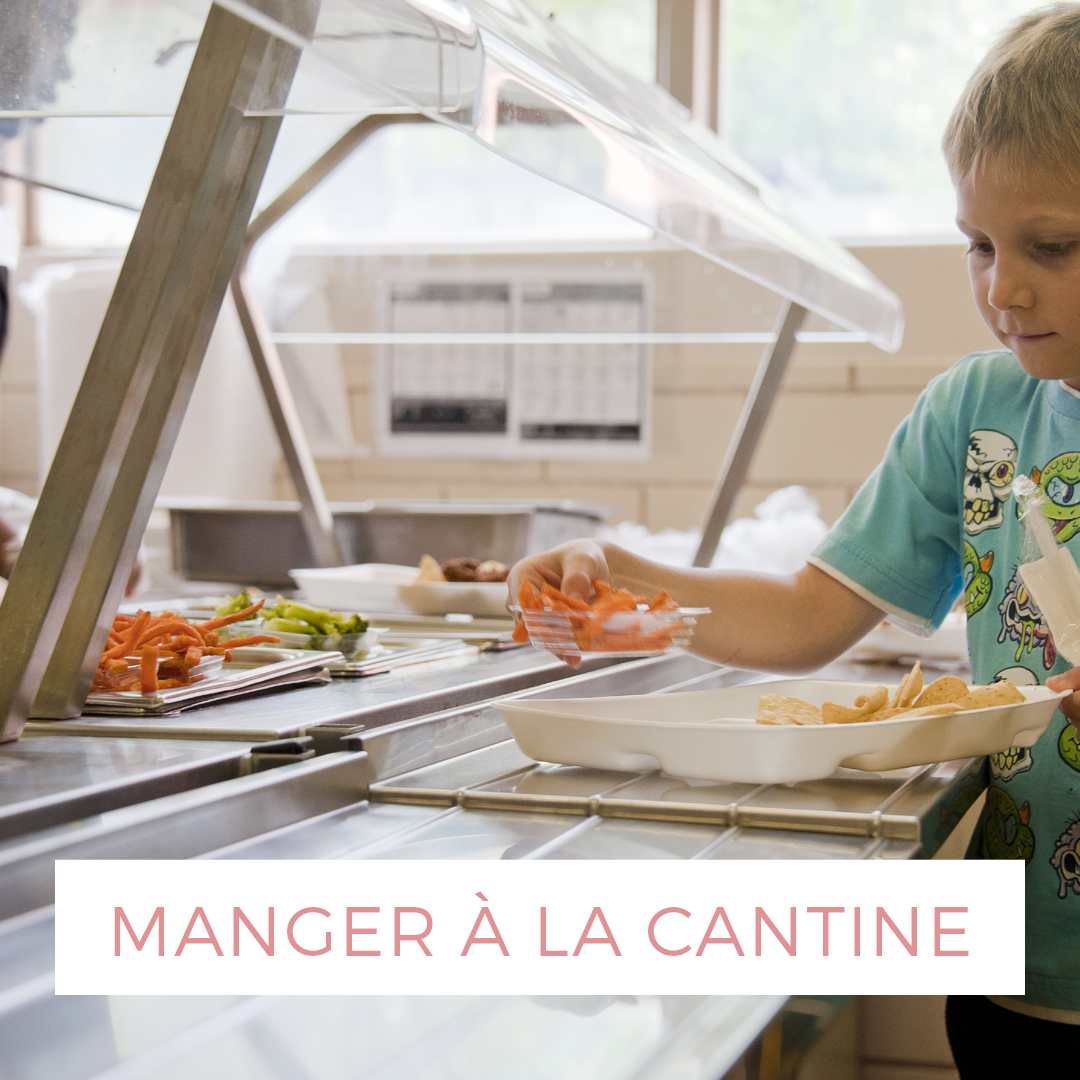


*start of the school year | *go camping | *the aim | *the everyday | *to take one’s mind off something | *the holidays

One of the best nights of my life was spent in La Grande Place* in Brussels, drinking bière blanche* with a couple of young Dutch guys who also spoke French (and English and German and enough Spanish and Italian to get by - j'étais jalouse*).
I was about 21 at the time, wide-eyed and on my first trip to Europe. Quels beaux souvenirs*. I remember the sheer scale of the Place blew my little mind and the mix of culture, history, architecture and fashion was absolutely intoxicating. A spell was cast that night and la Belgique* has stayed close to my heart ever since.
I hope this post sends you straight back to your first experiences of travel and just how stimulating and exciting it can be. Oh travel, tu nous manques!*


*The Big Square | *white beer | *Belgium | *What beautiful memories | *We miss you!

Savez-vous que*….
Brisbane has its own French theatre troupe?
Here, Lingua Franca speaks to musician, actor, writer and director Thomas Smith, who wrote BFT’s latest play, Les Uns Contre Les Autres*.
Be sure to right to la fin*. We have two tickets to give away!
LF: Thomas, tell us a little about your background. Where are you from and how did you come to be living in Australia?
TS: I am a "Ch'ti" from Northern France who first visited Australia on a Working Holiday Visa back in 2008. After a year travelling around the country in a van, I spent a few months working in Brisbane... I fell in love with the city and decided to settle here!
LF: Have you always wanted to be a playwright? What propelled you to take this on?
TS: I was introduced to theatre by chance: a friend proposed we audition for Brisbane's first ever French play produced by Growl Theatre in 2015, and it soon became an addiction. Along with five friends, we founded the BFT in 2017. Writing original plays was mainly born out of necessity, after we found out how difficult and time-consuming finding an existing play was - when you have limited casting options and don't necessarily want to produce works from the traditional French repertoire.
LF: How long does it take you to write a play and do you collaborate with other writers? And where do you get your inspiration from?
TS: It's usually an uneven process that's spread over several weeks, with sudden bursts of productivity followed by days of drought. My partner (and BFT's resident director) Isabelle is of precious help as we exchange ideas, she reviews my drafts and provides feedback. Inspiration is a mixed pot of past experiences and random observations: crossing Paris one summer in the Metro led to "Alas April", while the romantic vision people often have of France was "Repeat After Me"'s starting point.
LF: What is this year’s play about and when and where can we see it?
"Les uns contre les autres" is a tragi-comedy dealing with the challenges of long-term relationships and how they can be affected by lengthy lockdowns due to Covid. It will show at the Queensland Multicultural Centre in Kangaroo Point, Brisbane on 14, 15 & 16 October.
Head here for online bookings.

*Did you know that | * Against One Another | *the end
If you’re susceptible to une crise de FOMO*, hearing stories of friends going to Lune Croissanterie when in Melbourne could really rankle.
Fear no more, though, for Lune has opened up very recently here in South Brisbane and one of our intrepid Chouchous*, Sue, was straight onto it.


Source : www.lunecroissanterie.com
LF: Sue, I believe you had an interesting outing a couple of weeks ago? Where did you go?
SC: I went to Lune Croissanterie, which has just opened a new location in Brisbane, at the end of Fish Lane in Southbank (13-17 Manning St South Brisbane). It is the mecca of all things croissant, sweet and savoury.
LF: What made you so keen to go?
SC: I had heard of Lune in Melbourne, where it is famous for its over-the-top delicious croissants and pastries, but unfortunately didn’t manage to go there last time I was in Melbourne, and alas, such interstate travel is not feasible at the moment. Their croissants are supposed to be divine, and I’d heard from friends who went that it was amazing. So I knew I had to go when they came to Brisbane.
One of the founders is an ex-Formula 1 scientist, so in a way, this is the Formula 1 of croissants.
LF: Was there a queue?
SC: If you do go check it out, yes there WILL be a line out the door and down the street, because there’s not much space inside the store for socially distanced lines. But don’t let it deter you. They are take away only at the moment, and the line does move fairly quickly, so you won’t be waiting too long. Make sure to go earlier in the day to avoid disappointment, as they tend to sell out of some of the more popular flavours around noon-ish.
LF: Does it live up to the hype?
SC: For me, oui! It is freshly baked on site (you can see them baking in front of you as you wait). The skin is super crispy, and the inside is nice and fluffy, and some of the flavours have gooey cheese-filled layers. It is incredibly rich, but not overly heavy, and does not have that sometimes unpleasant over-the-top old butter flavour that some croissants have. I’m not a huge fan of the pure butter taste, but this is so light and well combined in the dough it is just perfect. It tastes just as good the day after (if you manage to have any leftovers!).
Definitely worth the trip for an occasional indulgence.
LF: What did you buy?
SC: I had the pain au chocolat, almond croissant, kouign amann, morning bun, ham & gruyere. My favourite was the kouign amann, light, crispy and delicate with a sweet glaze. The almond croissant is a beast, delicious, but on the heavy side with the almond paste. The ham and gruyere was amazing if you are after something savoury.
Their menu changes frequently, so check out their Instagram page for seasonal specials. Their Brisbane store has a more limited menu than what you’ll find online, which is for the Melbourne store.
LF: Three words in French to describe how it tasted?
SC: Riche, délicieux, merveilleux.
PS. Is “melt-in-your-mouth” a word? 😃
LF: Merci, Sue!
If you've ever done a group lesson here at Lingua Franca, you've probably come into contact with La Petite Histoire*. A tale with the very humblest of beginnings, it winds up becoming a rollicking schlockbuster as you move up the levels and your French improves enough to handle the outrageous (some would say impossible) turns of events of the six young friends.
La Petite Histoire is currently only available to our students, however La Préquelle is for everyone’s enjoyment. Below, another instalment of this new series, Chapter 2 (of 6) of the Beginner Revision level.
*The Little Story | *The Prequel

Jean-Louis ne travaille pas le lundi alors nous avons décidé de faire un pique-nique aujourd’hui avec mon frère, sa femme et nos enfants. Hervé et Yasmine ont un nouveau bébé - un petit garçon qui s’appelle Nasir. Il est petit, avec les cheveux noirs et les yeux marrons. Il est adorable mais il ne dort pas beaucoup. Il est très actif et je vois que Yasmine est très contente mais fatiguée aussi.
Nous sommes allés au Jardin du Luxembourg, qui est un grand parc près de chez nous. Yasmine et moi avons préparé le pique-nique. Je n’ai pas beaucoup de temps, donc j’ai préparé quelque chose de très simple: du poulet rôti avec une salade verte avec des tomates et du fromage de chèvre. Yasmine a passé beaucoup de temps dans la cuisine, je pense. Elle a préparé une assiette avec plusieurs petites salades (du houmous, des carottes épicées, des olives et des poivrons au cumin) et un tagine à l’agneau aussi. Elle cuisine très bien.
Nous nous sommes installés sous un arbre et nous avons parlé et mangé tranquillement.
Hervé, mon frère, a posé des question à propos de mes études. J’ai répondu avec plaisir.
“Ça va très bien, merci,” j’ai dit. “J’adore étudier à la fac. C’est très intéressant et j’aime bien les autres élèves. Le seul petit problème est que mon anglais n’est pas super, mais j’ai trouvé un tuteur et on fait des leçons deux fois par semaine.”
“Fantastique,” a répondu Hervé. “Je suis sûre que tu vas réussir. Tu es très intelligente.’
J’ai rougi et j’ai dit “Merci Hervé, mon frère préféré,” et il a rigolé.
“Je ne suis pas sûr,” Jean-Louis a dit. “Son tuteur n’est pas anglais. Il est français. Ce n’est pas normal”.
Soudain, l’ambiance est devenu un peu sombre et nous avons continué à manger en silence.
Jean-Louis doesn't work on Mondays so we decided to have a picnic today with my brother, his wife and our children. Hervé and Yasmine have a new baby - a little boy called Nasir. He is small, with black hair and brown eyes. He is adorable but he doesn't sleep much. He is very active and I see that Yasmine is very happy but tired as well.
We went to the Jardin du Luxembourg, which is a big park close to our place. Yasmine and I prepared the picnic. I don't have a lot of time, so I prepared something very simple: roasted chicken and a green salad with tomatoes and goat's cheese. Yasmine spent lots of time in the kitchen, I think. She prepared a plate with several little salads (hummous, spiced carrots, olives and capsicum with cumin) and a lamb tagine as well. She cooks very well.
We settled in under a tree and we spoke and ate peacefully.
Hervé, my brother, asked questions about my studies. I responded with pleasure.
"It's going very well, thank you," I said. "I love studying at the uni. It's very interesting and I really like the other students. The only little problem is that my English is not super, but I found a tutor and we do lessons twice a week."
"Fantastic," replied Hervé. "I am sure that you're going to succeed. You are very intelligent."
I blushed and I said "Thanks, Hervé, my favourite brother," and he laughed.
"I'm not sure," Jean-Louis said. "Her tutor isn't English. He's French. It's not normal."
Suddenly, the atmosphere became a bit somber and we continued to eat in silence.
Savez-vous que*….
Animal noises around the world are not the same? This is just the cutest little video which will have you rethinking the validity of our ‘oink oinks’ and ‘cock-a-doodle-dos’.
See if you’re able to match up the French noises for the various animals below. The first person to contact us with a perfect score will win a Petit Guide de Pronunciation*. Bon courage*!
Cock-a-doodle-do • quack quack • oink oink • coo coo • ribbit ribbit • cheep cheep




PS If you’re having difficulty even working out the English, the video is where it’s at!

Lingua Franca Petit Guide de Prononciation
*Did you know that | *Little Pronunciation Guide | *Good luck!
In July’s issue of Le Chouchou News we promised you a story about the famous Bal des Pompiers* which takes place on the evening of La Fête Nationale* which, as you know, is le 14 juillet*.
So how did it all start?
In 1937, bystanders from main parade on the Champs Élysées followed some of the firemen back to their caserne* in Montmartre. The fire chief made the fateful decision to open the doors to that tenacious group and a party ensued.
More than 80 years later, the Bal des Pompiers is still going strong and is a much-anticipated annual event, perhaps even more so than the parade itself for les fêtards*, at least.
D’où vient le Bal des Pompiers? | Where does the Firemen’s Ball come from?
*The Firemen’s Ball | *Bastille Day | *on the 14th July | *fire station | *party animals
If you've ever done a group lesson here at Lingua Franca, you've probably come into contact with La Petite Histoire*. A tale with the very humblest of beginnings, it winds up becoming a rollicking schlockbuster as you move up the levels and your French improves enough to handle the outrageous (some would say impossible) turns of events of the six young friends.
La Petite Histoire is currently only available to our students, however La Préquelle is for everyone’s enjoyment. Below, another instalment of this new series, Chapter 1 (of 6) of the Beginner Revision level.
*The Little Story | *The Prequel

Quelle expérience! Aujourd'hui j'ai eu mon premier cours avec Roger, qui est mon tuteur d'anglais. Nous sommes allés au café à la fac, nous avons commandé des cafés et nous avons commencé à travailler. Je dois améliorer mon anglais et c'est Roger qui a répondu à la petite annonce que j'ai mis dans le Département d'Anglais il y a deux semaines.
J'ai besoin d'aide avec la grammaire anglaise, qui est très compliquée et pas très logique. Il y a beaucoup, beaucoup d'exceptions et la prononciation est difficile aussi. J'ai demandé à Roger de faire une révision des participes passés, mais il a insisté que nous commençons du début. Il a raison, je suppose. C’est important de réviser les bases.
Donc, nous nous sommes présentés en anglais. J’étais très nerveuse mais il a dit que je parle très bien et que mon accent était ‘mignon’. Il est français, mais il a passé beaucoup de temps en Angleterre, donc il parle très bien et il a beaucoup de confiance quand il parle anglais, ça c’est sûr. Puis, il a posé beaucoup de questions, comme ‘What is your name?’, “How old are you?’, “Are you married?’ et toutes les autres questions classiques. Après ça, il a décidé de faire une dictée, donc il a dit quelques phrases en anglais et j’ai dû les écrire dans mon cahier. Il a raconté une petite histoire à propos de moi et ma vie et il a même ajouté deux ou trois nouvelles phrases. Il est très créatif et un peu coquin. Une des phrases était “She has eyes the colour of crème caramel”. J’ai dit que la crème caramel est jaune et il a rougi et j’ai rigolé. Nous avons passé un bon moment ensemble. J’aime mes leçons d’anglais avec Roger.
What an experience! Today I had my first lesson with Roger, who is my English tutor. We went to the café at uni, we ordered coffees and we started to work. I have to improve my English and it’s Roger who responded to the notice I put up in the English Department two weeks ago.
I need help with English grammar, which is very complicated and not very logical. There are many, many exceptions and the pronunciation is difficult as well. I asked Roger to do a revision of the past participles, but he insisted that we start at the start. He’s right, I suppose. It’s important to revise the basics.
So, we introduced ourselves in English. I was very nervous but he said that I speak very well and that my accent was ‘cute’. He is French, but he has spent lots of time in England, so he speaks very well and he has a lots of confidence when he speaks English, that’s for sure. Then, he asked lots of questions like ‘What is your name?’, “How old are you?’, “Are you married?’ and all the other classic questions.
After that, he decided to do a dictation, so he said a few sentences and I had to write them in my workbook. He told a little story about me and my life and he even added two or three new sentences. He is very creative and a little bit naughty. One of the sentences was “She has eyes the colour of crème caramel”. I said that crème caramel is yellow and he blushed and I laughed. It was fun. I like my English lessons with Roger.
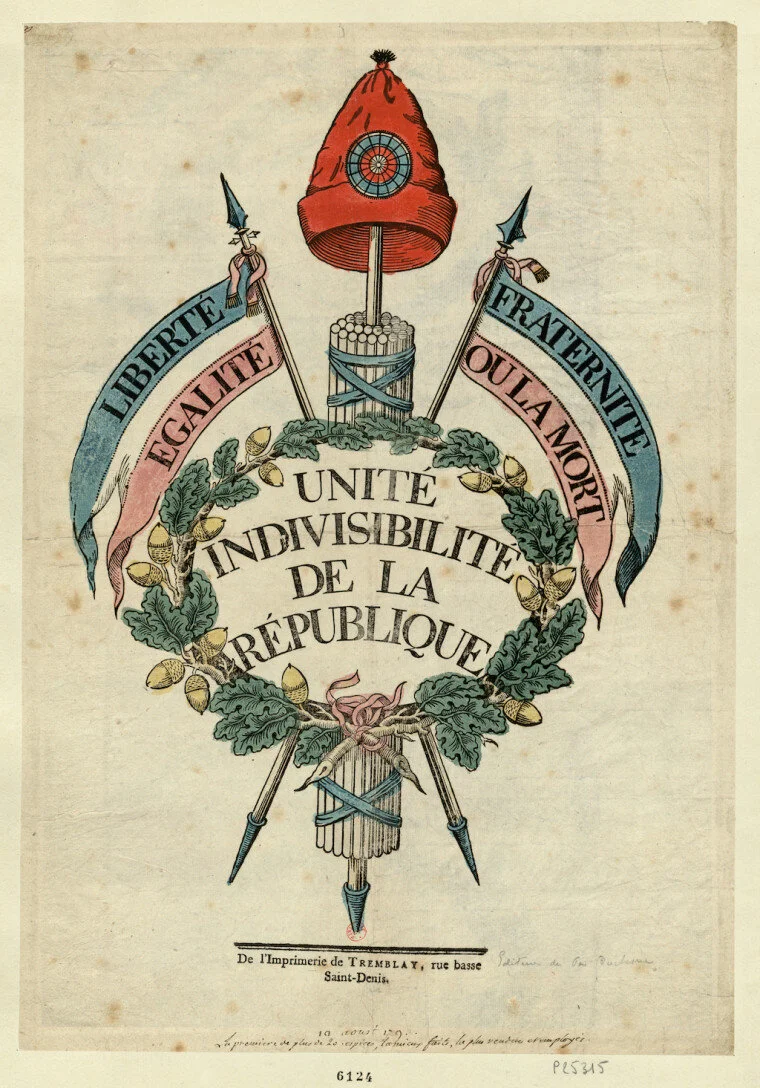
Have you ever wondered why the French flag is bleu, blanc, rouge*?
Well, you may be wondering a little longer, as it seems even the French find it difficult to trouver un accord* on the matter.
Some say the white is the colour of the House of Bourbon, which ruled France from the late 16th century to the French Revolution. Red and blue are the traditional colours of Paris, with revolutionaries wearing red and blue cockades on their hats when they stormed the Bastille in 1789.
Other suggest the three colours represent la liberté*, l'égalité* and la fraternité*, the French motto.
For some, it's bleu for la bourgeoisie*, blanc for la monarchie* and rouge for la révolution*.
A more romantique* take has the colours drawing inspiration from flowers: blue for cornflowers, white for marguerites and red for poppies.
Plus compliqué* than we might have thought art first, non?*?
*blue, white, red | *to come to an agreement | *freedom | *equality | *brotherhood | *the bourgeoisie | *the monarchy | *the revolution | *romantic | *More complicated | *isn't it?
You may have heard of faux amis* in French. These are words that look so similar to English words that they lull you into a false sense of security, having you believe you understand them without even opening your dictionary app. In the past, we’ve told you about blessé (not blessed but hurt), le bras (not a bra but the arm) and les préservatifs (not preservatives but condoms).
But there’s another group of words that may cause you even more trouble because they’re just a bit off. It’s difficult to explain and probably easier to just experience for yourself, so here is a little list for you right below.

*Almost friends

Je tire la tronche.
Recently, while (re)watching Episode 1 of The Parisian Agency, I was reminded of a great little phrase I’d heard the first time around. Tirer la tronche means to be unhappy, to pout or to brood. If you’ve seen the series, Valentin says it to his mère* just after he gets off the phone with Lisa, the lingerie designer, having just broken the news that someone else has put an offer in on the property she’d had her eye on.
“Elle tire la tronche*,” he says.
Even without understanding exactly what he says, you can tell from their short conversation and Valentin’s body language that his client is not happy. This is yet another benefit of watching series in French - you’ll pick up so much from the many visual and auditory clues on offer. Tirer la tronche is just one of the new expressions I learned from this series and there are dozens more to be had. Croisons les doigts* for a second series!
*mother | *She’s pouting | *Let’s cross our fingers
If you have just over eight minutes to spare and are confident you can keep le monstre aux yeux verts* at bay, be ready to be absolutely transported by this video from Vogue Paris.
*the green-eyed monster

This word is the possibly the embodiment of my love of the French language.
We use the word ‘denouement’ (without the acute accent) in English to describe the final resolution of a plot in a film or novel. The very best books and films have denouements that leave us gasping, surprised by a turn of events we fail to see coming.
To get to the beating heart of this word, we need to first remove both the prefix (dé-) and the suffix (-ment), which leaves us with noue. Nouer is the French verb ‘to knot’ which comes from the Latin verb nōdāre (also ‘to knot’). Incidentally, a very closely-related Latin verb is nectere which means ‘to tie’ or ‘to bind’. For those of you who have done the passé composé, the past participle of this verb is nexus, which we use in English and which is also where we gets words like ‘connection’ and ‘annex’. But I digress…
Back to noeur (to knot) and the prefix and suffix I dispensed with earlier. Dé- is the equivalent of ‘un’ in English. That is, is gives us the opposite sense of the word. Think of ‘stable’ and ‘unstable’, for example. It works the same in French. A verb you very likely know, faire (to do or to make) has its opposite in the verb défaire which means ‘to undo’.
[ Side note: the French often talk about hair being défaits: think of that tousled, disheveled look typical of Brigitte Bardot in her heyday. ]

UN NŒUD PAPILLON

LES CONNECTIONS

LES CHEVEUX DÉFAITS
Many of you will have seen the suffix -ment in your travels. Words like lentement, vraiment and exactement come to mind. They’re all adverbs as you may know (‘slowly’, ‘truly’ and ‘exactly’) so the -ment ending represents the equivalent of the English suffix ‘-ly’.
When it’s used to form nouns from verbs, though, it indicates a resulting action or state. For example, the verb bâtir is to build, and a bâtiment is the resulting action or state of the act of building.
Now we know that dénouer is ‘to unknot’, if you think about the final sequence of a film or books, it is like the author is unknotting the conflict they’ve created. And that’s where we get dénouement from. C’est dingue, non*?
So there we are, a full breakdown of a word you’ve possibly never heard before. If you’ve got a passion for words and their origins, I hope it was enough to titiller la curiosité*.
By the way, here are another couple of things I stumbled across when looking into dénouement.
You may already know that a nœud papillon (or nœud pap’ for short) is a bow tie, since it is a knot that resembles a butterfly (papillon).
But did you know that un nœud is also a slang term for a penis? And that tête de nœud is what you call someone you think is a bit of a d***head? Vulgar, oui,* but drôle*, tout à fait*.
Lastly, neuneu (variously spelled neu-neu, nœud-nœud) refers to someone who is a bit simple, sappy or just a bit of an idiot and apparently comes from tête de nœud as discussed above.

LE DÉNOUEMENT
*It’s crazy, isn’t it? | *to pique your curiosity | *yes | *funny | *absolutely