Lingua Franca | Award-Winning French Lessons Brisbane

French lessons, events & trips

FRENCH LESSONS EVENTS & GIFTS

Le Top 5 tips for speaking French.

I know I’m speaking a lot about my new-found love for tennis at the moment, but it’s very hard to ignore the parallels between trying to learn French and picking up a tennis racket again after a 40-year gap (and I was no Navratilova in the first place, je vous assure*).

My friend and I started hitting balls late last year and loved it so much we decided to do it more regularly in 2023. After a few sessions, though, it became clear we needed some help, so we started doing a lesson before work on a Thursday and then having a hit on a Saturday.

We dream of being able to turn up and spend the whole hour on the court, rallying back and forth to one another in a calm and competent manner. You won’t be surprised to hear that our current experience is a very long way from that. Some days we manage to hit a few shots in a row, but many, many balles de tennis* end up going straight into the net or way over the baseline at the other end. One or two have even somehow gone through a mysterious hole in my strings and hit the fence behind me, but we won’t dwell on those ones.

A very similar thing may happen to you when you try to speak French. We know that most of you are borderline fluent when under the shower or when driving, but when it comes the time to have a real conversation with another person, suddenly you find yourself afflicted with all manner of trous de mémoires*.

For beginners, this can be put down to nerves and is completely natural, but what if you’ve been doing French for a while and you still draw a blank? Or worse, find yourself heading down a rabbit hole from which there appears to be no return?

We find this usually happens because you’re trying to speak French as you do English (or your native language, whatever that may be). I really don’t enjoy saying this, but it’s simply impossible for most of us.

The average adult knows between 25 000 and 35 000 words in their mother tongue. By the end of our Absolute Beginner 1 course, you’ll know approximately 200 words, so if you extrapolate that figure, by the time you’ve completed our Intermediate Revision Course you’d know about 2 500 words. That is, you have approximately 10% of the word power in French that you do in English.

But, don’t be too déçu(e)*. You can absolutely make this work to your advantage. Over the course of the next few newsletters, I’ll be offering up my top five tips as to how to pull that off.

You’ll definitely notice there’s a running theme in all of the tips. If you remember nothing else, please learn this one par cœur*: lentement mais sûrement*.

So you know by now that my dream of lazily (and competently) rallying with my friend from either side of the net is on hold as we get to grips with the basics.

At one of our very first lessons, as Vince, our tennis coach, watched Tanya and I flail around the court trying to hit winners (which were for the great majority definitely losers), he casually mentioned the concept of the 100-point rally. Naturellement*, this stopped us in our tracks. The tennis definition of the word rally “is a sequence of back and forth shots between players” and I’m pretty sure two shots in a row is stretching the meaning of the word ‘sequence’. Vince gently suggested that the next time we had a hit together, we have as our goal to reach a 100-point rally without an error. Jaws on the floor, Tanya and I paused to consider just how gently and carefully we’d need to hit the ball if we were to get beyond 10 points in a row, let alone 100. Firstly, we’d have to move much closer to the net to reduce the margin for error. We’d have to take care to make sure the ball simply hit the strings, rather than try to erase the Dunlop logo with each whack. Lastly, we’d have to be mindful of where the other was standing to make sure the shot was easy for them to reach (needless to say our footwork is inexistant* at this point).

Every single bit of this can be applied to speaking French and another definition of the word ‘rally’ might be worth bearing in mind: to draw or call (persons) together for a common action or effort. 

Sure, when you’re approaching fluency, knock your socks off by adding flourishes and brilliant tournures de phrases*, but when you’re just  starting out, be a good partner to your interlocuteur*. That is, physically position yourself in a comfortable manner to get ready to communicate. This means: lower the shoulders, take a couple of deep breaths to centre yourself, open up your body language and look your partner in the eye.  Take another slow breath et voilà*! You’re closer to the net already.

Next, scrap the complicated English sentence you’re dying to communicate, and instead, imagine you’re about to explain that same idea to a four-year-old. How would you speak? Slowly? Carefully? Using simple language? Pausing every now and then to check they were following? Oui*? Now you’re on the path to success.

Imagine the opening question was “What are you doing today after the class?”. Instead of trying to say (to use an example from a recent class, merci* Martha!) “I’ve gotta rush home because I’ve got a guy coming to sand and reseal the deck” try this instead: “Aujourd’hui, après la classe, un homme vient à la maison. Il va travailler sur mon balcon.” Granted, not textbook perfect French, but you’ve got your message across, probably in a slow and deliberate manner but also hopefully (and this is by far the most important bit) in a way that is easily comprehensible.

Finally, be kind to your speaking partner, particularly if they’re not quite as advanced as you. This goes back to the four-year-old idea. Be sure to choose simple words and phrases you think your French-speaking buddy will understand. Don’t deny them the incredible pleasure of understanding a couple of simple sentences in a French they’re likely to be familiar with. You know the feeling yourself, so be sure to share it around as much as you can.

I really hope this advice doesn’t come across as patronising as it is sûrement* not my intent. You know how to communicate extremely well in your mother tongues, quite likely a great deal better than me. What I notice, though, is that in our excitement (anxiety?) to speak French, we sometimes forget the basics. It is my strong belief that if you can adopt this approach the next time you have a go at speaking, you’ll see more smiles than frowns, and that goes for your classroom potes* and ‘real’ French people as well.

Next month: walk before you can run.

Bon courage*!

*I assure you | *tennis balls | *memory lapses | *disappointed | *by heart | *slowly but surely | *Naturally | *non-existent | *turns of phrase | *fellow speaker | *there you go | *Yes | *thank you | *Today, after the class, a man is coming to the house. He is going to work on my balcony. | *surely | *mates | *Good luck

New Series: Liaison

With winter here, you might be looking for a new French series to dig into on those chilly(ish) nights in. Well, tu as de la chance* because Apple TV has delivered Liaison. With the star power of Vincent Cassel and Eva Green, this glossy, 6-part thriller has received somewhat mixed reviews. However, one of our chouchous* insists it’s worth a binge. 

Filmed in French and English, Liaison features Green and Cassel as agents and former lovers working together to combat international cyberattacks threatening the UK. And, unlike many hard-to-follow films, the French parts are relatively clear and easy to understand. 

Intrigued? Have a look at la bande annonce* here and see if it’s ton truc*.  

*you’re in luck | *preview | *your thing

English – C’est compliqué aussi!

Ever find yourself cursing the day you decided to learn the beautiful, complicated language that is French? Well, spare a thought for English learners because it's no cakewalk for them, either.

Not convinced? We’ll just leave this right here.

Le subjonctif* isn’t looking like quite as much of un cauchemar* now, is it?

Merci, Hayley, pour cette petite perle*.

*The subjunctive | *a nightmare | *Thanks, Hayley, for this little gem

My Paris Adventure

This month we have a slightly different spin on our regular ‘My French Adventure’ interview series as one of our chouchous* is off on a real adventure. Pip’s been a student at Lingua Franca since our Masters Street days and, after plusieurs* months of planning, is about to depart on an 8-week holiday à Paris*. Jaloux? Nous aussi*.

WHAT MADE YOU DECIDE TO HEAD TO PARIS?

Watching Emily in Paris. Je plaisante*! It’s honestly something I have wanted to do since forever. I’ve studied French on and off for years (with une enorme pause* between studying at high school and starting at Lingua Franca a few years back) and have always wanted to spend a few months there to really improve my grasp on the language.

A trip was in the back of my mind, then Covid struck. Now travel is back on the agenda, it seemed like the time was right. I’m self-employed and have no major commitments here (other than a very needy chat*), so it was a case of ‘pourquoi pas*?’.

WHAT WILL YOU BE DOING THERE?

I’ll be doing a bit of an immersion and working remotely for my clients (unfortunately someone needs to pay my mortgage and Airbnb fees). I’ll take a few weeks off and have two friends visiting, but otherwise, I want to try and avoid English speakers to make the most of the experience. I plan to be based in Paris and live like a local as much as possible but will do some day trips here and there.

WHICH AREA ARE YOU STAYING IN?

I’m staying in the 11th. I chose it as it’s quite nice and central yet relatively affordable and because there seems to be a good language school in the area (will report back). I also wanted a more lowkey ‘local’ experience rather than staying in a touristy or grand arrondissement* and peering into the designer boutiques and antique stores feeling like a paysanne*.

Katrina helped me make my decision and I’ve since heard from some Parisian contacts that it's a great area, so I can’t wait to check it out.

HAVE YOU HAD ANY TROUBLE BOOKING YOUR TRIP?

Bien sûr*. As they say, nothing worth doing is ever easy, and there have been some bumps along the way. One of the biggest challenges was finding accommodation due to the Bail Mobilité law. I don’t fully understand the ins and outs, but you essentially need to prove you’re either working or studying to be eligible to rent most properties on Airbnb (for longer than a month). And working remotely and doing casual, non-tertiary study doesn’t cut it.

So I had to trawl through hundreds of listings to find a suitable property as there’s no way of filtering them. It was un cauchemar* but I got there in the end.

Then there are the protests around the retirement age reform... I considered changing my dates for a while but once they started collecting the rubbish again, I thought I’d take my chances!

WHAT ARE YOU MOST LOOKING FORWARD TO?

At the moment, I’m looking forward to getting on that plane and being able to switch off! But after that, just strolling around and exploring at my leisure. I have a giant list of things to do, see and book. But my favourite part of travelling is always the unexpected discoveries you make when mooching about.  

Then, of course, there's the food. I’ve booked an extortionate dinner at the Jules Verne restaurant in the Eiffel Tower, but I'm equally excited about croissants and fromage* in the park.

GOALS WITH THE FRENCH LANGUAGE

I’ve booked in for a few weeks of immersion to start with, then I’m going to play it by ear. I didn’t want to overcommit and have the school component feel like a chore, especially as I’ll be working too. At the end of the day, I’m mainly hoping to soak up all Paris has to offer. If I manage to become more confident with speaking French along the way, ça sera la cerise sur le gâteau*.

*teacher’s pets | *several | *in Paris | *Jealous? Us too | *I’m joking | *a huge break | *cat |*why not? | *district | *peasant | *Of course | *Mobility lease |*cheese | *that will be the cherry on top (literal translation ‘the cherry on the cake’)

La Petite Histoire

If you've ever done a group lesson here at Lingua Franca, you've probably come into contact with La Petite Histoire*. A tale with the very humblest of beginnings, it winds up becoming a rollicking schlockbuster as you move up the levels and your French improves enough to handle the outrageous (some would say impossible) turns of events of the six young friends.

La Petite Histoire is currently only available to our students, however La Préquelle is for everyone’s enjoyment. Below, another instalment of this new series, Chapter 4 of the Intermediate 3 level.

*The Little Story | *The Prequel

Cinq minutes plus tard, je cherchais toujours mes boucles d’oreilles préférées, mais je ne pouvais pas les trouver.

Soudain, Hervé a crié “Allons-y, Leïla ! On va être en retard.”

“Jean-Louis, tu as vu mes boucles d’oreilles ?” j’ai crié de la chambre.

“Oui, elles sont dans la poche de ma veste, dans l’armoire. Tu me les as données l’autre soir après le dîner avec Noëlle. Tu m’as dit qu’elles te faisaient mal.”

“Ah, oui, tu as raison. Deux minutes !” j’ai répondu.

Mais en cherchant dans la poche, je n’ai rien trouvé. “Quelle veste, Jean-Louis ?” j’ai crié. Je commençais à paniquer.

“Leïla, viens ! On va rater l’avion si tu ne viens pas tout de suite!” a dit Hervé.

“Leïla,” a dit mon mari quand je suis revenue au salon, “encore une fois, ne t’inquiète pas ! Tu as ton passeport ?”

“Bien sûr,” j’ai répondu, “Il est là, dans mon sac à main. J’ai le passeport d’Anouk aussi.”

“Tu as les billets?” Hervé a demandé.

“Oui, je les ai avec les passeports,” j’ai répondu. “Et j’ai les chèques voyage.”

“Bon, tu es prête, alors !” a dit Jean-Louis.

“De toute façon,” a ajouté Hervé, “Amina a beaucoup de boucles d’oreilles. Elle peut te donner une paire.”

“C’est gentil, Hervé, mais ce sont mes préférées ! Ah, zut !”

“Chérie, s’il te plaît, laisse tomber. Pourquoi pas acheter une nouvelle paire à Londres ? Les Anglais ont des boutiques aussi, tu sais,” Jean-Louis a dit, en souriant.

J’étais surprise. Jean-Louis est normalement très prudent avec l’argent.

“Tu es sûr ?” j’ai demandé.

“Pour toi, ma reine, oui, je suis certain.”

“Merci beaucoup, chéri,” j’ai dit, touchée. Jean-Louis était vraiment très cool à propos de ce voyage, je me suis dit. “C’est très gentil. De toute façon, je les ai probablement mises dans ma valise par accident.”

Jean-Louis a souri, il m’a prise dans ses bras, et on s’est embrassés.

“Allez, ça suffit, vous deux. Il y a un avion qui nous attend. Allez, hop ! Dans la voiture !”

“Tu vas me manquer. Fais bon voyage, Leïla,” a dit mon mari.

“Merci, mon amour,” j’ai répondu avec des larmes aux yeux.

J’ai oublié le mauvais pressentiment et j’ai suivi mon frère vers la porte.

Five minutes later, I was still looking for my favourite earrings, but I couldn’t I find them.

Suddenly, Hervé yelled out “Let’s go, Leïla! We’re going to be late.”

“Jean-Louis, have you seen my earrings? I shouted from the bedroom.

“Yes, they’re in my jacket pocket, in the wardrobe. You gave them to me the other night after the dinner with Noëlle. You said they were hurting you.”

“Oh, yes, you’re right. Two minutes!” I responded.

But in searching the pocket, I didn’t find anything. “Which jacket, Jean-Louis?” I cried. I was starting to panic.

“Leïla, come on! We’re going to miss the plane if you don’t come straight away!” Hervé said.

“Leïla,” said my husband when I came back into the living room, “once again, don’t worry! Do you have your passport?”

“Of course,” I responded. “It’s here, in my handbag. I have Anouk’s passport as well.”

“Do you have the tickets?” Hervé asked.

“Yes, I have them with the passports,” I said. “And I have the travellers’ cheques.”

“Right, so you’re ready, then!” said Jean-Louis.

“In any case,” Hervé added, “Amina has lots of earrings. She can give you a pair.”

“That’s nice of you, Hervé, but they’re my favourites! Oh, damn!”

“Darling, please, drop it. Why not buy a new pair in London? The English have shops as well, you know,” Jean-Louis said, smiling.

I was surprised. Jean-Louis is usually very careful with money.

“Are you sure?” I asked.

“For you, my queen, I am certain.”

“Thank you very much, darling,” I said, touched. Jean-Louis was really cool about this trip, I said to myself. “That’s really kind of you. In any case, I probably put them in my suitcase by accident in any case.”

Jean-Louis smiled, he took me in his arms and we kissed.

“Okay, that’s enough, you two. We have a plane waiting for us. Come on, let’s go. In the car!”

“I’m going to miss you. Have a good trip, Leïla,” my husband said.

“Thank you, my love,” I responded with tears in my eyes.

I forgot the bad feeling and I followed my brother towards the door.

Tout va bien

Do you ever struggle with the verb pouvoir*? This song by Ezéchiel Pailhès will help you remember the negative, first-person conjugation, je ne peux pas*, for good. Simple and repetitive, it’s a bit of an ear worm. Go on and have a listen – we think you’ll be surprised how much tu comprends*. (But we’ve also included the translated lyrics, au cas où*.)

Listen on Spotify.

‘Tout Va Bien’

Je ne peux pas dire non, tout va bien
Ce serait mentir, oui, de le dire
Je ne peux pas dire non, tout va bien
Ce serait mentir, oui, de le dire

Je ne peux pas dire non, tout va bien
Ce serait mentir, oui, de le dire
Je ne peux pas dire non, tout va bien
Ce serait mentir, oui, de le dire

Mais ça va, va, va, va, va
Toujours mieux, mieux, mieux, mieux, mieux
Dès le soir
J'oublie tout, tout, tout, tout, tout
C'est bien trop, trop, trop, trop, trop dérisoire

Mais ça va, va, va, va, va
Toujours mieux, mieux, mieux, mieux, mieux
Dès le soir
J'oublie tout, tout, tout, tout, tout
C'est bien trop, trop, trop, trop, trop dérisoire

Je ne peux pas dire non, tout va bien
Ce serait mentir, oui, de le dire
Je ne peux pas dire non, tout va bien
Ce serait mentir, oui, de le dire
Je ne peux pas dire non, tout va bien
Ce serait mentir, oui, de le dire

Mais ça va, va, va, va, va
Toujours mieux, mieux, mieux, mieux, mieux
Dès le soir
J'oublie tout, tout, tout, tout, tout
C'est bien trop, trop, trop, trop, trop dérisoire

Mais ça va, va, va, va, va
Toujours mieux, mieux, mieux, mieux, mieux
Dès le soir
J'oublie tout, tout, tout, tout, tout
C'est bien trop, trop, trop, trop, trop dérisoire

Et en anglais*…

I can't say no, it's alright
It would be lying, yes, to say so
I can't say no, it's alright
It would be lying, yes, to say so 

I can't say no, it's alright
It would be lying, yes, to say so
I can't say no, it's alright
It would be lying, yes, to say so 

But it goes, goes, goes, goes, goes
Always better, better, better, better, better
From the evening
I forget everything, everything, everything, everything, everything
It's too, too, too, too, too ridiculous

But it goes, goes, goes, goes, goes
Always better, better, better, better, better
From the evening
I forget everything, everything, everything, everything, everything
It's too, too, too, too, too ridiculous

I can't say no, it's alright
It would be lying, yes, to say so
I can't say no, it's alright
It would be lying, yes, to say so
I can't say no, it's alright
It would be lying, yes, to say so 

But it goes, goes, goes, goes, goes
Always better, better, better, better, better
From the evening
I forget everything, everything, everything, everything, everything
It's too, too, too, too, too ridiculous

But it goes, goes, goes, goes, goes
Always better, better, better, better, better
From the evening
I forget everything, everything, everything, everything, everything
It's too, too, too, too, too ridiculous

*to be able to (can) | *I can’t | *you understand | *just in case | *And in English…

Sneak Peek into le Nid | Mot Français Préféré

There’s no denying French is, by and large, a beautiful langue*. However, some words are particularly satisfying to say en français*. Like our students, we all have our personal favourites. So without further ado, here are the favourite mots francais* of votre profs*.

*language | *in French | *French words | *your teachers

Recette: Gratin Dauphinois

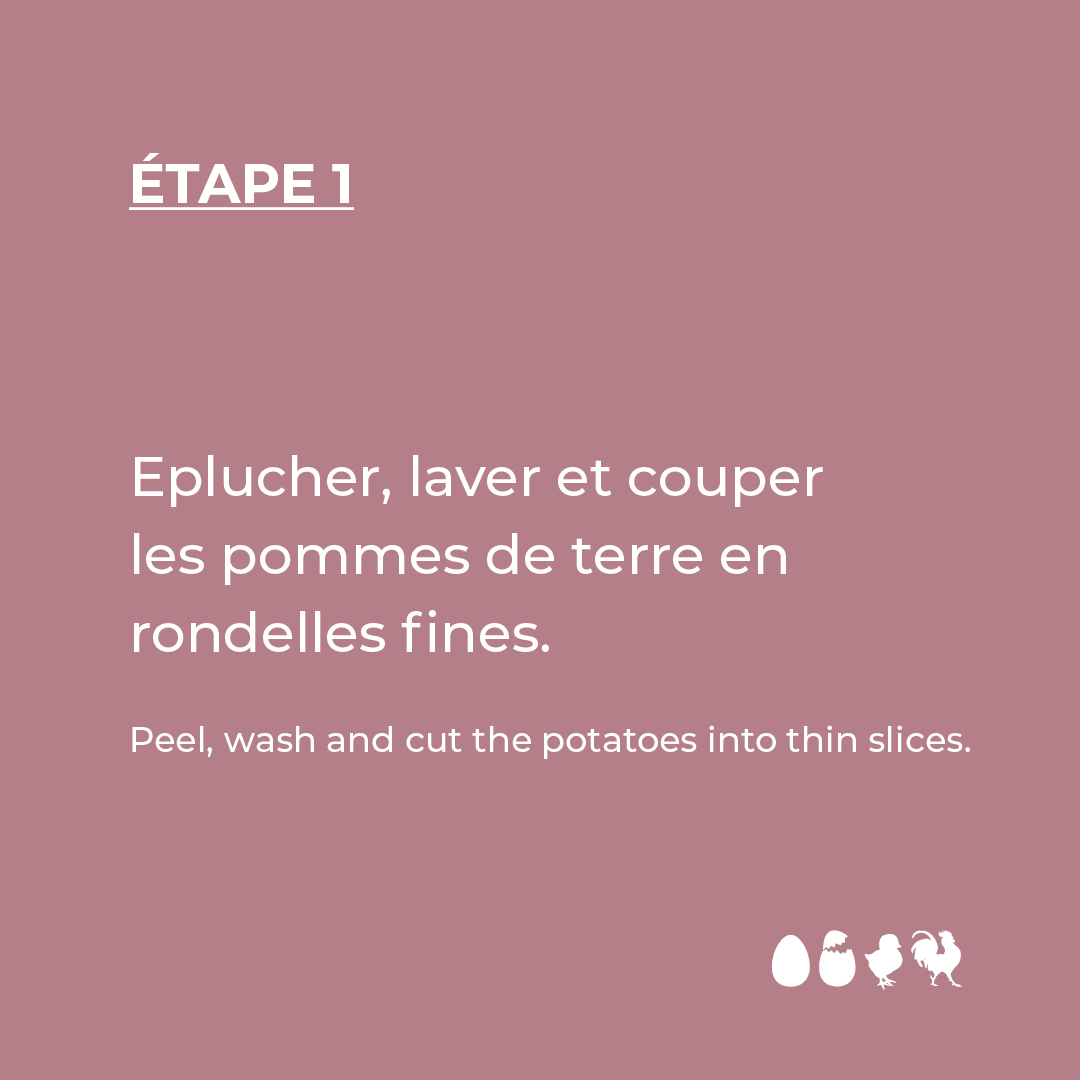
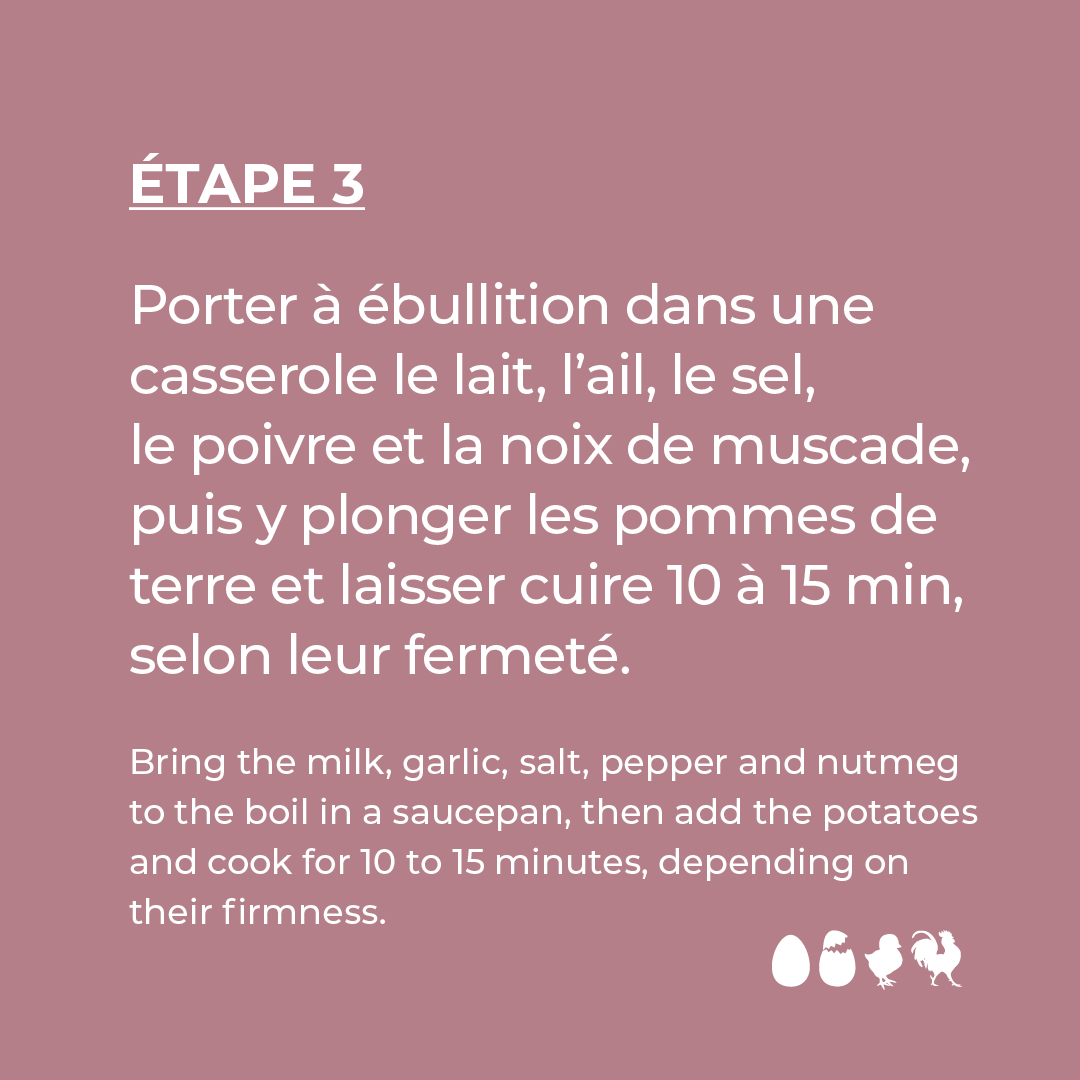
Pommes frites*, tartiflette, aligot… The French sure know their way around a root veg and have a knack for elevating the humble spud into a gustatory sensation. Notre plat préféré*, toutefois*, is the creamy, dreamy delight that is gratin dauphinois. For your next dinner party (or all for toi-même*), give this pomme de terre*-packed recipe a go.


Bon appétit*!

Merci à Marmiton pour la recette*.

*French fries | *our favourite dish | *however | *potato | *yourself | *Enjoy! | *Thank you to Marmiton for the recipe

Paris Métro Roleplay

Récemment*, one of our profs* stumbled across this gem of a photo gallery of pranksters (or amateur actors?) roleplaying the names of different Paris metro stations. For example, a rock and roll band at ‘Duroc’, Les Trois Mousquetaires* at ‘Alexandre Dumas’ station and a naked man showcasing his personal freedoms at ‘Liberté*’

There are dozens of photos to ponder, so we’ll let you peruse the rest at your leisure. Bonne chance* figuring out some of the more obscure references!

*Recently | *The Three Musketeers | *teachers | *Freedom | *Good luck
La Petite Histoire

If you've ever done a group lesson here at Lingua Franca, you've probably come into contact with La Petite Histoire*. A tale with the very humblest of beginnings, it winds up becoming a rollicking schlockbuster as you move up the levels and your French improves enough to handle the outrageous (some would say impossible) turns of events of the six young friends.

La Petite Histoire is currently only available to our students, however La Préquelle is for everyone’s enjoyment. Below, another instalment of this new series, Chapter 3 of the Intermediate 3 level.

*The Little Story | *The Prequel

“D’accord, maman !” ma fille m’a répondu et elle a quitté la chambre. “Papa, tu es où ? Je vais à Londres et je veux dire au revoir !”

Finalement, j’étais toute seule pour la première fois de la matinée. J’ai poussé un soupir de soulagement. J’étais surprise de remarquer que même après ça, je me sentais toujours mal à l’aise. “C’est normal, Leila,” je me suis dit. “C’est la première fois que tu voyages sans tous les enfants. Elles vont beaucoup te manquer .”

Si je suis honnête, j’étais un peu anxieuse de laisser les filles avec Jean-Louis, même si sa mère allait l’aider. C’est leur père, c’est vrai, mais mon mari à la tendance à travailler très, très dur, donc il ne passe pas beaucoup de temps avec nos filles. Et le fait que sa mère vienne pour l’aider lui donne l’excuse parfaite pour travailler encore plus.

Mais même en admettant tout ça, j’étais toujours un peu inquiète. Je ne savais pas pourquoi, mais j’avais un mauvais pressentiment.

Je ne pouvais pas y réfléchir plus, parce que tout d’un coup, j’ai entendu la voix de mon frère. “Tu es prête, frangine?”

“Oui, frérot, j’arrive. Deux minutes !”

J’ai fini de fermer ma valise et je suis entrée dans le salon. Tout le monde était là. 

Jean-Louis parlait à Hervé et Anouk jouait avec ses sœurs et ses cousines, Sara et Mina.

“Bon, on est prêts pour le grand voyage ?” a demandé mon frère.

“Oui, tout à fait,” j’ai répondu. “Chéri, n’oublie pas qu’il y a une quiche pour vous dans le frigo pour ce soir. Vous restez ici ce soir, non ?”

“Ne t’inquiète pas, Leïla, ça va aller. Demain, on va à l’hôtel avec grand-mère. Vous avez hâte de la voir, les filles ?” Jean-Louis a demandé à Céline et Vivienne.

Mais les petites étaient trop occupées avec leurs cousines pour lui répondre.

“Ah, un instant, j’ai oublié mes boucles d’oreilles préférées. Je reviens tout de suite.” j’ai dit et je suis retournée à la chambre pour les chercher.

“Okay, Mum!” my daughter replied and she left the room. “Dad, where are you?” I’m going to London and I want to say goodbye!”

Finally, I was alone for the first time that morning. I let out a sigh of relief. I was surprised to notice that even after that I still felt ill at ease. “It’s normal, Leïla,” I said to myself. “It’s the first time you’re travelling without all the children. You’re going to miss them a lot.”

If I’m honest, I was a bit anxious about leaving the girls with Jean-Louis, even if his mother was going to help him. He’s their father, it’s true, but my husband has the tendency to work very, very hard, so he doesn’t spend a lot of time with our girls. And the fact his mother is coming to help him gives him the perfect excuse to work even more.

But even in admitting that, I was still a little worried. I didn’t know why, but I had a bad feeling.

I couldn’t think about it any more, because all of a sudden, I heard my brother’s voice. “You ready, sis?”

“Yes, bro, I’m coming. Two minutes!”

I finished closing my suitcase and I went into the living room. Everyone was there.

Jean-Louis was speaking to Hervé and Anouk was playing with her sisters and cousins, Sara and Mina.

“Right, are we ready for the big trip?” asked my brother.

“Yes, absolutely,” I responded. “Darling, don’t forget there is a quiche for you in the fridge for tonight. You’re staying here tonight, aren’t you?”

“Don’t worry, Leïla, it’s all going to be fine. Tomorrow, we’re going to the hotel with Grandma. Are you keen to see her, girls?” Jean-Louis asked Céline and Vivienne.

But the little ones were too busy with their cousins to answer.

“Oh, one sec, I’ve forgotten my favourite earrings. I’ll be back straight away,” I said and I returned to the bedroom to look for them.

Who Speaks French?

How much do you know about the French language? Who speaks it and where do they live? If you’re up for a translation challenge, this article provides some interesting insights. Or, if you want to take the easy route, we’ve pulled out the key facts below.

But before you take a peek, can you deviner* how many Francophones there are around the world? If it helps, the total number of English speakers is environ* 1.5 billion…


Drapeau de la francophonie

French is…

  • The official language of 30 countries. This represents more than 300 million people, half of whom live in Africa.

  • The world's fifth-most spoken language after Mandarin, English, Spanish and Arabic or Hindi.

  • The only language spoken on 5 continents (besides English).

  • The second most taught language in the world.

Francophones (French speakers)…

  • Number around 274 million, globally.

  • 212 million are native speakers, while 62 million have learned French as a second language.

  • Have a total income representing about 5% of the world economy (while making up only 1.5% to 2% of its population).

    *guess | *around

D'accord vs ça va

Do you think you know the difference between d’accord and ça va? Es-tu sûr*? While in some circumstances these expressions both mean ‘OK’, that’s not always the case – and they’re not interchangeable. D’accord and ça va have different uses, yet even our most advanced students mix them up from time to time.

Ne t’inquiète pas*, though. After you’ve finished this lesson, tout sera clair*! And in case you get lost, just remember this:

When you want to say ‘OK’

D’accord and ça va both mean OK. However, d’accord is to do with agreement, whereas ça va is about how you are feeling or how someone or something is going. Confused? Consider how both are used in conversation below. 

D’accord

Q: Tu veux venir avec nous?
Do you want to come with us?
R: D’accord!
OK!

Q: D’accord?
OK?
R: Oui, d’accord.
Yes, OK.

In these examples, you are agreeing to an activity, idea or decision. 

Ça va

Q: Ça va? 
How are you? (Literal translation: it goes?)
R: Ça va.
OK/ fine. (Literal translation: it goes.)

Q: Je prends ta voiture, ça va?
I’m taking your car, is that OK? 
R: Oui, ça va.
Yes, it’s OK.  

In these examples, you are being asked if you are OK or if a certain situation is OK. 

Other uses of d’accord

Still with us? While ça va is quite straightforward, there are plusieurs* other uses of d’accord to wrap your tête* around.  

Être d’accord (literally, ‘to be in agreement’) means to agree with someone or something. 

Par example*

Q: Ils sont d’accord?
Do they agree? 
R: Oui, ils sont d’accord.
Yes, they agree. 

Q: Es-tu d’accord avec elle?
Do you agree with her?
R: Oui, je suis d’accord. 
Yes, I agree.

Q: Qu’est-ce que vous pensez?
What do you think?
R: Je ne suis pas d’accord avec ça. 
I don’t agree with that. 

Être d’accord pour is also used to express agreement or willingness to do something.
Par example…

Q: Vous êtes d’accord pour arroser mes plantes quand je suis en vacances?
Do you agree to water my plants while I’m on holiday?
R: Oui, je suis d’accord pour les arroser.
Yes, I’m willing to water them. 

Je suis d’accord pour travailler samedi. 
I agree to work on Saturday. 

Finally (for now), être d’accord que means ‘to agree that’.

Par example…

Il était d’accord que ce n’était pas une bonne idée. 
He agreed that it wasn’t a good idea. 

TO RECAP

Got it? Here are some common traps to avoid. 

COMMON MISTAKES

*Are you sure? | * Don’t worry | *Everything will be clear! | *several | *head | *For example

The Ultimate Snack?

Récemment*, an American mother in Paris created quite the social media storm by posting a video of her child’s after-school snack to TikTok. The meal in question? A chunk of baguette filled with chocolate and beurre salé.*

While Aussie dietitians would likely choke on their activated almonds, this is apparently a common delicacy among French children for le goûter*. With goûter meaning ‘to taste’, le goûter is the sweet afternoon snack les enfants* enjoy around 4:30pm when the bell rings. 

Served by parents and after-school carers, this non-negotiable snack is designed to tide les petits* over until dinnertime. It might simply consist of yoghurt and fruit. But if you're lucky, you'll score a couple of cookies, pain au chocolat, or Nutella on bread. The TikTok goûter in question is also popular.

One thing that’s a little contentious, however, is the addition of salted butter. “Baguette + chocolate bar + BUTTER. Butter is compulsory for me, not an option! But never salted, beurk*,” says LF’s Josephine. What do you think, les chouchous*? Is salted butter a ‘oui’ or a ‘non’ for you?

*Recently | *salted butter | *afternoon snack | *children | *the little ones | yuk! | *teacher’s pets

AFFFF Playlist

Watching, reading, listening… We all learn in different ways, and many of our students use music to polish up on their French. If that's you, or if you're simply looking for something to listen to en faisant le ménage*, you might be interested in the playlist from this year's Alliance Française French Film Festival. 

Listen here

*while doing the housework

La Petite Histoire

If you've ever done a group lesson here at Lingua Franca, you've probably come into contact with La Petite Histoire*. A tale with the very humblest of beginnings, it winds up becoming a rollicking schlockbuster as you move up the levels and your French improves enough to handle the outrageous (some would say impossible) turns of events of the six young friends.

La Petite Histoire is currently only available to our students, however La Préquelle is for everyone’s enjoyment. Below, another instalment of this new series, Chapter 2 of the Intermediate 3 level.

*The Little Story | *The Prequel

C’était le jour de mon départ à Londres et j’étais à la maison en faisant les valises pour ma fille Anouk et moi.

Anouk est entrée dans ma chambre, en chantant: “On va à Londres pour voir La Reine et je vais devenir princesse!”

J’ai rigolé et j’ai hoché la tête. “Je ne peux pas promettre qu’on va voir la Reine, ma petite, mais tu es déjà une princesse à mes yeux.”

Elle a souri et elle a pris ma main.

“On part bientôt, maman?” elle a demandé, avec de grands yeux.

“Oui, ma chérie. Très bientôt. Tonton Hervé va venir nous chercher pour aller à l’aéroport.”

“Est-ce que Tatie Amina va venir aussi?” Anouk a continué.

“Oui, elle vient avec tes cousins. C’est Tati Amina qui a organisé ce voyage pour aller voir ses amis anglais,” j’ai répondu.

“Ah, bon,” elle a dit. “Maman, pourquoi Céline et Vivienne ne viennent pas avec nous? Ce ne sont pas des princesses comme moi?”

“Mais bien sûr que si! Ce sont des princesses comme toi, mais tes sœurs sont trop petites pour faire un long voyage comme ça. Toi, tu es grande.”

“Oui, j’ai 3 ans, maman. Je suis une grande fille.”

“Oui, je sais, ma grande, mais tes sœurs vont faire un petit voyage avec ton papa et ta mamie, tu te souviens? Mamie vient du Maroc pour aider papa avec tes sœurs. Ils vont tous rester à l’hôtel de Papa pendant que nous sommes à Londres.”

J’ai presque rigolé, mais je me suis arrêtée. C’était le premier voyage à Paris pour la mère de Jean-Louis. Il voulait lui offrir de rester à son hôtel. Jean-Louis vient d’une famille simple. Ses parents n’avaient pas beaucoup d’argent, donc pour mon mari c’était important de montrer à sa maman qu’il gagnait bien sa vie. Ses parents étaient horrifiés quand il a décidé d’émigrer en France, donc il voulait prouver à sa mère qu’il avait pris la bonne décision. Je comprenais ça, bien sûr, mais ma pauvre belle-mère! Certes, elle allait adorer rester dans un hôtel de luxe au centre de Paris avec le service de chambre, mais de partager sa chambre avec deux bébés ce ne sont pas des vacances! Mais ma belle-mère a dit qu’elle était ravie. Si on allait aller voir La Reine en Angleterre, ma belle mère, Fatima, aller voir son roi en venant en France. Pour elle, Jean-Louis était le soleil de sa vie.

“Allez, oust!” j’ai dit à Anouk. “Je dois finir de faire les valises. Va dire au revoir à Papa.”

It was the day of my departure for London and I was at home, packing suitcases for my daughter, Anouk, and me.

Anouk came into my bedroom singing “We’re going to London to see The Queen and I’m going to become a princess!”

I laughed and I shook my head. “I can’t promise we’re going to see The Queen, my darling, but you’re already a princess in my eyes.”

She smiled and she took my hand.

“Are we leaving soon, Mum?” she asked, her eyes wide.

“Yes, my darling. Very soon. Uncle Hervé is going to come and pick us up to go to the airport.”

“Is Aunty Amina coming too?” Anouk continued.

“Yes, she’s coming with your cousins. It’s Tati Amina who organised this trip in order to go and see her English friends,” I responded.

“Oh really?” she said “Mum, why aren’t Céline and Vivienne coming with us? Aren’t they princesses like me?”

“But of course they are! They are princesses like you but your sisters are too little to go on a long trip like that. You, you’re a big girl.”

“Yes, I’m three.”

“Yes, I know, my big girl, but your sisters are going to go on a little trip with your Daddy and your Grandma. Do you remember? Grandma’s coming from Morocco to help Daddy with your sisters. They’re all going to stay at Daddy’s hotel while we’re in London.”

I nearly laughed, but I stopped myself. It was Jean-Louis’ mother’s first trip to Paris. He wanted to offer for her to stay at his hotel. Jean-Louis comes from a modest family. His parents didn’t have a lot of money, so for my husband it was important to show his Mum that he was doing well for himself. His parents were horrified when he decided to emigrate to France, so he wanted to prove to his mother that he made the right decision. I understood that, of course, but my poor mother-in-law! Sure, she was going to love staying in a luxury hotel in the centre of Paris with room service, but to share her room with two babies was no holiday! But my mother-in-law said that she was delighted. If we were going to see the Queen in England, my mother-in-law, Fatima, was going to see her King by coming to France. For her, Jean-Louis was the moon and the stars.

“Come on, scoot!” I said to Anouk. “I have to finish packing the suitcases. Go say goodbye to Daddy.”